

224
5-LOX-derived arachidonic acid metabolites are considered to represent potent
mediators of inflammatory reactions (Kang et al. 2015). Considerable evidence has
shown that the 5-LOX pathway plays a role in developing allergic diseases such as
asthma and many inflammatory disorders such as rheumatoid arthritis and cardiovascular disease. Lipoxygenase pathway has a role in tumourigenesis, especially in
the development of certain forms of leukaemia (Steinhilber and Hofmann 2014).
The combined action of 5-LOX and 12-LOX or 15-LOX can lead to lipoxins (LXs)
(Werz and Steinhilber 2006), which are bioactive trihydroxytetraene-containing
lipid mediators. They appear to function as stop signals for inflammatory responses
and to promote repair and wound healing (Batt 1992).
9.2.3.1 Structure of Lipoxygenase
Lipoxygenase is a single ∼ 75–80 kDa polypeptide in animals and ∼94–104 kDa in
plants. The proteins have a larger catalytic domain containing a single atom of nonheme iron and N terminal β-barrel domain structure. The metal is liganded to the
OH
OH
OH
OH
O
O
O
O
HO
O
O
O
O
O
O
HO
OH
O
HO
OH
O
HO
HO
HO
10-Gingerol
8-Gingerol
8-paradol
3-hydroxy-1-(4-hydroxy-3-methoxyphenyl) 5-hydroxy-1-(4-hydroxy-3-methoxyphenyl)
decane
dodecane
6-shogaol
8-shogaol
6-Gingerol
O
OH
CH 2 (CH 2 ) 7 CH 3
OCH 3
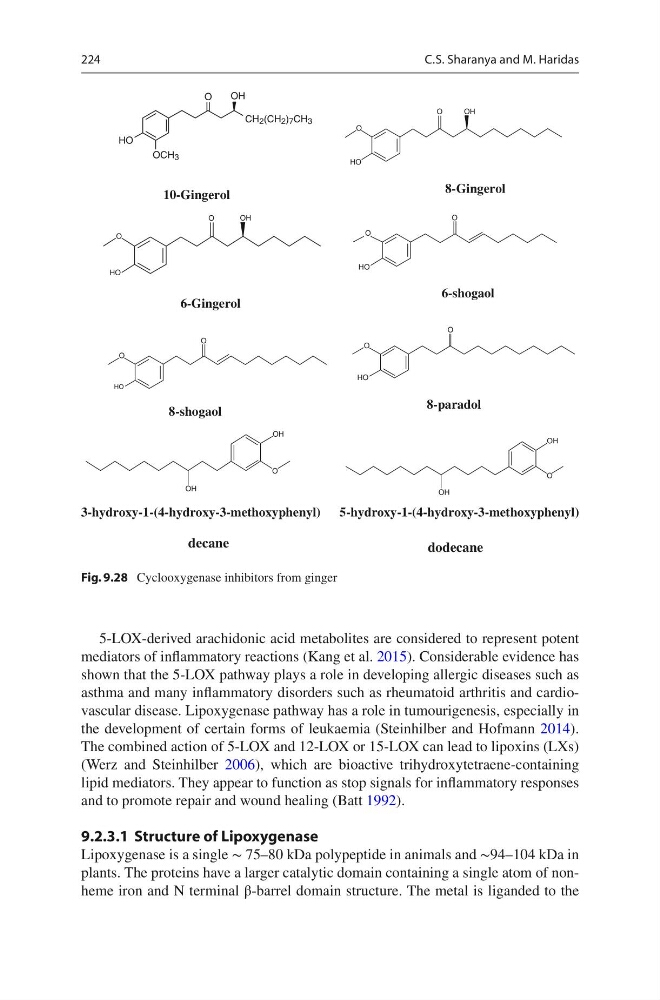
Fig. 9.28 Cyclooxygenase inhibitors from ginger
C.S. Sharanya and M. Haridas
5-LOX-derived arachidonic acid metabolites are considered to represent potent
mediators of inflammatory reactions (Kang et al. 2015). Considerable evidence has
shown that the 5-LOX pathway plays a role in developing allergic diseases such as
asthma and many inflammatory disorders such as rheumatoid arthritis and cardiovascular disease. Lipoxygenase pathway has a role in tumourigenesis, especially in
the development of certain forms of leukaemia (Steinhilber and Hofmann 2014).
The combined action of 5-LOX and 12-LOX or 15-LOX can lead to lipoxins (LXs)
(Werz and Steinhilber 2006), which are bioactive trihydroxytetraene-containing
lipid mediators. They appear to function as stop signals for inflammatory responses
and to promote repair and wound healing (Batt 1992).
9.2.3.1 Structure of Lipoxygenase
Lipoxygenase is a single ∼ 75–80 kDa polypeptide in animals and ∼94–104 kDa in
plants. The proteins have a larger catalytic domain containing a single atom of nonheme iron and N terminal β-barrel domain structure. The metal is liganded to the
OH
OH
OH
OH
O
O
O
O
HO
O
O
O
O
O
O
HO
OH
O
HO
OH
O
HO
HO
HO
10-Gingerol
8-Gingerol
8-paradol
3-hydroxy-1-(4-hydroxy-3-methoxyphenyl) 5-hydroxy-1-(4-hydroxy-3-methoxyphenyl)
decane
dodecane
6-shogaol
8-shogaol
6-Gingerol
O
OH
CH 2 (CH 2 ) 7 CH 3
OCH 3
Fig. 9.28 Cyclooxygenase inhibitors from ginger
C.S. Sharanya and M. Haridas