

221
HO
HO
HO
OH
HO
HO
O
O
O
O
O
O
O
OH
OH
Catechin
Epigallocatechin
Epigallocatechin gallate
Epicatechingallate
Gallocatechin
OH
OH
OH
OH
OH
OH
OH
OH
OH
OH
OH
OH
OH
OH
OH
OH
OH
OH
OH
OH
OH
OH
OH
OH
O
O
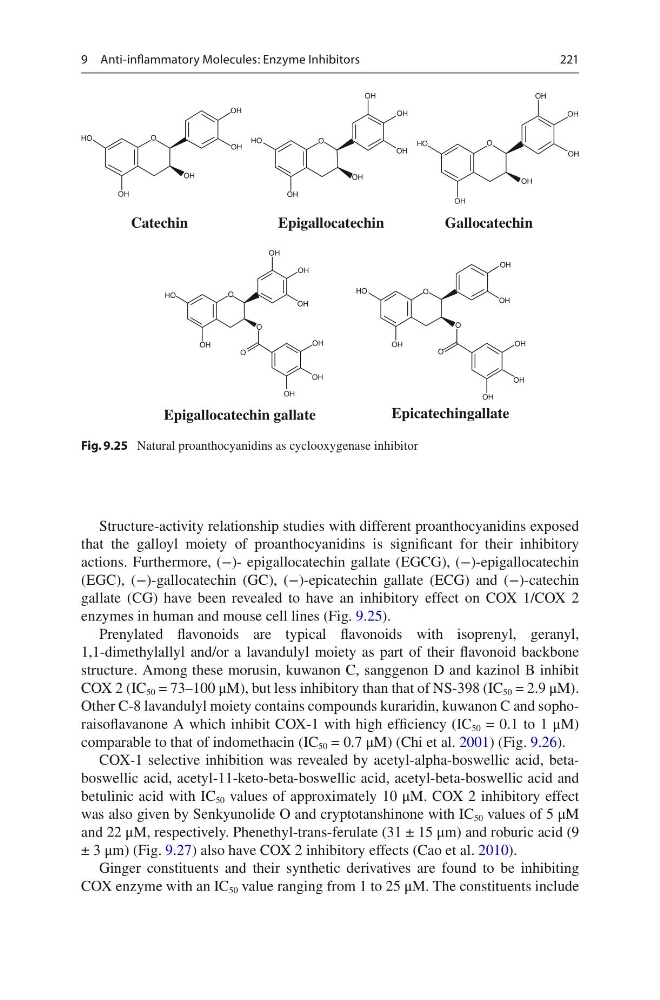
Fig. 9.25 Natural proanthocyanidins as cyclooxygenase inhibitor
Structure-activity relationship studies with different proanthocyanidins exposed
that the galloyl moiety of proanthocyanidins is significant for their inhibitory
actions. Furthermore, (−)- epigallocatechin gallate (EGCG), (−)-epigallocatechin
(EGC), (−)-gallocatechin (GC), (−)-epicatechin gallate (ECG) and (−)-catechin
gallate (CG) have been revealed to have an inhibitory effect on COX 1/COX 2
enzymes in human and mouse cell lines (Fig. 9.25).
Prenylated flavonoids are typical flavonoids with isoprenyl, geranyl,
1,1- dimethylallyl and/or a lavandulyl moiety as part of their flavonoid backbone
structure. Among these morusin, kuwanon C, sanggenon D and kazinol B inhibit
COX 2 (IC 50 = 73–100 μM), but less inhibitory than that of NS-398 (IC 50 = 2.9 μM).
Other C-8 lavandulyl moiety contains compounds kuraridin, kuwanon C and sophoraisoflavanone A which inhibit COX-1 with high efficiency (IC 50 = 0.1 to 1 μM)
comparable to that of indomethacin (IC 50 = 0.7 μM) (Chi et al. 2001) (Fig. 9.26).
COX-1 selective inhibition was revealed by acetyl-alpha-boswellic acid, betaboswellic acid, acetyl-11-keto-beta-boswellic acid, acetyl-beta-boswellic acid and
betulinic acid with IC 50 values of approximately 10 μM. COX 2 inhibitory effect
was also given by Senkyunolide O and cryptotanshinone with IC 50 values of 5 μM
and 22 μM, respectively. Phenethyl-trans-ferulate (31 ± 15 μm) and roburic acid (9
± 3 μm) (Fig. 9.27) also have COX 2 inhibitory effects (Cao et al. 2010).
Ginger constituents and their synthetic derivatives are found to be inhibiting
COX enzyme with an IC 50 value ranging from 1 to 25 μM. The constituents include
9 Anti-inflammatory Molecules: Enzyme Inhibitors
HO
HO
HO
OH
HO
HO
O
O
O
O
O
O
O
OH
OH
Catechin
Epigallocatechin
Epigallocatechin gallate
Epicatechingallate
Gallocatechin
OH
OH
OH
OH
OH
OH
OH
OH
OH
OH
OH
OH
OH
OH
OH
OH
OH
OH
OH
OH
OH
OH
OH
OH
O
O
Fig. 9.25 Natural proanthocyanidins as cyclooxygenase inhibitor
Structure-activity relationship studies with different proanthocyanidins exposed
that the galloyl moiety of proanthocyanidins is significant for their inhibitory
actions. Furthermore, (−)- epigallocatechin gallate (EGCG), (−)-epigallocatechin
(EGC), (−)-gallocatechin (GC), (−)-epicatechin gallate (ECG) and (−)-catechin
gallate (CG) have been revealed to have an inhibitory effect on COX 1/COX 2
enzymes in human and mouse cell lines (Fig. 9.25).
Prenylated flavonoids are typical flavonoids with isoprenyl, geranyl,
1,1- dimethylallyl and/or a lavandulyl moiety as part of their flavonoid backbone
structure. Among these morusin, kuwanon C, sanggenon D and kazinol B inhibit
COX 2 (IC 50 = 73–100 μM), but less inhibitory than that of NS-398 (IC 50 = 2.9 μM).
Other C-8 lavandulyl moiety contains compounds kuraridin, kuwanon C and sophoraisoflavanone A which inhibit COX-1 with high efficiency (IC 50 = 0.1 to 1 μM)
comparable to that of indomethacin (IC 50 = 0.7 μM) (Chi et al. 2001) (Fig. 9.26).
COX-1 selective inhibition was revealed by acetyl-alpha-boswellic acid, betaboswellic acid, acetyl-11-keto-beta-boswellic acid, acetyl-beta-boswellic acid and
betulinic acid with IC 50 values of approximately 10 μM. COX 2 inhibitory effect
was also given by Senkyunolide O and cryptotanshinone with IC 50 values of 5 μM
and 22 μM, respectively. Phenethyl-trans-ferulate (31 ± 15 μm) and roburic acid (9
± 3 μm) (Fig. 9.27) also have COX 2 inhibitory effects (Cao et al. 2010).
Ginger constituents and their synthetic derivatives are found to be inhibiting
COX enzyme with an IC 50 value ranging from 1 to 25 μM. The constituents include
9 Anti-inflammatory Molecules: Enzyme Inhibitors