

230
Mohamed A1-Rubeai
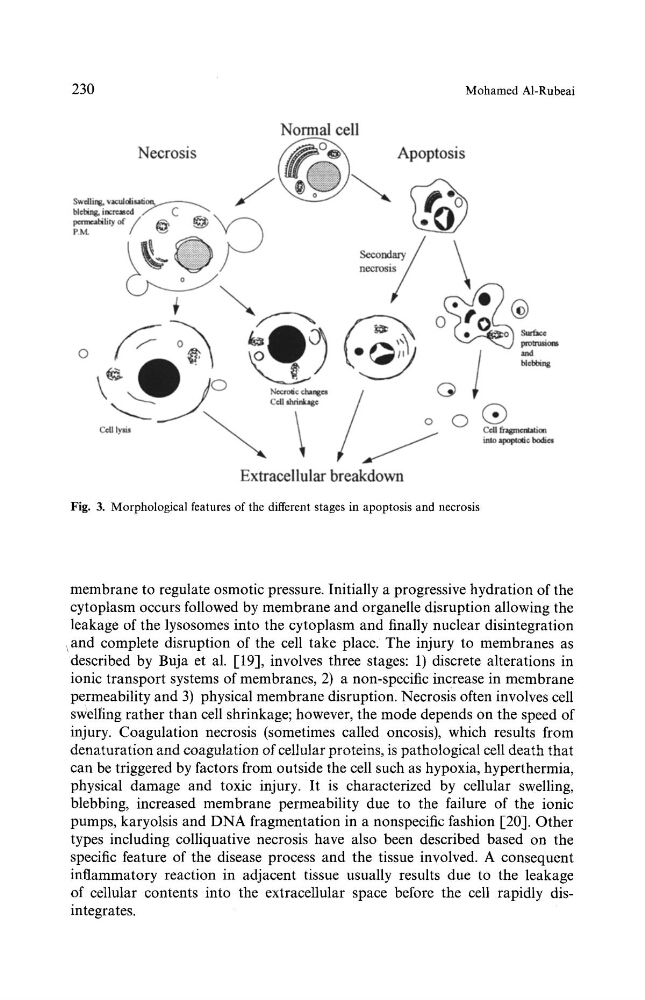
Fig. 3. Morphological features of the different stages in apoptosis and necrosis
membrane to regulate osmotic pressure. Initially a progressive hydration of the
cytoplasm occurs followed by membrane and organelle disruption allowing the
leakage of the lysosomes into the cytoplasm and finally nuclear disintegration
~and complete disruption of the cell take place. The injury to membranes as
described by Buja et al. [19], involves three stages: 1) discrete alterations in
ionic transport systems of membranes, 2) a non-specific increase in membrane
permeability and 3) physical membrane disruption. Necrosis often involves cell
swelling rather than cell shrinkage; however, the mode depends on the speed of
injury. Coagulation necrosis (sometimes called oncosis), which results from
denaturation and coagulation of cellular proteins, is pathological cell death that
can be triggered by factors from outside the cell such as hypoxia, hyperthermia,
physical damage and toxic injury. It is characterized by cellular swelling,
blebbing, increased membrane permeability due to the failure of the ionic
pumps, karyolsis and DNA fragmentation in a nonspecific fashion [20]. Other
types including colliquative necrosis have also been described based on the
specific feature of the disease process and the tissue involved. A consequent
inflammatory reaction in adjacent tissue usually results due to the leakage
of cellular contents into the extracellular space before the cell rapidly disintegrates.
Mohamed A1-Rubeai
Fig. 3. Morphological features of the different stages in apoptosis and necrosis
membrane to regulate osmotic pressure. Initially a progressive hydration of the
cytoplasm occurs followed by membrane and organelle disruption allowing the
leakage of the lysosomes into the cytoplasm and finally nuclear disintegration
~and complete disruption of the cell take place. The injury to membranes as
described by Buja et al. [19], involves three stages: 1) discrete alterations in
ionic transport systems of membranes, 2) a non-specific increase in membrane
permeability and 3) physical membrane disruption. Necrosis often involves cell
swelling rather than cell shrinkage; however, the mode depends on the speed of
injury. Coagulation necrosis (sometimes called oncosis), which results from
denaturation and coagulation of cellular proteins, is pathological cell death that
can be triggered by factors from outside the cell such as hypoxia, hyperthermia,
physical damage and toxic injury. It is characterized by cellular swelling,
blebbing, increased membrane permeability due to the failure of the ionic
pumps, karyolsis and DNA fragmentation in a nonspecific fashion [20]. Other
types including colliquative necrosis have also been described based on the
specific feature of the disease process and the tissue involved. A consequent
inflammatory reaction in adjacent tissue usually results due to the leakage
of cellular contents into the extracellular space before the cell rapidly disintegrates.