

Enzymatic and Chemical Deblocking of N-Terminally Modified Proteins
f
e
d
c
b
a
f
e
d
c
b
a
m
m
A
a
C
a
b c d e
b c d e
f
f
B
a
o
a
b
b
311
c d e f +
c d e f
+
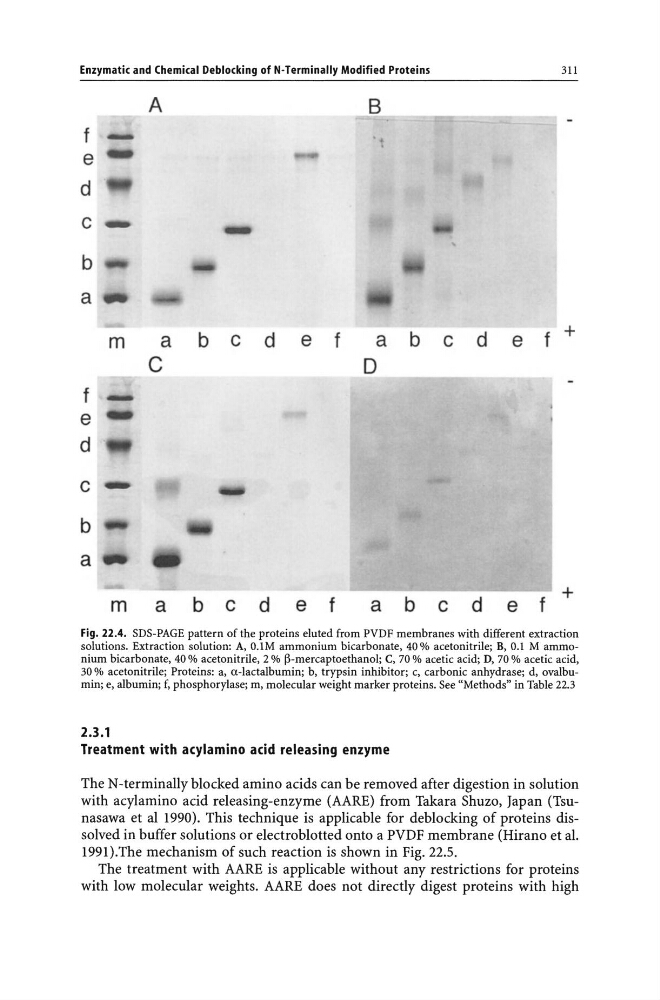
Fig. 22.4. SDS-PAGE pattern of the proteins eluted from PVDF membranes with different extraction
solutions. Extraction solution: A, O.lM ammonium bicarbonate, 40% acetonitrile; B, 0.1 M ammonium bicarbonate, 40 % acetonitrile, 2 % ~-mercaptoethanol; C, 70 % acetic acid; D, 70 % acetic acid,
30 % acetonitrile; Proteins: a, a-lactalbumin; b, trypsin inhibitor; c, carbonic anhydrase; d, ovalbumin; e, albumin; f, phosphorylase; m, molecular weight marker proteins. See "Methods" in Table 22.3
2.3.1
Treatment with acylamino acid releasing enzyme
The N-terminally blocked amino acids can be removed after digestion in solution
with acylamino acid releasing-enzyme (AARE) from Takara Shuzo, Japan (Tsunasawa et al 1990). This technique is applicable for deblocking of proteins dissolved in buffer solutions or electroblotted onto a PVDF membrane (Hirano et al.
1991).The mechanism of such reaction is shown in Fig. 22.5.
The treatment with AARE is applicable without any restrictions for proteins
with low molecular weights. AARE does not directly digest proteins with high
f
e
d
c
b
a
f
e
d
c
b
a
m
m
A
a
C
a
b c d e
b c d e
f
f
B
a
o
a
b
b
311
c d e f +
c d e f
+
Fig. 22.4. SDS-PAGE pattern of the proteins eluted from PVDF membranes with different extraction
solutions. Extraction solution: A, O.lM ammonium bicarbonate, 40% acetonitrile; B, 0.1 M ammonium bicarbonate, 40 % acetonitrile, 2 % ~-mercaptoethanol; C, 70 % acetic acid; D, 70 % acetic acid,
30 % acetonitrile; Proteins: a, a-lactalbumin; b, trypsin inhibitor; c, carbonic anhydrase; d, ovalbumin; e, albumin; f, phosphorylase; m, molecular weight marker proteins. See "Methods" in Table 22.3
2.3.1
Treatment with acylamino acid releasing enzyme
The N-terminally blocked amino acids can be removed after digestion in solution
with acylamino acid releasing-enzyme (AARE) from Takara Shuzo, Japan (Tsunasawa et al 1990). This technique is applicable for deblocking of proteins dissolved in buffer solutions or electroblotted onto a PVDF membrane (Hirano et al.
1991).The mechanism of such reaction is shown in Fig. 22.5.
The treatment with AARE is applicable without any restrictions for proteins
with low molecular weights. AARE does not directly digest proteins with high