

310
R. M. KAMP and H. HIRANO
Fluorotrans
Immobilon-P
a
b
c
+
m
a
b
c
a
b
c
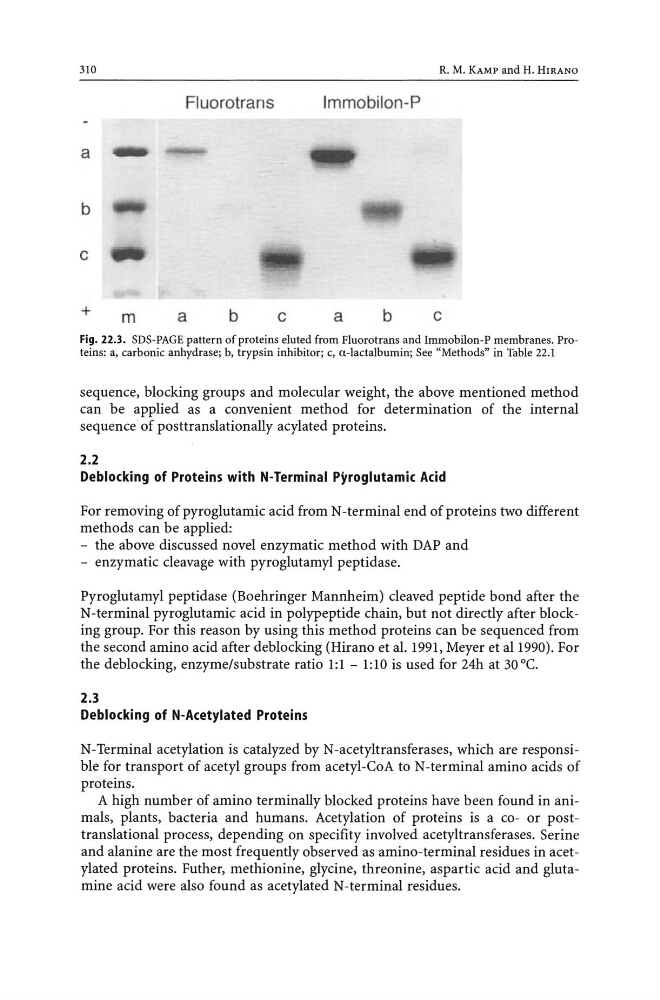
Fig. 22.3. SDS-PAGE pattern of proteins eluted from Fluorotrans and Immobilon-P membranes. Proteins: a, carbonic anhydrase; b, trypsin inhibitor; c, a-lactalbumin; See "Methods" in Table 22.1
sequence, blocking groups and molecular weight, the above mentioned method
can be applied as a convenient method for determination of the internal
sequence of posttranslationally acylated proteins.
2.2
Deblocking of Proteins with N-Terminal Pyroglutamic Acid
For removing of pyroglutamic acid from N -terminal end of proteins two different
methods can be applied:
- the above discussed novel enzymatic method with DAP and
- enzymatic cleavage with pyroglutamyl peptidase.
Pyroglutamyl peptidase (Boehringer Mannheim) cleaved peptide bond after the
N-terminal pyroglutamic acid in polypeptide chain, but not directly after blocking group. For this reason by using this method proteins can be sequenced from
the second amino acid after deblocking (Hirano et al. 1991, Meyer et alI990). For
the deblocking, enzyme/substrate ratio 1: 1 - 1: 10 is used for 24h at 30°C.
2.3
Deblocking of N-Acetylated Proteins
N-Terminal acetylation is catalyzed by N-acetyltransferases, which are responsible for transport of acetyl groups from acetyl-CoA to N-terminal amino acids of
proteins.
A high number of amino terminally blocked proteins have been found in animals, plants, bacteria and humans. Acetylation of proteins is a co- or posttranslational process, depending on specifity involved acetyltransferases. Serine
and alanine are the most frequently observed as amino-terminal residues in acetylated proteins. Futher, methionine, glycine, threonine, aspartic acid and glutamine acid were also found as acetylated N-terminal residues.
R. M. KAMP and H. HIRANO
Fluorotrans
Immobilon-P
a
b
c
+
m
a
b
c
a
b
c
Fig. 22.3. SDS-PAGE pattern of proteins eluted from Fluorotrans and Immobilon-P membranes. Proteins: a, carbonic anhydrase; b, trypsin inhibitor; c, a-lactalbumin; See "Methods" in Table 22.1
sequence, blocking groups and molecular weight, the above mentioned method
can be applied as a convenient method for determination of the internal
sequence of posttranslationally acylated proteins.
2.2
Deblocking of Proteins with N-Terminal Pyroglutamic Acid
For removing of pyroglutamic acid from N -terminal end of proteins two different
methods can be applied:
- the above discussed novel enzymatic method with DAP and
- enzymatic cleavage with pyroglutamyl peptidase.
Pyroglutamyl peptidase (Boehringer Mannheim) cleaved peptide bond after the
N-terminal pyroglutamic acid in polypeptide chain, but not directly after blocking group. For this reason by using this method proteins can be sequenced from
the second amino acid after deblocking (Hirano et al. 1991, Meyer et alI990). For
the deblocking, enzyme/substrate ratio 1: 1 - 1: 10 is used for 24h at 30°C.
2.3
Deblocking of N-Acetylated Proteins
N-Terminal acetylation is catalyzed by N-acetyltransferases, which are responsible for transport of acetyl groups from acetyl-CoA to N-terminal amino acids of
proteins.
A high number of amino terminally blocked proteins have been found in animals, plants, bacteria and humans. Acetylation of proteins is a co- or posttranslational process, depending on specifity involved acetyltransferases. Serine
and alanine are the most frequently observed as amino-terminal residues in acetylated proteins. Futher, methionine, glycine, threonine, aspartic acid and glutamine acid were also found as acetylated N-terminal residues.