

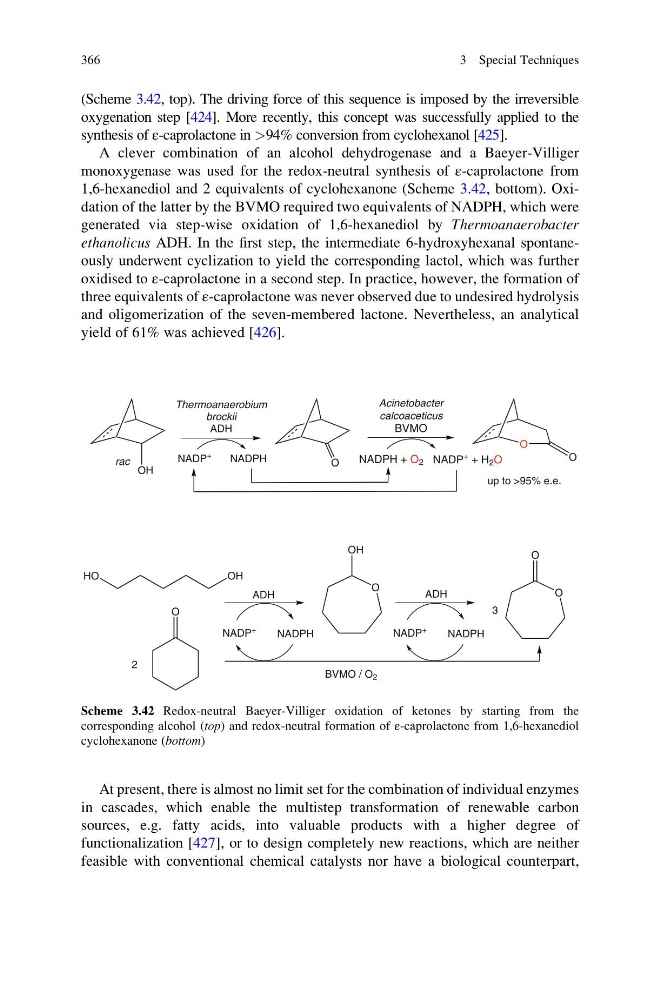
(Scheme 3.42, top). The driving force of this sequence is imposed by the irreversible
oxygenation step [424]. More recently, this concept was successfully applied to the
synthesis of ε-caprolactone in >94% conversion from cyclohexanol [425].
A clever combination of an alcohol dehydrogenase and a Baeyer-Villiger
monoxygenase was used for the redox-neutral synthesis of ε-caprolactone from
1,6-hexanediol and 2 equivalents of cyclohexanone (Scheme 3.42, bottom). Oxidation of the latter by the BVMO required two equivalents of NADPH, which were
generated via step-wise oxidation of 1,6-hexanediol by Thermoanaerobacter
ethanolicus ADH. In the first step, the intermediate 6-hydroxyhexanal spontaneously underwent cyclization to yield the corresponding lactol, which was further
oxidised to ε-caprolactone in a second step. In practice, however, the formation of
three equivalents of ε-caprolactone was never observed due to undesired hydrolysis
and oligomerization of the seven-membered lactone. Nevertheless, an analytical
yield of 61% was achieved [426].
At present, there is almost no limit set for the combination of individual enzymes
in cascades, which enable the multistep transformation of renewable carbon
sources, e.g. fatty acids, into valuable products with a higher degree of
functionalization [427], or to design completely new reactions, which are neither
feasible with conventional chemical catalysts nor have a biological counterpart,
OH
O
O
O
NADPH + O 2 NADP + + H 2 O
NADP +
NADPH
Thermoanaerobium
brockii
ADH
Acinetobacter
calcoaceticus
BVMO
up to >95% e.e.
HO
OH
O
2
NADP
+
NADPH
O
OH
NADP
+
NADPH
O
O
3
ADH
ADH
BVMO / O 2
rac
Scheme 3.42 Redox-neutral Baeyer-Villiger oxidation of ketones by starting from the
corresponding alcohol (top) and redox-neutral formation of ε-caprolactone from 1,6-hexanediol
cyclohexanone (bottom)
366
3 Special Techniques
oxygenation step [424]. More recently, this concept was successfully applied to the
synthesis of ε-caprolactone in >94% conversion from cyclohexanol [425].
A clever combination of an alcohol dehydrogenase and a Baeyer-Villiger
monoxygenase was used for the redox-neutral synthesis of ε-caprolactone from
1,6-hexanediol and 2 equivalents of cyclohexanone (Scheme 3.42, bottom). Oxidation of the latter by the BVMO required two equivalents of NADPH, which were
generated via step-wise oxidation of 1,6-hexanediol by Thermoanaerobacter
ethanolicus ADH. In the first step, the intermediate 6-hydroxyhexanal spontaneously underwent cyclization to yield the corresponding lactol, which was further
oxidised to ε-caprolactone in a second step. In practice, however, the formation of
three equivalents of ε-caprolactone was never observed due to undesired hydrolysis
and oligomerization of the seven-membered lactone. Nevertheless, an analytical
yield of 61% was achieved [426].
At present, there is almost no limit set for the combination of individual enzymes
in cascades, which enable the multistep transformation of renewable carbon
sources, e.g. fatty acids, into valuable products with a higher degree of
functionalization [427], or to design completely new reactions, which are neither
feasible with conventional chemical catalysts nor have a biological counterpart,
OH
O
O
O
NADPH + O 2 NADP + + H 2 O
NADP +
NADPH
Thermoanaerobium
brockii
ADH
Acinetobacter
calcoaceticus
BVMO
up to >95% e.e.
HO
OH
O
2
NADP
+
NADPH
O
OH
NADP
+
NADPH
O
O
3
ADH
ADH
BVMO / O 2
rac
Scheme 3.42 Redox-neutral Baeyer-Villiger oxidation of ketones by starting from the
corresponding alcohol (top) and redox-neutral formation of ε-caprolactone from 1,6-hexanediol
cyclohexanone (bottom)
366
3 Special Techniques