

In contrast to symmetric acid anhydrides, which liberate one equivalent of
carboxylic acid as byproduct, mixed anhydrides composed of a straight-chain
carboxylic acid (R
1 –CO 2 H) and a carbonic ester bearing a branched secondary
alcohol group (e.g., isopropyl) can be used instead. The hydrolase takes off the
straight-chain carboxylic acid moiety from the acyl donor by liberating an unstable
hemi-carbonate ester, which undergoes rapid decarboxylation, forming innocuous
carbon dioxide and a sec-alcohol, thereby rendering the reaction completely irreversible (Scheme 3.4) [182]. Cyclic acid anhydrides, such as succinic and glutaric
acid anhydrides lead to the formation of a hemiester [183–185]. Due to the presence
of the carboxylic acid moiety, separation of the formed hemiester product from the
nonreacted alcohol enantiomer is particularly easy using a (basic) aqueous-organic
solvent system. Consequently, cyclic acid anhydrides are advantageous in largescale applications.
Besides the more often-used acyl donors mentioned above, others which would
also ensure an irreversible type of reaction have been investigated [186]. Bearing in
mind that most of the problems of irreversible enzymatic acyl transfer arise from
the formation of unavoidable byproducts, emphasis has been put on finding acyl
donors that possess cyclic structures, which would not liberate any byproducts at
all. However, with candidates such as lactones, lactams, enol lactones (e.g.,
diketene [187, 188]), and oxazolin-5-one derivatives [189], the drawbacks often
outweighed their merits.
Enzyme-catalyzed acyl transfer can be applied to a number of different synthetic
problems. The majority of applications that have been reported involve the
desymmetrization of prochiral and meso-diols or the kinetic resolution of racemic
primary and secondary alcohols. Since, as a rule, an enzyme’s preference for a
specific enantiomer remains constant when water is replaced by an organic solvent,
it is always the same enantiomer which is preferably accepted in hydrolysis and
ester synthesis. Taking into consideration that hydrolysis and esterification represent reactions in opposite directions, products of opposite configuration are
obtained (Scheme 3.6). In other words, if the (R)-enantiomer of an ester is hydrolyzed at a faster rate than its (S)-counterpart [yielding an (R)-alcohol and an (S)ester], esterification of the racemic alcohol will lead to the formation of an (S)alcohol and an (R)-ester.
Cl
Cl
OMe
MeO
Cl
Cl
AcO
Cl
Cl
MeO
OMe
Cl
Cl
OH
MeO
OMe
Cl
Cl
Cl
Cl
OH
base
Ac 2 O / toluene
+
Candida rugosa
lipase
rac
Base
Reaction Rate
Selectivity (E)
none
good
18
KHCO 3
low
>200
2,6-lutidine
good
>200
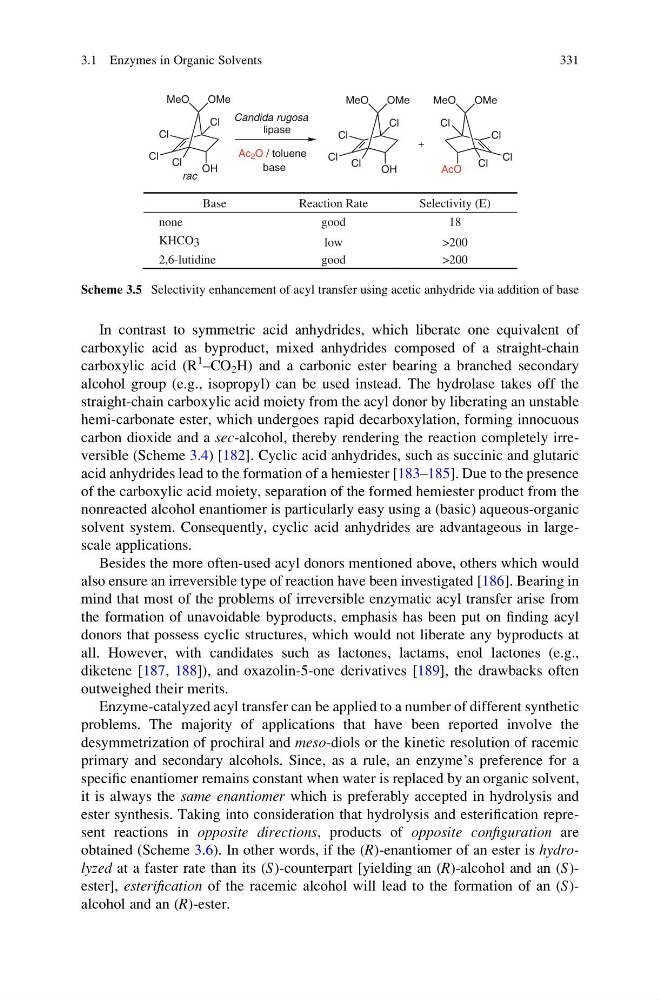
Scheme 3.5 Selectivity enhancement of acyl transfer using acetic anhydride via addition of base
3.1 Enzymes in Organic Solvents
331
carboxylic acid as byproduct, mixed anhydrides composed of a straight-chain
carboxylic acid (R
1 –CO 2 H) and a carbonic ester bearing a branched secondary
alcohol group (e.g., isopropyl) can be used instead. The hydrolase takes off the
straight-chain carboxylic acid moiety from the acyl donor by liberating an unstable
hemi-carbonate ester, which undergoes rapid decarboxylation, forming innocuous
carbon dioxide and a sec-alcohol, thereby rendering the reaction completely irreversible (Scheme 3.4) [182]. Cyclic acid anhydrides, such as succinic and glutaric
acid anhydrides lead to the formation of a hemiester [183–185]. Due to the presence
of the carboxylic acid moiety, separation of the formed hemiester product from the
nonreacted alcohol enantiomer is particularly easy using a (basic) aqueous-organic
solvent system. Consequently, cyclic acid anhydrides are advantageous in largescale applications.
Besides the more often-used acyl donors mentioned above, others which would
also ensure an irreversible type of reaction have been investigated [186]. Bearing in
mind that most of the problems of irreversible enzymatic acyl transfer arise from
the formation of unavoidable byproducts, emphasis has been put on finding acyl
donors that possess cyclic structures, which would not liberate any byproducts at
all. However, with candidates such as lactones, lactams, enol lactones (e.g.,
diketene [187, 188]), and oxazolin-5-one derivatives [189], the drawbacks often
outweighed their merits.
Enzyme-catalyzed acyl transfer can be applied to a number of different synthetic
problems. The majority of applications that have been reported involve the
desymmetrization of prochiral and meso-diols or the kinetic resolution of racemic
primary and secondary alcohols. Since, as a rule, an enzyme’s preference for a
specific enantiomer remains constant when water is replaced by an organic solvent,
it is always the same enantiomer which is preferably accepted in hydrolysis and
ester synthesis. Taking into consideration that hydrolysis and esterification represent reactions in opposite directions, products of opposite configuration are
obtained (Scheme 3.6). In other words, if the (R)-enantiomer of an ester is hydrolyzed at a faster rate than its (S)-counterpart [yielding an (R)-alcohol and an (S)ester], esterification of the racemic alcohol will lead to the formation of an (S)alcohol and an (R)-ester.
Cl
Cl
OMe
MeO
Cl
Cl
AcO
Cl
Cl
MeO
OMe
Cl
Cl
OH
MeO
OMe
Cl
Cl
Cl
Cl
OH
base
Ac 2 O / toluene
+
Candida rugosa
lipase
rac
Base
Reaction Rate
Selectivity (E)
none
good
18
KHCO 3
low
>200
2,6-lutidine
good
>200
Scheme 3.5 Selectivity enhancement of acyl transfer using acetic anhydride via addition of base
3.1 Enzymes in Organic Solvents
331