

Halogenation of C–H Groups
Similar to the chemical process, enzymatic halogenation of C–H groups is only
possible if they are activated by adjacent electron-withdrawing substituents, for
example carbonyl groups, which facilitate enolization. Since the reactivity depends
on the enol content of the substrate, simple ketones like 2-heptanone are unreactive
[1995], but highly enolized 1,3-diketones are readily halogenated to give the
corresponding 2-mono- or 2,2-dihalo derivatives (Scheme 2.229) [1996]. For
instance, monochloro dimedone has been used extensively to detect chlorinating
and brominating haloperoxidases due to a hypsochromic shift of its absorbance
maximum from 290 nm (owing to its enol content) to shorter wavelengths. In
addition, it served as mimic in the elucidation of the biosynthesis of the intriguing
highly chlorinated metabolite caldariomycin, which is formed by the
(haloperoxidase-producing) fungus Caldariomyces fumago.
As with the formation of halohydrins from alkenes, stereoselectivities are low
and the reactivity of the substrate is independent of its size. For example, monocyclic compounds such as barbituric acid derivatives [1997] and sterically demanding
polycyclic steroids are equally well accepted [1998]. β-Ketoacids are also halogenated, but the spontaneous decarboxylation of the intermediate α-halo-β-ketoacid
affords the corresponding α-haloketones [1999]. The chloroperoxidase-catalyzed
halogenation of oximes was shown to proceed via a two-step sequence through a
halonitroso intermediate which is further oxidized to furnish an α-halonitro
product [2000].
Br
Br
Br
Br
H
Cl
Cl
O
O
O
O
H
O
SO 3 H
OH
Cl , H 2 O 2
haloperoxidase
purple
red
yellow-red
Br , H 2 O 2
Br
R
R
Halogenation
Br
R
+
R
Br
R
+
Br
Br
Br
+
Br
Bromoperoxidase
Br / H 2 O 2
6
6 3
4
6
:
:
:
aqu. Br 2
3
1 4
3
2 9
:
:
:
<1
14
13
23
:
:
:
Bu 4 Br 3
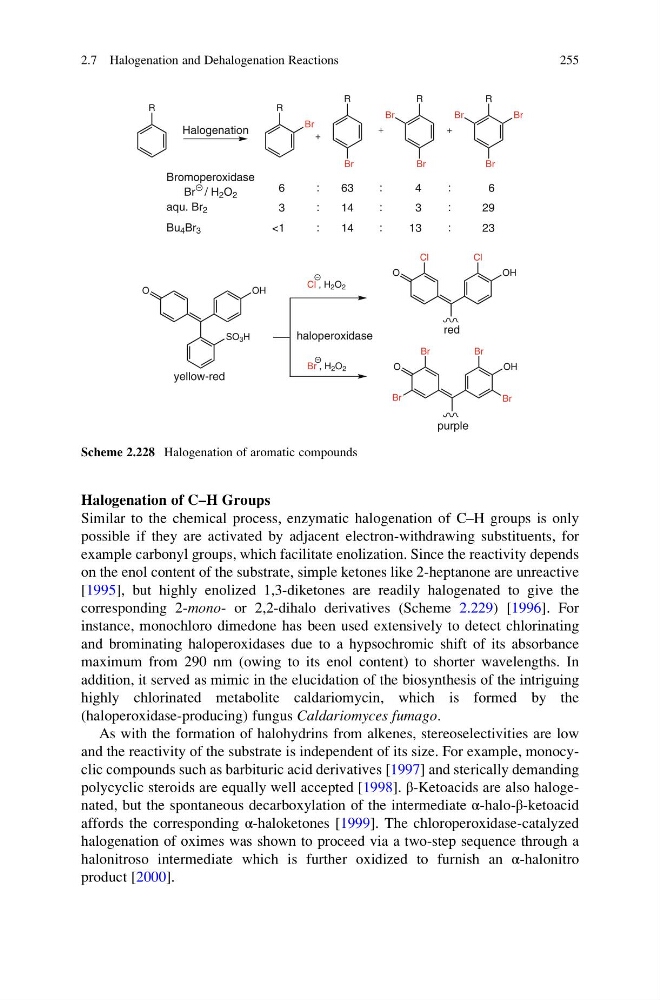
Scheme 2.228 Halogenation of aromatic compounds
2.7 Halogenation and Dehalogenation Reactions
255
Similar to the chemical process, enzymatic halogenation of C–H groups is only
possible if they are activated by adjacent electron-withdrawing substituents, for
example carbonyl groups, which facilitate enolization. Since the reactivity depends
on the enol content of the substrate, simple ketones like 2-heptanone are unreactive
[1995], but highly enolized 1,3-diketones are readily halogenated to give the
corresponding 2-mono- or 2,2-dihalo derivatives (Scheme 2.229) [1996]. For
instance, monochloro dimedone has been used extensively to detect chlorinating
and brominating haloperoxidases due to a hypsochromic shift of its absorbance
maximum from 290 nm (owing to its enol content) to shorter wavelengths. In
addition, it served as mimic in the elucidation of the biosynthesis of the intriguing
highly chlorinated metabolite caldariomycin, which is formed by the
(haloperoxidase-producing) fungus Caldariomyces fumago.
As with the formation of halohydrins from alkenes, stereoselectivities are low
and the reactivity of the substrate is independent of its size. For example, monocyclic compounds such as barbituric acid derivatives [1997] and sterically demanding
polycyclic steroids are equally well accepted [1998]. β-Ketoacids are also halogenated, but the spontaneous decarboxylation of the intermediate α-halo-β-ketoacid
affords the corresponding α-haloketones [1999]. The chloroperoxidase-catalyzed
halogenation of oximes was shown to proceed via a two-step sequence through a
halonitroso intermediate which is further oxidized to furnish an α-halonitro
product [2000].
Br
Br
Br
Br
H
Cl
Cl
O
O
O
O
H
O
SO 3 H
OH
Cl , H 2 O 2
haloperoxidase
purple
red
yellow-red
Br , H 2 O 2
Br
R
R
Halogenation
Br
R
+
R
Br
R
+
Br
Br
Br
+
Br
Bromoperoxidase
Br / H 2 O 2
6
6 3
4
6
:
:
:
aqu. Br 2
3
1 4
3
2 9
:
:
:
<1
14
13
23
:
:
:
Bu 4 Br 3
Scheme 2.228 Halogenation of aromatic compounds
2.7 Halogenation and Dehalogenation Reactions
255