

2.5.3 Cyanohydrin Formation and Henry-Reaction
Hydroxynitrile lyase enzymes (HNLs) catalyze the asymmetric addition of hydrogen cyanide onto a carbonyl group of an aldehyde or a ketone thus forming a chiral
cyanohydrin [1710–1715],
46 a reaction which was used for the first time as long
ago as 1908 [1716]. In nature, HNLs catalyze the cleavage of cyanohydrins derived
from cyanoglucosides and cyanolipids (Scheme 2.95) to liberate HCN as a defence
mechanism against herbivores and microbial attack. This activity is not only
widespread in plants, but is also found in bacteria, fungi, lichens and insects.
Although they catalyze the same reaction, HNLs belong to (at least) four different
structural folds, i.e. α/β-hydrolase proteins, oxidoreductases, cupins
47 and alcohol
dehydrognases, which indicates a perfect example of convergent evolution [1717].
Cyanohydrins are rarely used as products per se, but they represent versatile
starting materials for the synthesis of various types of compounds [1718]. Most
prominent, chiral cyanohydrins constitute the alcohol moieties of several commercial pyrethroid insecticides (see Scheme 2.208) (see below) [1719].
Since only a single enantiomer is produced during the reaction – through
desymmetrization of a prochiral substrate – the availability of enzymes possessing
opposite stereochemical preference is of importance to gain access to both (R)- and (S)cyanohydrins (Scheme 2.207). Fortunately, an impressive number of hydroxy-nitrile
lyases can be isolated from cyanogenic plants to meet this requirement [1720–1724].
(R)-Specific enzymes are obtained predominantly from the Rosacea family
(almond, plum, cherry, apricot) and they have been thoroughly investigated
[1725–1728]. They contain FAD in its oxidized form as a prosthetic group located
near (but not in) the active site, but this moiety does not participate in catalysis and
seems to be an evolutionary relict.
R
NH 2
CO 2 H
R
NH 2
CO 2 H
R
CO 2 H
β
α
+
aminomutase
Phenylalanine
R
S
NH 3
R
R a t i o α/β α E.e. [%] β E.e. [%]
H
1 : 1
>99
>99
o-F, o-Cl, o-Br, o-Me
>98 : 2
>99
n.d.
m-F
86 : 14
92
n.d.
m-Me
20 : 80
>99
>99
p-n-Pr
12 : 88
n.d.
>99
p-Et
9 : 91
n.d.
>99
p-Me
4 : 96
>99
>99
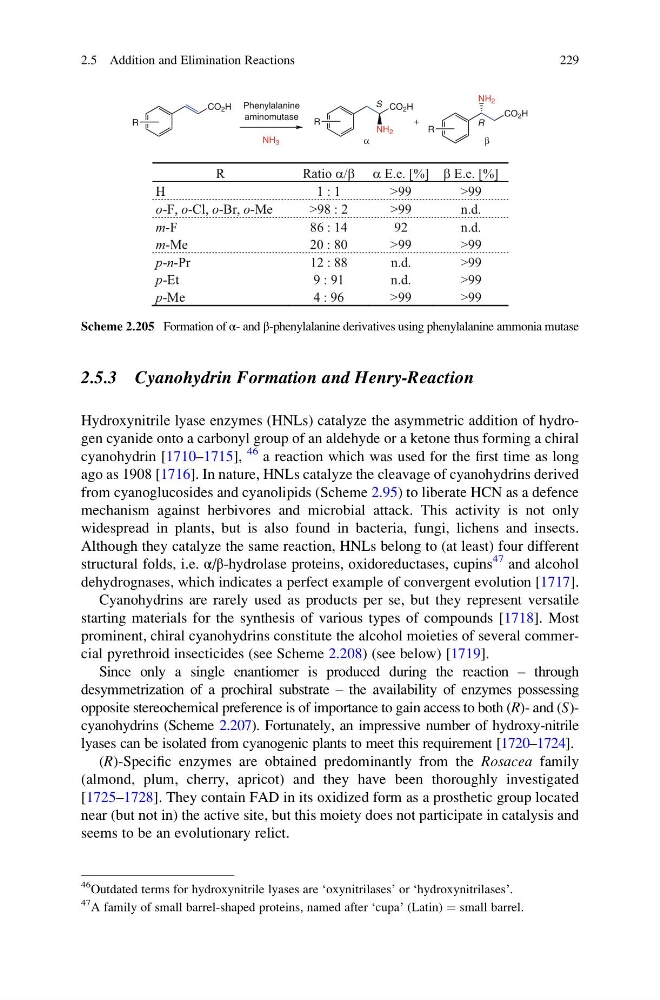
Scheme 2.205 Formation of α- and β-phenylalanine derivatives using phenylalanine ammonia mutase
46 Outdated terms for hydroxynitrile lyases are ‘oxynitrilases’ or ‘hydroxynitrilases’.
47 A family of small barrel-shaped proteins, named after ‘cupa’ (Latin) ¼ small barrel.
2.5 Addition and Elimination Reactions
229
Hydroxynitrile lyase enzymes (HNLs) catalyze the asymmetric addition of hydrogen cyanide onto a carbonyl group of an aldehyde or a ketone thus forming a chiral
cyanohydrin [1710–1715],
46 a reaction which was used for the first time as long
ago as 1908 [1716]. In nature, HNLs catalyze the cleavage of cyanohydrins derived
from cyanoglucosides and cyanolipids (Scheme 2.95) to liberate HCN as a defence
mechanism against herbivores and microbial attack. This activity is not only
widespread in plants, but is also found in bacteria, fungi, lichens and insects.
Although they catalyze the same reaction, HNLs belong to (at least) four different
structural folds, i.e. α/β-hydrolase proteins, oxidoreductases, cupins
47 and alcohol
dehydrognases, which indicates a perfect example of convergent evolution [1717].
Cyanohydrins are rarely used as products per se, but they represent versatile
starting materials for the synthesis of various types of compounds [1718]. Most
prominent, chiral cyanohydrins constitute the alcohol moieties of several commercial pyrethroid insecticides (see Scheme 2.208) (see below) [1719].
Since only a single enantiomer is produced during the reaction – through
desymmetrization of a prochiral substrate – the availability of enzymes possessing
opposite stereochemical preference is of importance to gain access to both (R)- and (S)cyanohydrins (Scheme 2.207). Fortunately, an impressive number of hydroxy-nitrile
lyases can be isolated from cyanogenic plants to meet this requirement [1720–1724].
(R)-Specific enzymes are obtained predominantly from the Rosacea family
(almond, plum, cherry, apricot) and they have been thoroughly investigated
[1725–1728]. They contain FAD in its oxidized form as a prosthetic group located
near (but not in) the active site, but this moiety does not participate in catalysis and
seems to be an evolutionary relict.
R
NH 2
CO 2 H
R
NH 2
CO 2 H
R
CO 2 H
β
α
+
aminomutase
Phenylalanine
R
S
NH 3
R
R a t i o α/β α E.e. [%] β E.e. [%]
H
1 : 1
>99
>99
o-F, o-Cl, o-Br, o-Me
>98 : 2
>99
n.d.
m-F
86 : 14
92
n.d.
m-Me
20 : 80
>99
>99
p-n-Pr
12 : 88
n.d.
>99
p-Et
9 : 91
n.d.
>99
p-Me
4 : 96
>99
>99
Scheme 2.205 Formation of α- and β-phenylalanine derivatives using phenylalanine ammonia mutase
46 Outdated terms for hydroxynitrile lyases are ‘oxynitrilases’ or ‘hydroxynitrilases’.
47 A family of small barrel-shaped proteins, named after ‘cupa’ (Latin) ¼ small barrel.
2.5 Addition and Elimination Reactions
229