

2.5 Addition and Elimination Reactions
Among the various types of transformations used in organic synthesis, addition
reactions are the ‘cleanest’ since two components are combined into a single
product with 100% atom efficiency [1665, 1666].
The asymmetric addition of (small) molecules, such as water, ammonia and C-H
acidic carbon nucleophiles (such as hydrogen cyanide, nitroalkanes, β-dicarbonyl
compounds) onto C¼C or C¼O bonds is typically catalyzed by lyases. Depending
on the substitution pattern of the substrate, up to two chiral centers are created from
a prochiral substrate via desymmetrization.
2.5.1 Addition of Water
The asymmetric addition of water onto olefins is one of the ‘dream-reactions’ in
organic synthesis and represents one of the (largely unsolved) problems of catalysis. Enzymes called hydratases [EC 4.2.1.X]
45 can catalyze this reaction [1667].
In analogy to the rules of chemical catalysis, two different types of enzymatic
hydration mechanisms exist:
– Hydration of electron-rich (isolated) alkenes proceeds via acid-catalysis and
obeys the Markovnikov rule, which dictates that the nucleophile [OH
À ] is
attached to the more highly substituted carbon [1668].
– Electron-deficient alkenes, which are polarized by an electron-withdrawing
(carbonyl) group, are hydrated via Michael-type addition with nucleophilic
attack at Cβ. If the corresponding proton to be added is in the α-position to a
carboxyl group, hydration occurs in an anti-fashion (Scheme 2.202), in case of a
(coenzyme A) thioester, the syn-product is preferred [1669, 1670].
O
H
R
1
OH
O
O
R
1
O
H
R 2
OH
R
2
O
R
1
O
R
4
R 3
R 4
R
3
OH
O
R 1
O
CO 2 H
R
5
CO 2 H
R 5
OH
O
R 1
Donor
* newly generated stereocenter
Acceptor
Acceptor
*
*
*
CO 2
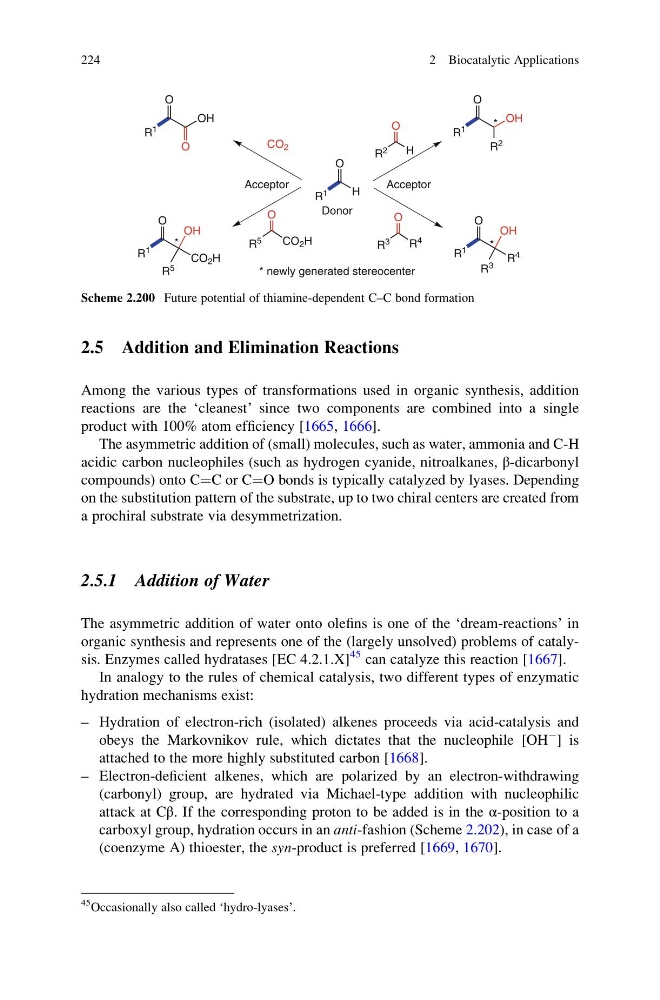
Scheme 2.200 Future potential of thiamine-dependent C–C bond formation
45 Occasionally also called ‘hydro-lyases’.
224
2 Biocatalytic Applications
Among the various types of transformations used in organic synthesis, addition
reactions are the ‘cleanest’ since two components are combined into a single
product with 100% atom efficiency [1665, 1666].
The asymmetric addition of (small) molecules, such as water, ammonia and C-H
acidic carbon nucleophiles (such as hydrogen cyanide, nitroalkanes, β-dicarbonyl
compounds) onto C¼C or C¼O bonds is typically catalyzed by lyases. Depending
on the substitution pattern of the substrate, up to two chiral centers are created from
a prochiral substrate via desymmetrization.
2.5.1 Addition of Water
The asymmetric addition of water onto olefins is one of the ‘dream-reactions’ in
organic synthesis and represents one of the (largely unsolved) problems of catalysis. Enzymes called hydratases [EC 4.2.1.X]
45 can catalyze this reaction [1667].
In analogy to the rules of chemical catalysis, two different types of enzymatic
hydration mechanisms exist:
– Hydration of electron-rich (isolated) alkenes proceeds via acid-catalysis and
obeys the Markovnikov rule, which dictates that the nucleophile [OH
À ] is
attached to the more highly substituted carbon [1668].
– Electron-deficient alkenes, which are polarized by an electron-withdrawing
(carbonyl) group, are hydrated via Michael-type addition with nucleophilic
attack at Cβ. If the corresponding proton to be added is in the α-position to a
carboxyl group, hydration occurs in an anti-fashion (Scheme 2.202), in case of a
(coenzyme A) thioester, the syn-product is preferred [1669, 1670].
O
H
R
1
OH
O
O
R
1
O
H
R 2
OH
R
2
O
R
1
O
R
4
R 3
R 4
R
3
OH
O
R 1
O
CO 2 H
R
5
CO 2 H
R 5
OH
O
R 1
Donor
* newly generated stereocenter
Acceptor
Acceptor
*
*
*
CO 2
Scheme 2.200 Future potential of thiamine-dependent C–C bond formation
45 Occasionally also called ‘hydro-lyases’.
224
2 Biocatalytic Applications