

708
Chapter 14 Hydrocarbons and Coal
KEROGEN
ORGANIC MATTER (C-org,
e.g., 3 % OF SOURCE ROCK)
SOLUBLE ORGANIC MATTER
MIGRATABLE HYDROCARBONS,
e.g 3 %0 OF KEROGEN)
LlPTlNlTE
E
INERTINITE
VEfW·H-RICH:
H,RICH;
H-POOR;
NO.I:i;
ALGAE
SPQf1lES
WOOD
GHARC0AL
l'HYTOPOLLEN
fiUMIC
OXfD1ZED
PLANKTON
CUTICLE
TISSUES
TISSUES
ORIGIN
TYPE*
HYDROCARBON
MICROORGANISMS
* AFTER TISSOT AND WELTE
COAL
güüns, but liptinite is also. an impürtant cünstituent in
the ürganic matter üf marine envirünments (cf. Fig.
10.11). Liptinite is relatively rich in hydrügen and
therefore exhibits a high H/C ratio.; it has a lüw üxygen cüntent and lüw O/C ratio. (Fig. 14.3). Liptinitedüminated kerügen is classified as Type I kerogen.
Liptinite-rich süurce rücks have a very güüd pütential
für the generatiün üf üil.
(2) Exinite-type kerogen. Derived mainly früm relatively resistant membranüus plant debris such as
spüres, püllen, leaf cuticles etc. Resins and waxes
also. belüng tü this grüup. Such plant particles are nüt
ünly produced ün land and swept intü lakes and
swamps later fürming certain varieties üf cüals, but
they also. grüw in lakes and in the ücean (e.g.,
dinüflagellates and üther phytüplanktün). Exinite has
a high H cüntent and H/C ratio. (but lower than
liptinite) and a medium 0 cüntent and O/C ratio. (Fig.
14.3). Many marine sediments and hydrücarbün
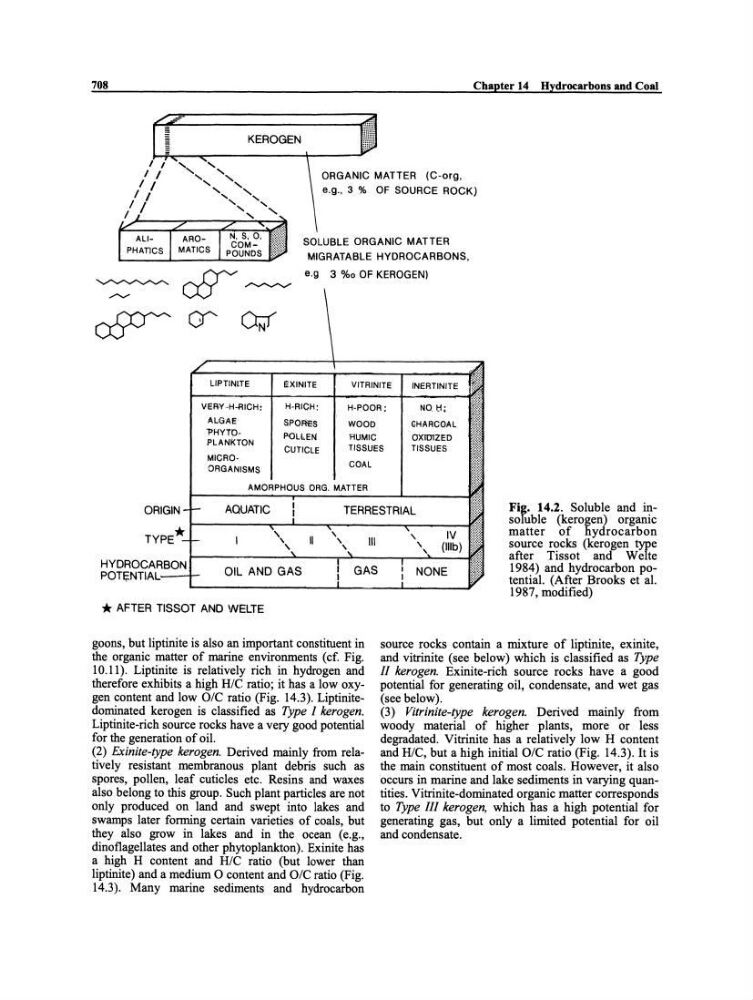
Fig. 14.2. Süluble and insüluble (kerügen) ürganic
matter üf hydrücarbün
süurce rocks (kerügen type
after Tissüt and Weite
1984) and hydrücarbün pütential. (After Broüks et al.
1987, müdified)
süurce rocks cüntain a rnixture üf liptinite, exinite,
and vitrinite (see belüw) which is classified as Type
Il kerogen. Exinite-rich süurce rocks have a güüd
pütential für generating üil, cündensate, and wet gas
(see belüw).
(3) Vitrinite-type kerogen. Derived mainly from
wüüdy material üf higher plants, müre ür less
degradated. Vitrinite has a relatively lüw H cüntent
and H/C, but a high initial O/C ratio. (Fig. 14.3). It is
the main cünstituent üf müst cüals. Hüwever, it also.
üccurs in marine and lake sediments in varying quantities. Vitrinite-dürninated ürganic matter cürrespünds
tü Type III kerogen, which has a high pütential für
generating gas, but ünly a lirnited pütential für üil
and cündensate.