

402
Chapter 8 Subsidence
a, GRABEN SHOULDER
I
POINT A, BASIN WATER-FILLED,
~
NO FLEXURAL EFFECT
0'05L-~~======~===-_ _
_
~M8;;2O)dfr
km
I
b, GRABEN SHOULDER
POINT A, ßASIN SEDIMENT -FILLED WITH
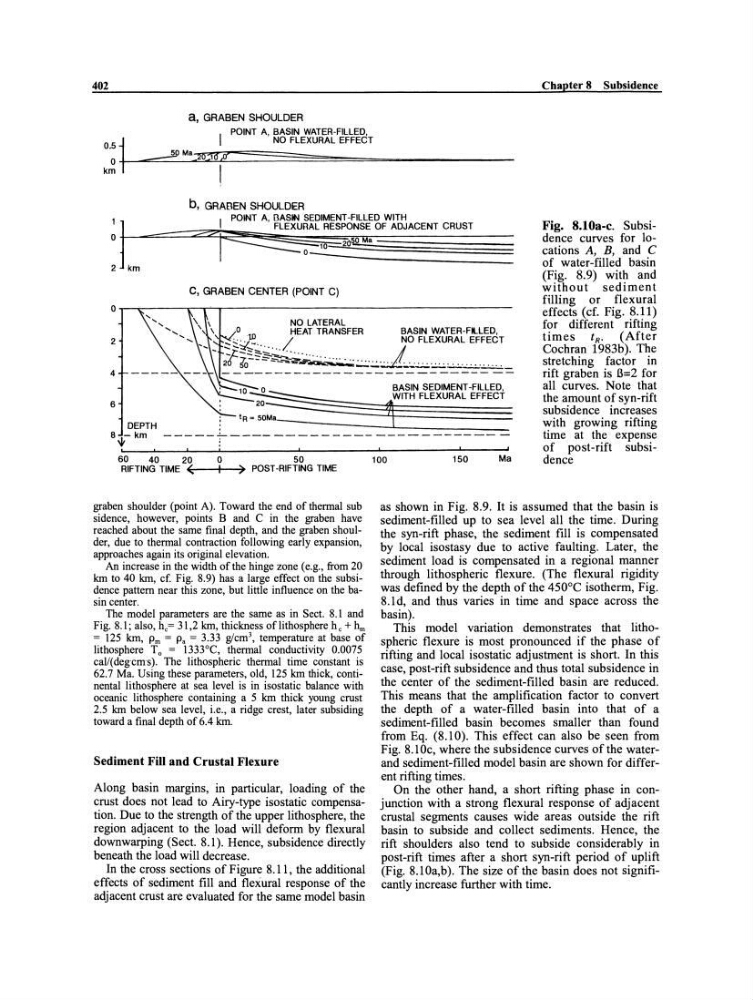
Fig. 8.10a-c . . Subsidence eurves for 10cations A, B, and C
of water-filled basin
(Fig.. 8 . . 9) with and
without sediment
filling or flexural
effeets (cf . . Fig. 8.11)
for different rifting
times t R • (After
Cochran 1983b). The
stretching factor in
rift graben is ß=2 for
all curves. Note that
the amount of syn-rift
subsidence increases
with growing rifting
time at the expense
of post-rift subsidence
FLEXURAL RESPONSE OF ADJACENT CRUST
°t---=======~~~~~~~~~~10~~2~05~0~M~a~~~~~~~~~~~
0- _____________ -=======
2 km
C, GRABEN CENTER (POINT C)
O~_.------~~_r------------------------------------------" ,
\ \
NO LATERAL
..........
\\ \
0
HEAT TRANSFER
BASIN WATER-FILLED,
2
.......... " ~ :::. ' ::.:J:}. ..... .. /
NO FLEXURAL EFFECT
, 2flo=:"3-~~~~:..;.;;.;.;.;,;~:.:...J.;.:..:.~~:_:_: . . :-=..:~_
4
- - - - - - - - - - - - - - - - - - - - - - - - - - - -
6
BASIN SEDIMENT -FILLED,
WITH FLEXURAL EFFECT
~
DEPTH
B",- km
----_.!-_--- - - - - - - - - - - - - - - - - - - - - -
60
40
20
0
50
RIFTING TIME '(,.........--tl-~) POST -RIFTING TIME
graben shoulder (point A). Toward the end of thermal sub
sidence, however, points Band C in the graben have
reached about the same final depth, and the graben shoulder, due to thermal contraction following early expansion,
approaches again its original elevation.
An increase in the width of the hinge zone (e.g., from 20
km to 40 km, cf. Fig. 8.9) has a large effect on the subsidence pattern near this zone, but little influence on the basin center.
The model parameters are the same as in Sect. 8.1 and
Fig. 8.1; also, hc= 31,2 km, thickness oflithosphere h c + hm
= 125 km, Pm = Pa = 3.33 glcm 3 , temperature at base of
lithosphere To = 1333°C, thermal conductivity 0.0075
cal/(degcms). The lithospheric thermal time constant is
62.7 Ma. Using these parameters, old, 125 km thick, continental lithosphere at sea level is in isostatic balance with
oceanic lithosphere containing a 5 km thick young crnst
2 . . 5 km below sea level, i.e., a ridge crest, later subsiding
toward a final depth of 6.4 km.
Sediment Fill and Crustal Flexure
Along basin margins, in partieular, loading of the
ernst does not lead to Airy-type isostatie compensation . . Due to the strength of the upper lithosphere, the
region adjaeent to the load will deform by flexural
downwarping (Sect. 8.1). Henee, subsidence direedy
beneath the load will deerease.
In the cross seetions of Figure 8 . . 11, the additional
effects of sediment fill and flexural response of the
adjacent ernst are evaluated for the same model basin
100
150
Ma
as shown in Fig. 8.9. It is assumed that the basin is
sediment-filled up to sea level all the time. During
the syn-rift phase, the sediment fill is eompensated
by loeal isostasy due to aetive faulting. Later, the
sediment load is compensated in a regional manner
through lithospherie flexure. (The flexural rigidity
was defined by the depth of the 450°C isotherm, Fig.
8.ld, and thus varies in time and spaee aeross the
basin).
This model variation demonstrates that lithospherie flexure is most pronounced if the phase of
rifting and local isostatie adjustment is short. In this
ease, post-rift subsidenee and thus total subsidenee in
the center of the sediment-filled basin are redueed.
This means that the amplifieation faetor to eonvert
the depth of a water-filled basin into that of a
sediment-filled basin beeomes srnaller than found
from Eq. (8.10). This effeet ean also be seen from
Fig. 8.l0e, where the subsidenee eurves of the waterand sediment-filled model basin are shown for different rifting times.
On the other hand, a short rifting phase in eonjunetion with a strong flexural response of adjaeent
ernstal segments eauses wide areas outside the rift
basin to subside and eolleet sediments. Henee, the
rift shoulders also tend to subside eonsiderably in
post-rift times after a short syn-rift period of uplift
(Fig. 8.1 Oa,b). The size of the basin does not signifieandy inerease further with time.
Chapter 8 Subsidence
a, GRABEN SHOULDER
I
POINT A, BASIN WATER-FILLED,
~
NO FLEXURAL EFFECT
0'05L-~~======~===-_ _
_
~M8;;2O)dfr
km
I
b, GRABEN SHOULDER
POINT A, ßASIN SEDIMENT -FILLED WITH
Fig. 8.10a-c . . Subsidence eurves for 10cations A, B, and C
of water-filled basin
(Fig.. 8 . . 9) with and
without sediment
filling or flexural
effeets (cf . . Fig. 8.11)
for different rifting
times t R • (After
Cochran 1983b). The
stretching factor in
rift graben is ß=2 for
all curves. Note that
the amount of syn-rift
subsidence increases
with growing rifting
time at the expense
of post-rift subsidence
FLEXURAL RESPONSE OF ADJACENT CRUST
°t---=======~~~~~~~~~~10~~2~05~0~M~a~~~~~~~~~~~
0- _____________ -=======
2 km
C, GRABEN CENTER (POINT C)
O~_.------~~_r------------------------------------------" ,
\ \
NO LATERAL
..........
\\ \
0
HEAT TRANSFER
BASIN WATER-FILLED,
2
.......... " ~ :::. ' ::.:J:}. ..... .. /
NO FLEXURAL EFFECT
, 2flo=:"3-~~~~:..;.;;.;.;.;,;~:.:...J.;.:..:.~~:_:_: . . :-=..:~_
4
- - - - - - - - - - - - - - - - - - - - - - - - - - - -
6
BASIN SEDIMENT -FILLED,
WITH FLEXURAL EFFECT
~
DEPTH
B",- km
----_.!-_--- - - - - - - - - - - - - - - - - - - - - -
60
40
20
0
50
RIFTING TIME '(,.........--tl-~) POST -RIFTING TIME
graben shoulder (point A). Toward the end of thermal sub
sidence, however, points Band C in the graben have
reached about the same final depth, and the graben shoulder, due to thermal contraction following early expansion,
approaches again its original elevation.
An increase in the width of the hinge zone (e.g., from 20
km to 40 km, cf. Fig. 8.9) has a large effect on the subsidence pattern near this zone, but little influence on the basin center.
The model parameters are the same as in Sect. 8.1 and
Fig. 8.1; also, hc= 31,2 km, thickness oflithosphere h c + hm
= 125 km, Pm = Pa = 3.33 glcm 3 , temperature at base of
lithosphere To = 1333°C, thermal conductivity 0.0075
cal/(degcms). The lithospheric thermal time constant is
62.7 Ma. Using these parameters, old, 125 km thick, continental lithosphere at sea level is in isostatic balance with
oceanic lithosphere containing a 5 km thick young crnst
2 . . 5 km below sea level, i.e., a ridge crest, later subsiding
toward a final depth of 6.4 km.
Sediment Fill and Crustal Flexure
Along basin margins, in partieular, loading of the
ernst does not lead to Airy-type isostatie compensation . . Due to the strength of the upper lithosphere, the
region adjaeent to the load will deform by flexural
downwarping (Sect. 8.1). Henee, subsidence direedy
beneath the load will deerease.
In the cross seetions of Figure 8 . . 11, the additional
effects of sediment fill and flexural response of the
adjacent ernst are evaluated for the same model basin
100
150
Ma
as shown in Fig. 8.9. It is assumed that the basin is
sediment-filled up to sea level all the time. During
the syn-rift phase, the sediment fill is eompensated
by loeal isostasy due to aetive faulting. Later, the
sediment load is compensated in a regional manner
through lithospherie flexure. (The flexural rigidity
was defined by the depth of the 450°C isotherm, Fig.
8.ld, and thus varies in time and spaee aeross the
basin).
This model variation demonstrates that lithospherie flexure is most pronounced if the phase of
rifting and local isostatie adjustment is short. In this
ease, post-rift subsidenee and thus total subsidenee in
the center of the sediment-filled basin are redueed.
This means that the amplifieation faetor to eonvert
the depth of a water-filled basin into that of a
sediment-filled basin beeomes srnaller than found
from Eq. (8.10). This effeet ean also be seen from
Fig. 8.l0e, where the subsidenee eurves of the waterand sediment-filled model basin are shown for different rifting times.
On the other hand, a short rifting phase in eonjunetion with a strong flexural response of adjaeent
ernstal segments eauses wide areas outside the rift
basin to subside and eolleet sediments. Henee, the
rift shoulders also tend to subside eonsiderably in
post-rift times after a short syn-rift period of uplift
(Fig. 8.1 Oa,b). The size of the basin does not signifieandy inerease further with time.