

7.5 Marine Carbonate Systems
• FLUVIAL,
SUPRATIDAL AND TIDAL
± TEMPESTITES
NON-MARINE
SHELF MARGIN
GRAINSTONES
AND/OR REEFS
IN PLACES
SHALLOWMARINE
AND/OR MARLS
SILICICLASTIC AND CLAYS
SANDS
.: ! : TEMPESTITES
LOCALLY CANYON CUTlING
(AND FILLING OURING TR}
• ENVIRONMENTS PROMISING
FOR CYCLOSTRATIGRAPHY
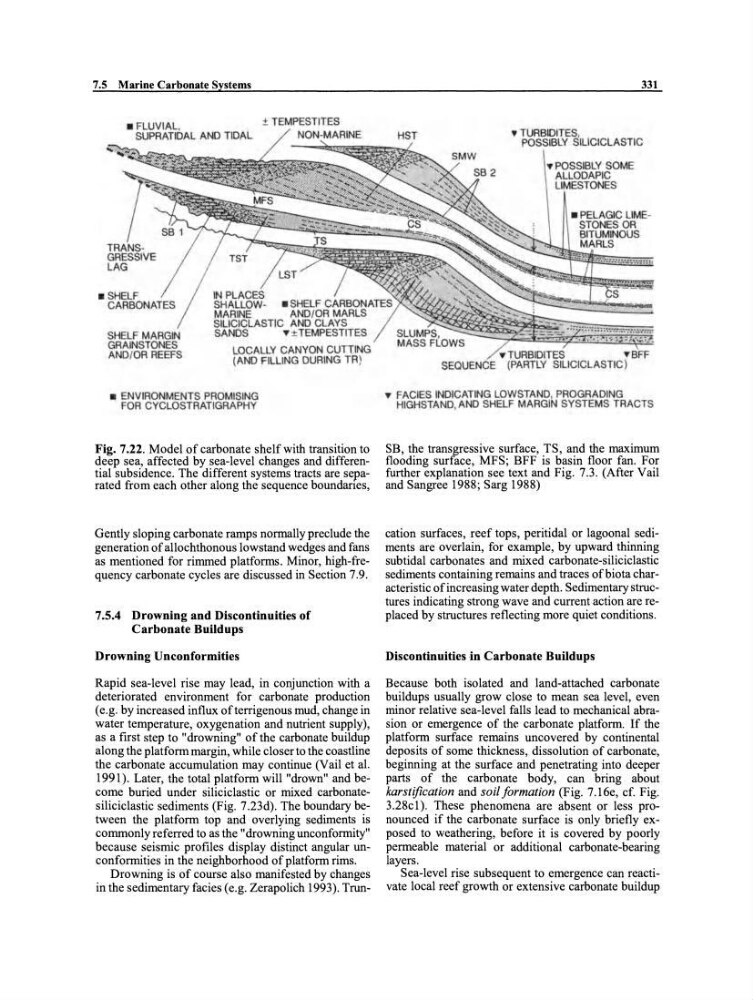
Fig. 7.22. Model of carbonate shelf with transition to
deep sea, affected by sea-level changes and differential subsidence. The different systems tracts are separated from each other along the sequence boundaries,
Gently sloping carbonate ramps normally preclude the
generation of allochthonous lowstand wedges and fans
as mentioned for rimmed platforms. Minor, high-frequency carbonate cycles are discussed in Section 7.9.
7.5.4 Drowning and Discontinuities of
Carbonate Buildups
Drowning Unconformities
Rapid sea-level rise may lead, in conjunction with a
deteriorated environment for carbonate production
(e.g. by increased influx ofterrigenous mud, change in
water temperature, oxygenation and nutrient supply),
as a first step to "drowning" ofthe carbonate buildup
along the platform margin, while closer to the coastline
the carbonate accumulation may continue (Vail et al.
1991). Later, the total platform will "drown" and become buried under siliciclastic or mixed carbonatesiliciclastic sediments (Fig. 7.23d). The boundary between the platform top and overlying sediments is
commonly referred to as the "drowning unconformity"
because seismic profiles display distinct angular unconforrnities in the neighborhood of platform rims.
Drowning is of course also manifested by changes
in the sedimentary facies (e.g. Zerapolich 1993). TrunSEQU
331
• TURBIDITES,
POSSIBLY SILICICLASTIC
POSSIBLY SOME
ALLOOAPIC
LIMESTONES
• PELAGIC L1MESTONES OA
BITUMINOUS
MARLS
• TUABIDITES
• BFF
E (PAATLY SILICICLASTIC)
• FACIES INDICATING LOWSTANO, PAOGRADING
HIGHSTAND, AND SHELF MARGIN SYSTEMS TRACTS
SB, the transgressive surface, TS, and the maximum
flooding surface, MFS; BFF is basin floor fan. For
further explanation see text and Fig. 7.3. (After Vail
and Sangree 1988; Sarg 1988)
cation surfaces, reef tops, peritidal or lagoonal sediments are overlain, for example, by upward thinning
subtidal carbonates and mixed carbonate-siliciclastic
sediments containing remains and traces ofbiota characteristic of increasing water depth. Sedimentary structures indicating strong wave and current action are replaced by structures reflecting more quiet conditions.
Discontinuities in Carbonate Buildups
Because both isolated and land-attached carbonate
buildups usually grow close to mean sea level, even
minor relative sea-level falls lead to mechanical abrasion or emergence of the carbonate platform. If the
platform surface remains uncovered by continental
deposits of some thickness, dissolution of carbonate,
beginning at the surface and penetrating into deeper
parts of the carbonate body, can bring about
karstification and soil formation (Fig. 7.16e, cf. Fig.
3.28c1). These phenomena are absent or less pronounced if the carbonate surface is only briefly exposed to weathering, before it is covered by poorly
permeable material or additional carbonate-bearing
layers.
Sea-Ievel rise subsequent to emergence can reactivate local reef growth or extensive carbonate buildup
• FLUVIAL,
SUPRATIDAL AND TIDAL
± TEMPESTITES
NON-MARINE
SHELF MARGIN
GRAINSTONES
AND/OR REEFS
IN PLACES
SHALLOWMARINE
AND/OR MARLS
SILICICLASTIC AND CLAYS
SANDS
.: ! : TEMPESTITES
LOCALLY CANYON CUTlING
(AND FILLING OURING TR}
• ENVIRONMENTS PROMISING
FOR CYCLOSTRATIGRAPHY
Fig. 7.22. Model of carbonate shelf with transition to
deep sea, affected by sea-level changes and differential subsidence. The different systems tracts are separated from each other along the sequence boundaries,
Gently sloping carbonate ramps normally preclude the
generation of allochthonous lowstand wedges and fans
as mentioned for rimmed platforms. Minor, high-frequency carbonate cycles are discussed in Section 7.9.
7.5.4 Drowning and Discontinuities of
Carbonate Buildups
Drowning Unconformities
Rapid sea-level rise may lead, in conjunction with a
deteriorated environment for carbonate production
(e.g. by increased influx ofterrigenous mud, change in
water temperature, oxygenation and nutrient supply),
as a first step to "drowning" ofthe carbonate buildup
along the platform margin, while closer to the coastline
the carbonate accumulation may continue (Vail et al.
1991). Later, the total platform will "drown" and become buried under siliciclastic or mixed carbonatesiliciclastic sediments (Fig. 7.23d). The boundary between the platform top and overlying sediments is
commonly referred to as the "drowning unconformity"
because seismic profiles display distinct angular unconforrnities in the neighborhood of platform rims.
Drowning is of course also manifested by changes
in the sedimentary facies (e.g. Zerapolich 1993). TrunSEQU
331
• TURBIDITES,
POSSIBLY SILICICLASTIC
POSSIBLY SOME
ALLOOAPIC
LIMESTONES
• PELAGIC L1MESTONES OA
BITUMINOUS
MARLS
• TUABIDITES
• BFF
E (PAATLY SILICICLASTIC)
• FACIES INDICATING LOWSTANO, PAOGRADING
HIGHSTAND, AND SHELF MARGIN SYSTEMS TRACTS
SB, the transgressive surface, TS, and the maximum
flooding surface, MFS; BFF is basin floor fan. For
further explanation see text and Fig. 7.3. (After Vail
and Sangree 1988; Sarg 1988)
cation surfaces, reef tops, peritidal or lagoonal sediments are overlain, for example, by upward thinning
subtidal carbonates and mixed carbonate-siliciclastic
sediments containing remains and traces ofbiota characteristic of increasing water depth. Sedimentary structures indicating strong wave and current action are replaced by structures reflecting more quiet conditions.
Discontinuities in Carbonate Buildups
Because both isolated and land-attached carbonate
buildups usually grow close to mean sea level, even
minor relative sea-level falls lead to mechanical abrasion or emergence of the carbonate platform. If the
platform surface remains uncovered by continental
deposits of some thickness, dissolution of carbonate,
beginning at the surface and penetrating into deeper
parts of the carbonate body, can bring about
karstification and soil formation (Fig. 7.16e, cf. Fig.
3.28c1). These phenomena are absent or less pronounced if the carbonate surface is only briefly exposed to weathering, before it is covered by poorly
permeable material or additional carbonate-bearing
layers.
Sea-Ievel rise subsequent to emergence can reactivate local reef growth or extensive carbonate buildup