

118
TYPES OF ALGAL STRUCTURES
(STROMATOLlTES)
Chapter 3 Coastal and Shallow Sea Sediments
SUPRATIDAL SAL T FLA T
(SABKHA)
DESERT
(s . g., SAND DUNES)
A
B
columnar
knolle
c
o
smooth
pustular
INTERTIDAL
ALGAL
FLAT
@) oncOid lE l
LAGOONAL
CARBONATE
wlth 9aeor
keave vugs crinkled
----=--- ~~
PROTECTED
BAY OR
LAGOON
",. /
. /
. /
LARGE GYPSUM
BEACH SAND,
CRYSTALS
..... ~ •• , " ' ' ' . f<.
.. ~ __ .. ~..:=._ ...... "
-/ OOIDS . _ :
_ ', _=. ,-:
... :~ .... '4t~- '..
S
,'''::-:'.-: -_' .ALGAL PE AT
,-:.::::~:"::=
.• MALL _o.o:~..: ___ .'
:?-?! 0" ' SHELLS, " ~''' ...... \\ ,~ ,'
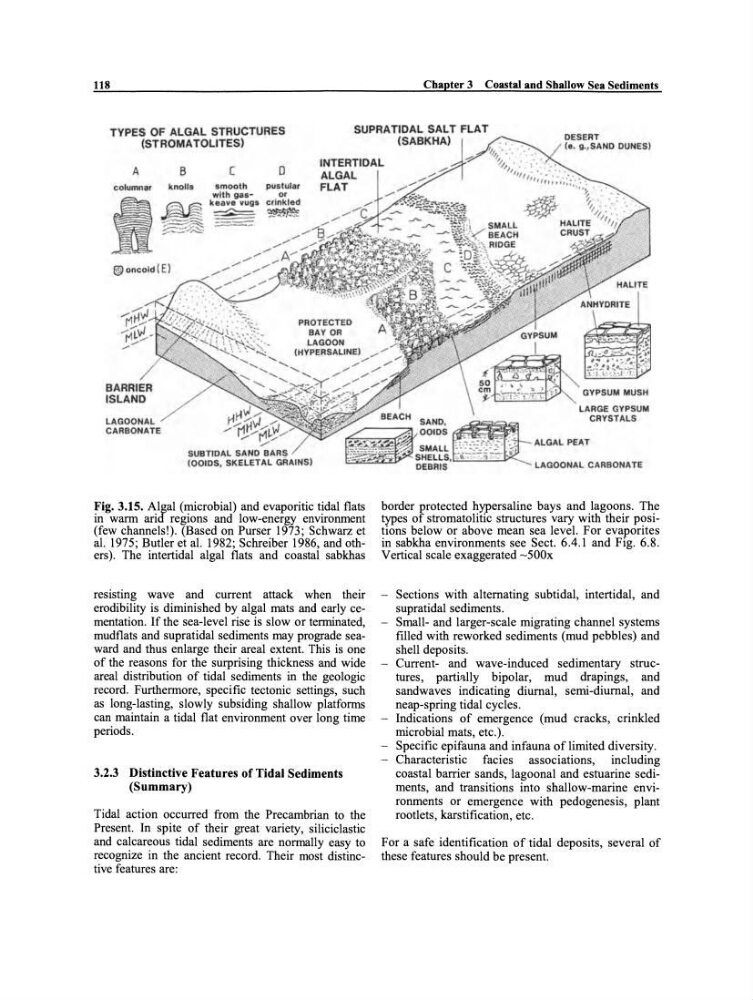
Fig. 3.15. Algal (microbial) and evaporitic tidal flats
in warm arid regions and low-energy environment
(few channels!). (Based on Purser 1973; Schwarz et
al. 1975; Butler et al. 1982; Schreiber 1986, and others). The intertidal algal flats and coastal sabkhas
reslstmg wave and current attack when their
erodibility is diminished by algal mats and early cementation. If the sea-level rise is slow or terrninated,
mudflats and supratidal sediments may prograde seaward and thus enlarge their areal extent. This is one
of the reasons for the surprising thickness and wide
areal distribution of tidal sediments in the geologic
record. Furthermore, specific tectonic settings, such
as long-Iasting, slowly subsiding shallow platforms
can maintain a tidal flat environment over long time
periods.
3.2.3 Distinctive Features of Tidal Sediments
(Summary)
Tidal action occurred from the Precambrian to the
Present. In spite of their great variety, silicic1astic
and calcareous tidal sediments are normally easy to
recognize in the ancient record. Their most distinctive features are:
DEBRIS
LAGOONAL CARBONATE
border protected hypersaline bays and lagoons. The
types of stromatolitic structures vary with their positions below or above mean sea level. For evaporites
in sabkha environments see Sect. 6.4.1 and Fig. 6.8.
Vertical scale exaggerated ~500x
Sections with alternating subtidal, intertidal, and
supratidal sediments.
- Small- and larger-scale migrating channel systems
filled with reworked sediments (mud pebbles) and
shell deposits.
- Current- and wave-induced sedimentary structures, partilllly bipolar, mud drapings, and
sandwaves indicating diurnal, semi-diurnal, and
neap-spring tidal cyc1es.
- Indications of emergence (mud cracks, crinkled
microbial mats, etc.).
- Specific epifauna and infauna of limited diversity.
Characteristic facies aSSOCIatlOns, inc1uding
coastal barrier sands, lagoonal and estuarine sediments, and transitions into shallow-marine environments or emergence with pedogenesis, plant
rootlets, karstification, etc.
For a safe identification of tidal deposits, several of
these features should be present.
TYPES OF ALGAL STRUCTURES
(STROMATOLlTES)
Chapter 3 Coastal and Shallow Sea Sediments
SUPRATIDAL SAL T FLA T
(SABKHA)
DESERT
(s . g., SAND DUNES)
A
B
columnar
knolle
c
o
smooth
pustular
INTERTIDAL
ALGAL
FLAT
@) oncOid lE l
LAGOONAL
CARBONATE
wlth 9aeor
keave vugs crinkled
----=--- ~~
PROTECTED
BAY OR
LAGOON
",. /
. /
. /
LARGE GYPSUM
BEACH SAND,
CRYSTALS
..... ~ •• , " ' ' ' . f<.
.. ~ __ .. ~..:=._ ...... "
-/ OOIDS . _ :
_ ', _=. ,-:
... :~ .... '4t~- '..
S
,'''::-:'.-: -_' .ALGAL PE AT
,-:.::::~:"::=
.• MALL _o.o:~..: ___ .'
:?-?! 0" ' SHELLS, " ~''' ...... \\ ,~ ,'
Fig. 3.15. Algal (microbial) and evaporitic tidal flats
in warm arid regions and low-energy environment
(few channels!). (Based on Purser 1973; Schwarz et
al. 1975; Butler et al. 1982; Schreiber 1986, and others). The intertidal algal flats and coastal sabkhas
reslstmg wave and current attack when their
erodibility is diminished by algal mats and early cementation. If the sea-level rise is slow or terrninated,
mudflats and supratidal sediments may prograde seaward and thus enlarge their areal extent. This is one
of the reasons for the surprising thickness and wide
areal distribution of tidal sediments in the geologic
record. Furthermore, specific tectonic settings, such
as long-Iasting, slowly subsiding shallow platforms
can maintain a tidal flat environment over long time
periods.
3.2.3 Distinctive Features of Tidal Sediments
(Summary)
Tidal action occurred from the Precambrian to the
Present. In spite of their great variety, silicic1astic
and calcareous tidal sediments are normally easy to
recognize in the ancient record. Their most distinctive features are:
DEBRIS
LAGOONAL CARBONATE
border protected hypersaline bays and lagoons. The
types of stromatolitic structures vary with their positions below or above mean sea level. For evaporites
in sabkha environments see Sect. 6.4.1 and Fig. 6.8.
Vertical scale exaggerated ~500x
Sections with alternating subtidal, intertidal, and
supratidal sediments.
- Small- and larger-scale migrating channel systems
filled with reworked sediments (mud pebbles) and
shell deposits.
- Current- and wave-induced sedimentary structures, partilllly bipolar, mud drapings, and
sandwaves indicating diurnal, semi-diurnal, and
neap-spring tidal cyc1es.
- Indications of emergence (mud cracks, crinkled
microbial mats, etc.).
- Specific epifauna and infauna of limited diversity.
Characteristic facies aSSOCIatlOns, inc1uding
coastal barrier sands, lagoonal and estuarine sediments, and transitions into shallow-marine environments or emergence with pedogenesis, plant
rootlets, karstification, etc.
For a safe identification of tidal deposits, several of
these features should be present.