

116
SAND FLATS
WITH DIFFERENT
TYPES OF WAVE AND
CUR RENT RIPPLES
(PARTL Y SUPERIMPOSED)
LONGITUDINAL
CROSS-BEDDING
TRANSVERSE
CROSS-BEDDING ,
DISPLACED SHEllS,
MUO PEBBlES
SUBTIDAl CHANNELS
MIXED FLATS
(oandy mud.)
AND SAND RIDGES (SAND
WAVES) , MUD DRAPING
MUDFLATS
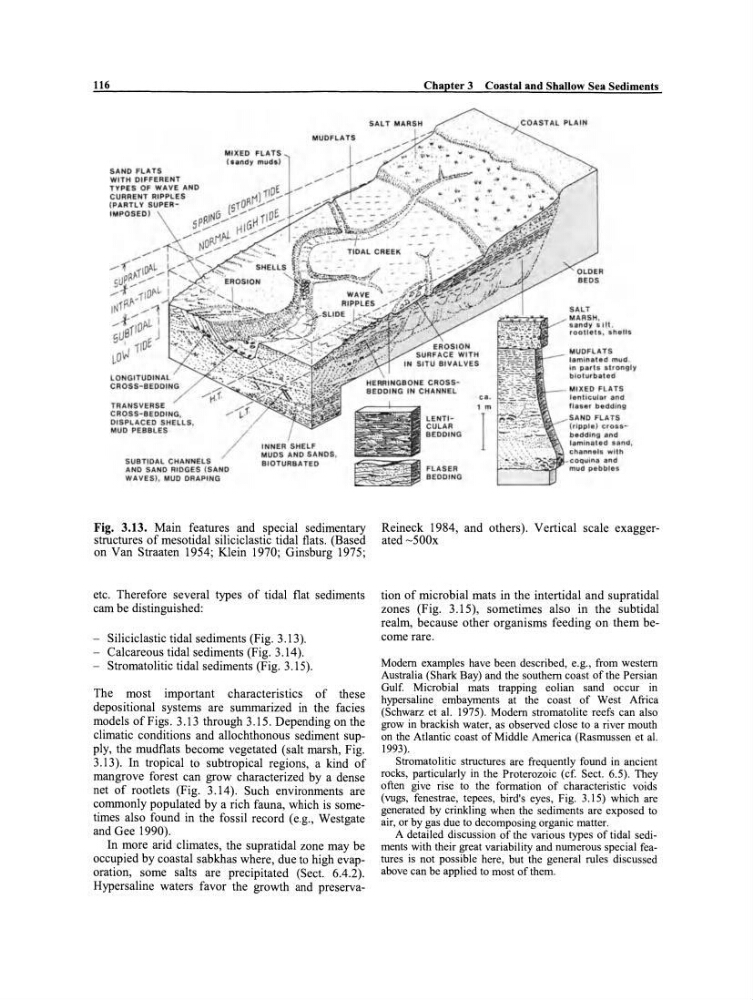
Fig. 3.13. Main features and special sedimentary
structures of mesotidal siliciclastic tidal flats. (Based
on Van Straaten 1954; Klein 1970; Ginsburg 1975;
etc. Therefore several types of tidal flat sediments
cam be distinguished:
Siliciclastic tidal sediments (Fig. 3.13).
Ca1careous tidal sediments (Fig. 3.14).
Stromatolitic tidal sediments (Fig. 3.15).
The most important characteristics of these
depositional systems are summarized in the facies
models ofFigs. 3.13 through 3.15. Depending on the
c1imatic conditions and allochthonous sediment supply, the mudflats become vegetated (salt marsh, Fig.
3.l3). In tropical to subtropical regions, a kind of
mangrove forest can grow characterized by a dense
net of rootlets (Fig. 3.14). Such environments are
commonly populated by a rich fauna, which is sometimes also found in the fossil record (e.g., Westgate
and Gee 1990).
In more arid c1imates, the supratidal zone may be
occupied by coastal sabkhas where, due to high evaporation, some salts are precipitated (Sect. 6.4.2).
Hypersaline waters favor the growth and preservaChapter 3 Coastal and Shallow Sea Sediments
MUDFlATS
laminated mud ,
in part s atrongly
b l oturb8ted
MIXED FlATS
Reineck 1984, and others). Vertical scale exaggerated ~500x
tion of microbial mats in the intertidal and supratidal
zones (Fig. 3.15), sometimes also in the subtidal
realm, because other organisms fee ding on them become rare.
Modem exarnples have been described, e.g., from western
Australia (Shark Bay) and the southern coast of the Persian
Gulf. Microbial mats trapping eolian sand occur in
hypersaline embayments at the co ast of West Africa
(Schwarz et al. 1975). Modem stromatolite reefs can also
grow in brackish water, as observed elose to a river mouth
on the Atlantic coast of Middle Arnerica (Rasmussen et al.
1993).
Stromatolitic structures are frequently found in ancient
rocks, particularly in the Proterozoic (cf. Sect. 6.5). They
often give rise to the formation of characteristic voids
(vugs, fenestrae, tepees, bird's eyes, Fig. 3.15) which are
generated by crinkling when the sediments are exposed to
air, or by gas due to decomposing organic matter.
A detailed discussion of the various types of tidal sediments with their great variability and numerous special features is not possible here, but the general rules discussed
above can be applied to most of them.
SAND FLATS
WITH DIFFERENT
TYPES OF WAVE AND
CUR RENT RIPPLES
(PARTL Y SUPERIMPOSED)
LONGITUDINAL
CROSS-BEDDING
TRANSVERSE
CROSS-BEDDING ,
DISPLACED SHEllS,
MUO PEBBlES
SUBTIDAl CHANNELS
MIXED FLATS
(oandy mud.)
AND SAND RIDGES (SAND
WAVES) , MUD DRAPING
MUDFLATS
Fig. 3.13. Main features and special sedimentary
structures of mesotidal siliciclastic tidal flats. (Based
on Van Straaten 1954; Klein 1970; Ginsburg 1975;
etc. Therefore several types of tidal flat sediments
cam be distinguished:
Siliciclastic tidal sediments (Fig. 3.13).
Ca1careous tidal sediments (Fig. 3.14).
Stromatolitic tidal sediments (Fig. 3.15).
The most important characteristics of these
depositional systems are summarized in the facies
models ofFigs. 3.13 through 3.15. Depending on the
c1imatic conditions and allochthonous sediment supply, the mudflats become vegetated (salt marsh, Fig.
3.l3). In tropical to subtropical regions, a kind of
mangrove forest can grow characterized by a dense
net of rootlets (Fig. 3.14). Such environments are
commonly populated by a rich fauna, which is sometimes also found in the fossil record (e.g., Westgate
and Gee 1990).
In more arid c1imates, the supratidal zone may be
occupied by coastal sabkhas where, due to high evaporation, some salts are precipitated (Sect. 6.4.2).
Hypersaline waters favor the growth and preservaChapter 3 Coastal and Shallow Sea Sediments
MUDFlATS
laminated mud ,
in part s atrongly
b l oturb8ted
MIXED FlATS
Reineck 1984, and others). Vertical scale exaggerated ~500x
tion of microbial mats in the intertidal and supratidal
zones (Fig. 3.15), sometimes also in the subtidal
realm, because other organisms fee ding on them become rare.
Modem exarnples have been described, e.g., from western
Australia (Shark Bay) and the southern coast of the Persian
Gulf. Microbial mats trapping eolian sand occur in
hypersaline embayments at the co ast of West Africa
(Schwarz et al. 1975). Modem stromatolite reefs can also
grow in brackish water, as observed elose to a river mouth
on the Atlantic coast of Middle Arnerica (Rasmussen et al.
1993).
Stromatolitic structures are frequently found in ancient
rocks, particularly in the Proterozoic (cf. Sect. 6.5). They
often give rise to the formation of characteristic voids
(vugs, fenestrae, tepees, bird's eyes, Fig. 3.15) which are
generated by crinkling when the sediments are exposed to
air, or by gas due to decomposing organic matter.
A detailed discussion of the various types of tidal sediments with their great variability and numerous special features is not possible here, but the general rules discussed
above can be applied to most of them.