

3.2 Tidal Flats
a
A DOMINANT CURRENT STAGE
~
~_~~GARIPPLE / SANI:
~AVE MIGRATION
_ _ _ _
- - -
. .... - I:.·I~.·:--:-"·~ ... : ·· --: ·,~,
B FIRST SLACK WATER STAGE
C SUBORDINATE CURRENT STAGE
-
~
. ~ JEACTIVATION SURFACE
~~. ~
--_.
. ..... _
.. ','._ " '.'
D SECOND SLACK WATER STAGE
115
c
A
M
B
E
c
SLOPE EXAGGERATED
d
LA TEST EBS CAP -
EBB
FLOOD
~-~~~i:i :i :i . . iI~~~~~~~~~~~~- ~~~~
-. - - - -- 1- -- - - - - - -
NEAP TID E
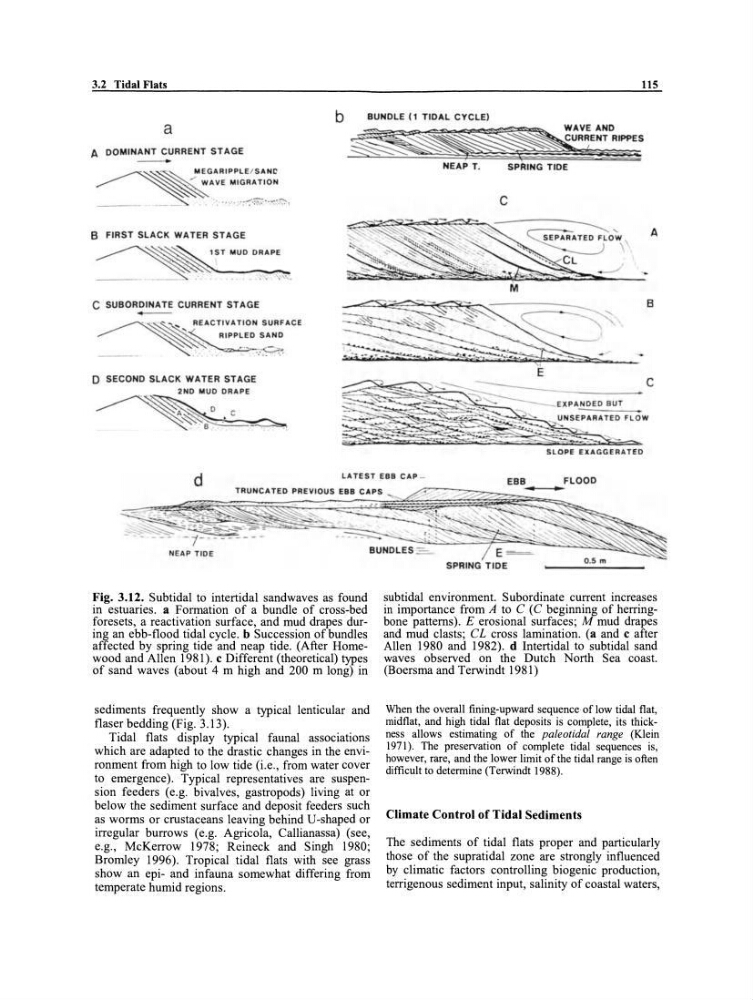
Fig. 3.12. Subtidal to intertidal sandwaves as found
in estuaries. a Formation of a bundle of cross-bed
foresets, a reactivation surface, and mud drapes during an ebb-flood tidal cyele. b Succession ofbundles
affected by spring tide and neap tide. (After Homewood and Allen 1981). c Different (theoretical) types
of sand waves (about 4 m high and 200 m long) in
sediments frequently show a typical lenticular and
flaser bedding (Fig. 3.13).
Tidal flats display typical faunal associations
which are adapted to the drastic changes in the environment from high to low tide (i.e., from water cover
to emergence). Typical representatives are suspension feeders (e.g. bivalves, gastropods) living at or
below the sediment surface and deposit feeders such
as worms or crustaceans leaving behind U -shaped or
irregular burrows (e.g. Agricola, Callianassa) (see,
e.g., McKerrow 1978; Rcineck and Singh 1980;
Brornley 1996). Tropical tidal flats with see grass
show an epi- and infauna somewhat differing from
temperate humid regions.
subtidal environment. Subordinate current increases
in importance from A to C (C beginning of herringbone patterns). E erosional surfaces; M mud drap es
and mud elasts; CL cross lamination. (a and c after
Allen 1980 and 1982). d Intertidal to subtidal sand
waves observed on the Dutch North Sea coast.
(Boersma and Terwindt 1981)
When the overall fining-upward sequence of low tidal flat,
midflat, and high tidal flat deposits is complete, its thickness allows estimating of the paleotidal range (Klein
1971). The preservation of complete tidal sequences is,
however, rare, and the lower limit of the tidal range is often
difficult to determine (Terwindt 1988).
Climate Control of Tidal Sediments
The sediments of tidal flats proper and particularly
those of the supratidal zone are strongly influenced
by elimatic factors controlling biogenic production,
terrigenous sediment input, salinity of coastal waters,
a
A DOMINANT CURRENT STAGE
~
~_~~GARIPPLE / SANI:
~AVE MIGRATION
_ _ _ _
- - -
. .... - I:.·I~.·:--:-"·~ ... : ·· --: ·,~,
B FIRST SLACK WATER STAGE
C SUBORDINATE CURRENT STAGE
-
~
. ~ JEACTIVATION SURFACE
~~. ~
--_.
. ..... _
.. ','._ " '.'
D SECOND SLACK WATER STAGE
115
c
A
M
B
E
c
SLOPE EXAGGERATED
d
LA TEST EBS CAP -
EBB
FLOOD
~-~~~i:i :i :i . . iI~~~~~~~~~~~~- ~~~~
-. - - - -- 1- -- - - - - - -
NEAP TID E
Fig. 3.12. Subtidal to intertidal sandwaves as found
in estuaries. a Formation of a bundle of cross-bed
foresets, a reactivation surface, and mud drapes during an ebb-flood tidal cyele. b Succession ofbundles
affected by spring tide and neap tide. (After Homewood and Allen 1981). c Different (theoretical) types
of sand waves (about 4 m high and 200 m long) in
sediments frequently show a typical lenticular and
flaser bedding (Fig. 3.13).
Tidal flats display typical faunal associations
which are adapted to the drastic changes in the environment from high to low tide (i.e., from water cover
to emergence). Typical representatives are suspension feeders (e.g. bivalves, gastropods) living at or
below the sediment surface and deposit feeders such
as worms or crustaceans leaving behind U -shaped or
irregular burrows (e.g. Agricola, Callianassa) (see,
e.g., McKerrow 1978; Rcineck and Singh 1980;
Brornley 1996). Tropical tidal flats with see grass
show an epi- and infauna somewhat differing from
temperate humid regions.
subtidal environment. Subordinate current increases
in importance from A to C (C beginning of herringbone patterns). E erosional surfaces; M mud drap es
and mud elasts; CL cross lamination. (a and c after
Allen 1980 and 1982). d Intertidal to subtidal sand
waves observed on the Dutch North Sea coast.
(Boersma and Terwindt 1981)
When the overall fining-upward sequence of low tidal flat,
midflat, and high tidal flat deposits is complete, its thickness allows estimating of the paleotidal range (Klein
1971). The preservation of complete tidal sequences is,
however, rare, and the lower limit of the tidal range is often
difficult to determine (Terwindt 1988).
Climate Control of Tidal Sediments
The sediments of tidal flats proper and particularly
those of the supratidal zone are strongly influenced
by elimatic factors controlling biogenic production,
terrigenous sediment input, salinity of coastal waters,