

104
Chapter 3 Coastal and Shallow Sea Sediments
a TEXAS
LOUISIANt\
r--......:.~~
SHALLOW
TO DISTAL
c
SHALLOW
( -10 m)
CROSS SECTION
-----~">,..
DEEPER (DISTAL)
(-20 m)
~~~=&==~~~~aMUD,
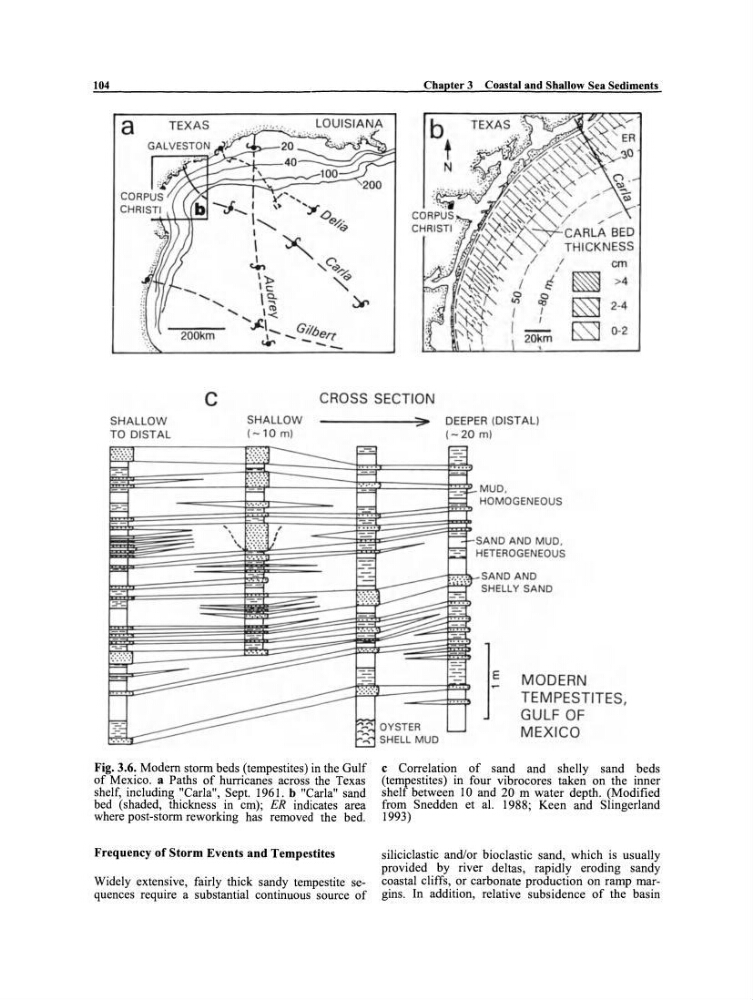
Fig. 3.6. Modem storm beds (tempestites) in the Gulf
of Mexico. a Paths of hurricanes across the Texas
shelf, including "Carla" , Sept. 1961. b "Carla" sand
bed (shaded, thickness in cm); ER indicates area
where post-storm reworking has removed the bed.
Frequency of Storm Events and Tempestites
Widely extensive, fairly thick sandy tempestite sequences require a substantia1 continuous source of
HOMOGENEOUS
SAND AND MUD.
HETEROGENEOUS
__ -=~~SAND AND
SHELLY SAND
]=
MODERN
TEMPESTITES,
GULF OF
MEXICO
c Correlation of sand and shelly sand beds
(tempestites) in four vibrocores taken on the inner
shelf between 10 and 20 m water depth. (Modified
from Snedden et a1. 1988; Keen and Slingerland
1993)
siliciclastic andJor bioclastic sand, which is usually
provided by river deltas, rapid1y eroding sandy
coastal cliffs, or carbonate production on ramp margins. In addition, relative subsidence of the basin
Chapter 3 Coastal and Shallow Sea Sediments
a TEXAS
LOUISIANt\
r--......:.~~
SHALLOW
TO DISTAL
c
SHALLOW
( -10 m)
CROSS SECTION
-----~">,..
DEEPER (DISTAL)
(-20 m)
~~~=&==~~~~aMUD,
Fig. 3.6. Modem storm beds (tempestites) in the Gulf
of Mexico. a Paths of hurricanes across the Texas
shelf, including "Carla" , Sept. 1961. b "Carla" sand
bed (shaded, thickness in cm); ER indicates area
where post-storm reworking has removed the bed.
Frequency of Storm Events and Tempestites
Widely extensive, fairly thick sandy tempestite sequences require a substantia1 continuous source of
HOMOGENEOUS
SAND AND MUD.
HETEROGENEOUS
__ -=~~SAND AND
SHELLY SAND
]=
MODERN
TEMPESTITES,
GULF OF
MEXICO
c Correlation of sand and shelly sand beds
(tempestites) in four vibrocores taken on the inner
shelf between 10 and 20 m water depth. (Modified
from Snedden et a1. 1988; Keen and Slingerland
1993)
siliciclastic andJor bioclastic sand, which is usually
provided by river deltas, rapid1y eroding sandy
coastal cliffs, or carbonate production on ramp margins. In addition, relative subsidence of the basin