

11 Towards an Integrated Approach in Environmental Planning:The Europipe Experience
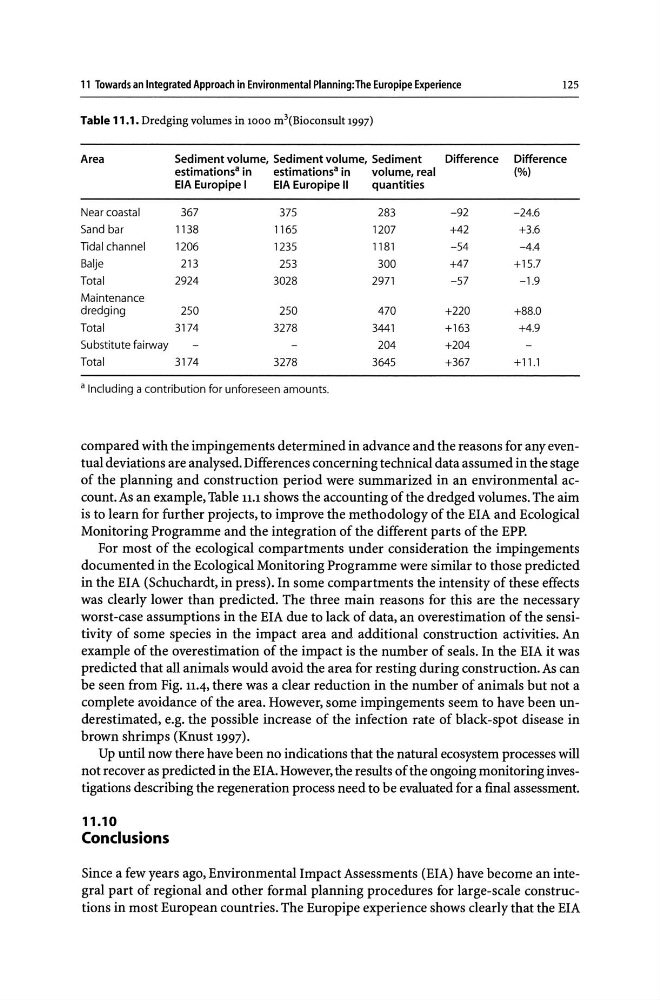
Table 11.1. Dredging volumes in 1000 rn 3 (Bioconsult 1997)
Area
Sediment volume, Sediment volume, Sediment
Difference
estimations· in
estimations· in
volume, real
EIA Europipe I
EIA Europipe II
quantities
Near coastal
367
375
283
-92
5and bar
1138
1165
1207
+42
TIdal channel
1206
1235
1181
-54
Balje
213
253
300
+47
Total
2924
3028
2971
-57
Maintenance
dredging
250
250
470
+220
Total
3174
3278
3441
+163
Substitute fairway
204
+204
Total
3174
3278
3645
+367
a Including a contribution for unforeseen amounts.
125
Difference
(%)
-24.6
+3.6
-4.4
+15.7
-1.9
+88.0
+4.9
+11.1
compared with the impingements determined in advance and the reasons for any eventual deviations are analysed. Differences concerning technical data assumed in the stage
of the planning and construction period were summarized in an environmental account. As an example, Table 11.1 shows the accounting of the dredged volumes. The aim
is to learn for further projects, to improve the methodology of the EIA and Ecological
Monitoring Programme and the integration of the different parts of the EPP.
For most of the ecological compartments under consideration the impingements
documented in the Ecological Monitoring Programme were similar to those predicted
in the EIA (Schuchardt, in press). In some compartments the intensity of these effects
was clearly lower than predicted. The three main reasons for this are the necessary
worst-case assumptions in the EIA due to lack of data, an overestimation of the sensitivity of some species in the impact area and additional construction activities. An
example of the overestimation of the impact is the number of seals. In the EIA it was
predicted that all animals would avoid the area for resting during construction. As can
be seen from Fig. 11.4, there was a clear reduction in the number of animals but not a
complete avoidance of the area. However, some impingements seem to have been underestimated, e.g. the possible increase of the infection rate of black-spot disease in
brown shrimps (Knust 1997).
Up until now there have been no indications that the natural ecosystem processes will
not recover as predicted in the EIA. However, the results of the ongoing monitoring investigations describing the regeneration process need to be evaluated for a final assessment.
11.10
Conclusions
Since a few years ago, Environmental Impact Assessments (EIA) have become an integral part of regional and other formal planning procedures for large-scale constructions in most European countries. The Europipe experience shows clearly that the EIA
Table 11.1. Dredging volumes in 1000 rn 3 (Bioconsult 1997)
Area
Sediment volume, Sediment volume, Sediment
Difference
estimations· in
estimations· in
volume, real
EIA Europipe I
EIA Europipe II
quantities
Near coastal
367
375
283
-92
5and bar
1138
1165
1207
+42
TIdal channel
1206
1235
1181
-54
Balje
213
253
300
+47
Total
2924
3028
2971
-57
Maintenance
dredging
250
250
470
+220
Total
3174
3278
3441
+163
Substitute fairway
204
+204
Total
3174
3278
3645
+367
a Including a contribution for unforeseen amounts.
125
Difference
(%)
-24.6
+3.6
-4.4
+15.7
-1.9
+88.0
+4.9
+11.1
compared with the impingements determined in advance and the reasons for any eventual deviations are analysed. Differences concerning technical data assumed in the stage
of the planning and construction period were summarized in an environmental account. As an example, Table 11.1 shows the accounting of the dredged volumes. The aim
is to learn for further projects, to improve the methodology of the EIA and Ecological
Monitoring Programme and the integration of the different parts of the EPP.
For most of the ecological compartments under consideration the impingements
documented in the Ecological Monitoring Programme were similar to those predicted
in the EIA (Schuchardt, in press). In some compartments the intensity of these effects
was clearly lower than predicted. The three main reasons for this are the necessary
worst-case assumptions in the EIA due to lack of data, an overestimation of the sensitivity of some species in the impact area and additional construction activities. An
example of the overestimation of the impact is the number of seals. In the EIA it was
predicted that all animals would avoid the area for resting during construction. As can
be seen from Fig. 11.4, there was a clear reduction in the number of animals but not a
complete avoidance of the area. However, some impingements seem to have been underestimated, e.g. the possible increase of the infection rate of black-spot disease in
brown shrimps (Knust 1997).
Up until now there have been no indications that the natural ecosystem processes will
not recover as predicted in the EIA. However, the results of the ongoing monitoring investigations describing the regeneration process need to be evaluated for a final assessment.
11.10
Conclusions
Since a few years ago, Environmental Impact Assessments (EIA) have become an integral part of regional and other formal planning procedures for large-scale constructions in most European countries. The Europipe experience shows clearly that the EIA