

560
temperature forecast for August 19 in comparison to in situ data gathered
over the 3 days August 18-21 by a Webb Research coastal glider AUV that
traveled from the coast of Martha’s Vineyard due south 30 km to the site of
CBLAST mooring ‘A’ (Hutto et al. 2003). Adjacent to the south coast of
Martha’s Vineyard, at the left of the section, a ‘bowl’ of warm water is
portrayed in both forecast and observations. To the south, a sharp
thermocline at 10 to 15 m depth with a temperature difference of 8 to 10
o
C
is also forecast well. The intervening zone is characterized by a shallow
mixed layer overlaying a more diffusely stratified water column. A more
comprehensive validation, plus an investigation of the physical origins of the
observed spatial patterns, has been made for hind-casts of the 2002 field
season.
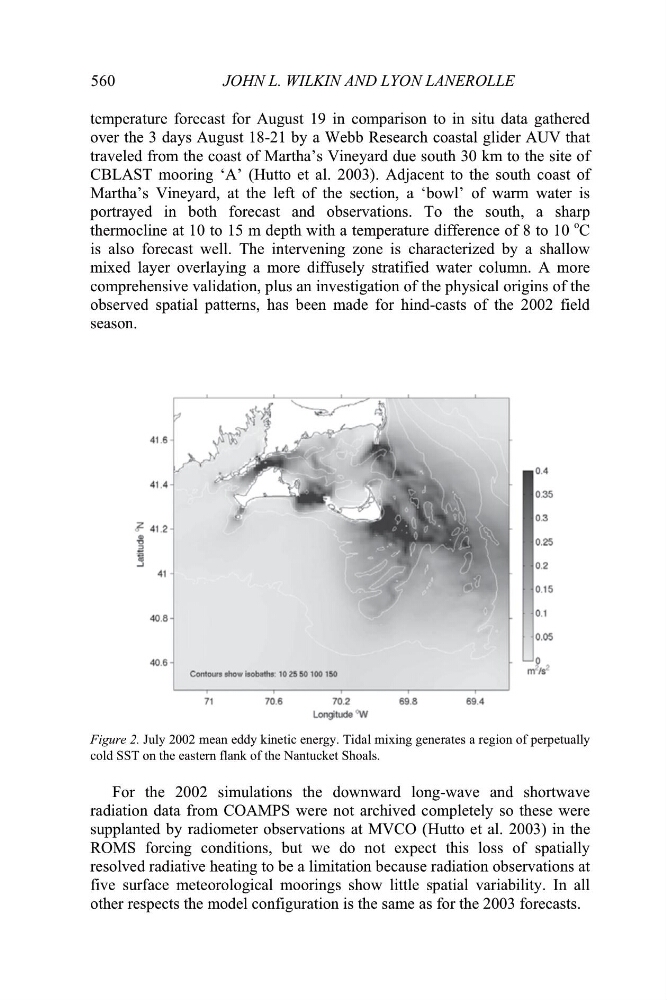
Figure 2. July 2002 mean eddy kinetic energy. Tidal mixing generates a region of perpetually
For the 2002 simulations the downward long-wave and shortwave
radiation data from COAMPS were not archived completely so these were
supplanted by radiometer observations at MVCO (Hutto et al. 2003) in the
ROMS forcing conditions, but we do not expect this loss of spatially
resolved radiative heating to be a limitation because radiation observations at
five surface meteorological moorings show little spatial variability. In all
other respects the model configuration is the same as for the 2003 forecasts.
cold SST on the eastern flank of the Nantucket Shoals.
JOHN L. WILKIN AND LYON LANEROLLE