

108
4 2.5D Vertical Slice Modelling
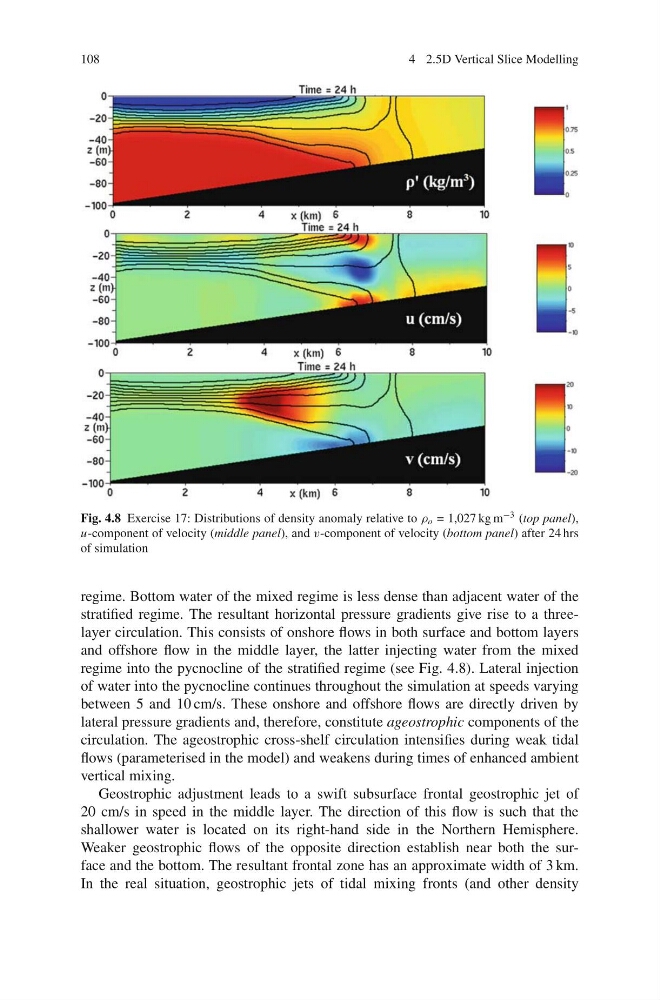
Fig. 4.8 Exercise 17: Distributions of density anomaly relative to ρ o = 1,027 kg m
−3 (top panel),
u-component of velocity (middle panel), and v-component of velocity (bottom panel) after 24 hrs
of simulation
regime. Bottom water of the mixed regime is less dense than adjacent water of the
stratified regime. The resultant horizontal pressure gradients give rise to a threelayer circulation. This consists of onshore flows in both surface and bottom layers
and offshore flow in the middle layer, the latter injecting water from the mixed
regime into the pycnocline of the stratified regime (see Fig. 4.8). Lateral injection
of water into the pycnocline continues throughout the simulation at speeds varying
between 5 and 10 cm/s. These onshore and offshore flows are directly driven by
lateral pressure gradients and, therefore, constitute ageostrophic components of the
circulation. The ageostrophic cross-shelf circulation intensifies during weak tidal
flows (parameterised in the model) and weakens during times of enhanced ambient
vertical mixing.
Geostrophic adjustment leads to a swift subsurface frontal geostrophic jet of
20 cm/s in speed in the middle layer. The direction of this flow is such that the
shallower water is located on its right-hand side in the Northern Hemisphere.
Weaker geostrophic flows of the opposite direction establish near both the surface and the bottom. The resultant frontal zone has an approximate width of 3 km.
In the real situation, geostrophic jets of tidal mixing fronts (and other density
4 2.5D Vertical Slice Modelling
Fig. 4.8 Exercise 17: Distributions of density anomaly relative to ρ o = 1,027 kg m
−3 (top panel),
u-component of velocity (middle panel), and v-component of velocity (bottom panel) after 24 hrs
of simulation
regime. Bottom water of the mixed regime is less dense than adjacent water of the
stratified regime. The resultant horizontal pressure gradients give rise to a threelayer circulation. This consists of onshore flows in both surface and bottom layers
and offshore flow in the middle layer, the latter injecting water from the mixed
regime into the pycnocline of the stratified regime (see Fig. 4.8). Lateral injection
of water into the pycnocline continues throughout the simulation at speeds varying
between 5 and 10 cm/s. These onshore and offshore flows are directly driven by
lateral pressure gradients and, therefore, constitute ageostrophic components of the
circulation. The ageostrophic cross-shelf circulation intensifies during weak tidal
flows (parameterised in the model) and weakens during times of enhanced ambient
vertical mixing.
Geostrophic adjustment leads to a swift subsurface frontal geostrophic jet of
20 cm/s in speed in the middle layer. The direction of this flow is such that the
shallower water is located on its right-hand side in the Northern Hemisphere.
Weaker geostrophic flows of the opposite direction establish near both the surface and the bottom. The resultant frontal zone has an approximate width of 3 km.
In the real situation, geostrophic jets of tidal mixing fronts (and other density