

4.3 Exercise 17: Tidal-Mixing Fronts
107
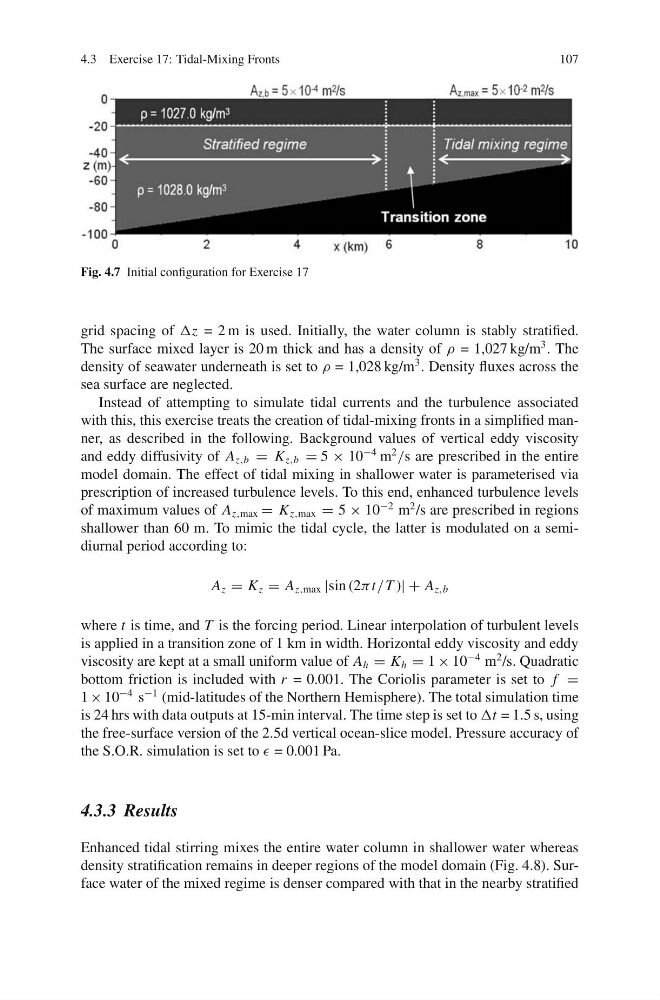
Fig. 4.7 Initial configuration for Exercise 17
grid spacing of Δz = 2 m is used. Initially, the water column is stably stratified.
The surface mixed layer is 20 m thick and has a density of ρ = 1,027 kg/m
3 . The
density of seawater underneath is set to ρ = 1,028 kg/m
3 . Density fluxes across the
sea surface are neglected.
Instead of attempting to simulate tidal currents and the turbulence associated
with this, this exercise treats the creation of tidal-mixing fronts in a simplified manner, as described in the following. Background values of vertical eddy viscosity
and eddy diffusivity of A z,b = K z,b = 5 × 10
−4 m
2
/s are prescribed in the entire
model domain. The effect of tidal mixing in shallower water is parameterised via
prescription of increased turbulence levels. To this end, enhanced turbulence levels
of maximum values of A z,max = K z,max = 5 × 10
−2 m
2 /s are prescribed in regions
shallower than 60 m. To mimic the tidal cycle, the latter is modulated on a semidiurnal period according to:
A z = K z = A z,max |sin (2πt/T )| + A z,b
where t is time, and T is the forcing period. Linear interpolation of turbulent levels
is applied in a transition zone of 1 km in width. Horizontal eddy viscosity and eddy
viscosity are kept at a small uniform value of A h = K h = 1 × 10
−4 m
2 /s. Quadratic
bottom friction is included with r = 0.001. The Coriolis parameter is set to f =
1 × 10
−4 s
−1 (mid-latitudes of the Northern Hemisphere). The total simulation time
is 24 hrs with data outputs at 15-min interval. The time step is set to Δt = 1.5 s, using
the free-surface version of the 2.5d vertical ocean-slice model. Pressure accuracy of
the S.O.R. simulation is set to = 0.001 Pa.
4.3.3 Results
Enhanced tidal stirring mixes the entire water column in shallower water whereas
density stratification remains in deeper regions of the model domain (Fig. 4.8). Surface water of the mixed regime is denser compared with that in the nearby stratified
107
Fig. 4.7 Initial configuration for Exercise 17
grid spacing of Δz = 2 m is used. Initially, the water column is stably stratified.
The surface mixed layer is 20 m thick and has a density of ρ = 1,027 kg/m
3 . The
density of seawater underneath is set to ρ = 1,028 kg/m
3 . Density fluxes across the
sea surface are neglected.
Instead of attempting to simulate tidal currents and the turbulence associated
with this, this exercise treats the creation of tidal-mixing fronts in a simplified manner, as described in the following. Background values of vertical eddy viscosity
and eddy diffusivity of A z,b = K z,b = 5 × 10
−4 m
2
/s are prescribed in the entire
model domain. The effect of tidal mixing in shallower water is parameterised via
prescription of increased turbulence levels. To this end, enhanced turbulence levels
of maximum values of A z,max = K z,max = 5 × 10
−2 m
2 /s are prescribed in regions
shallower than 60 m. To mimic the tidal cycle, the latter is modulated on a semidiurnal period according to:
A z = K z = A z,max |sin (2πt/T )| + A z,b
where t is time, and T is the forcing period. Linear interpolation of turbulent levels
is applied in a transition zone of 1 km in width. Horizontal eddy viscosity and eddy
viscosity are kept at a small uniform value of A h = K h = 1 × 10
−4 m
2 /s. Quadratic
bottom friction is included with r = 0.001. The Coriolis parameter is set to f =
1 × 10
−4 s
−1 (mid-latitudes of the Northern Hemisphere). The total simulation time
is 24 hrs with data outputs at 15-min interval. The time step is set to Δt = 1.5 s, using
the free-surface version of the 2.5d vertical ocean-slice model. Pressure accuracy of
the S.O.R. simulation is set to = 0.001 Pa.
4.3.3 Results
Enhanced tidal stirring mixes the entire water column in shallower water whereas
density stratification remains in deeper regions of the model domain (Fig. 4.8). Surface water of the mixed regime is denser compared with that in the nearby stratified