

dolerite and amphibolites was recovered in a talus pile between 12h40 to 12h51 at
a depth of 5050–4985 m (Fig. 8.5). This debris was detached from outcrops that
were probably located higher up along the slope.
We continued our ascension and encountered near vertical scarps at 4974 m
depth. These scarps had parallel East–West oriented striations. It almost looked as
if a gigantic paw had scraped the surface of the rock. After having crossed several
scarps with talus at their feet, the lithology began to change as we continued on our
way up. At 13h23 at 4804 m, we reached a 50° steep slope of basaltic rock
fragments forming talus. The talus was a mixture of dolerite intrusive rocks and
abundantly altered pillow lava (sample sites GN01-11, -12).
Near a depth of 4790 m, there was a break in the slope marking a transition
between the peridotite and the volcanic rocks. This is where we observed a vertical
scarp and a small depression marking a faulted area, probably due to the forceful
intrusion of the peridotite body. At 13h38 we stopped our submersible on some
pillow lava in order to eat a bite of lunch.
We had confirmation of the observed faulting when we traveled further up on
the scarp. From the depths of 4804 m to about 4448 m, we encountered large talus
piles that had slumped down from the major outcrops along the slope. A major
tectonic event must have occurred in order to have fragmented and dislocated the
entire scarp. The fragmented material consisted of pillow lava and lobated flow
formations.
At 14h36, at a depth of 4598 m, we arrived at the foot of a vertical scarp. It was
then that we suddenly heard a noise above the submarine. When looking through
the porthole we saw rock debris rolling along the slope. We must have touched the
outcrop with the submersible and caused an avalanche of rocks, which started to
move along the wall. Max backed the Nautile away from the wall and continued to
ascend while keeping visual contact with the bottom.
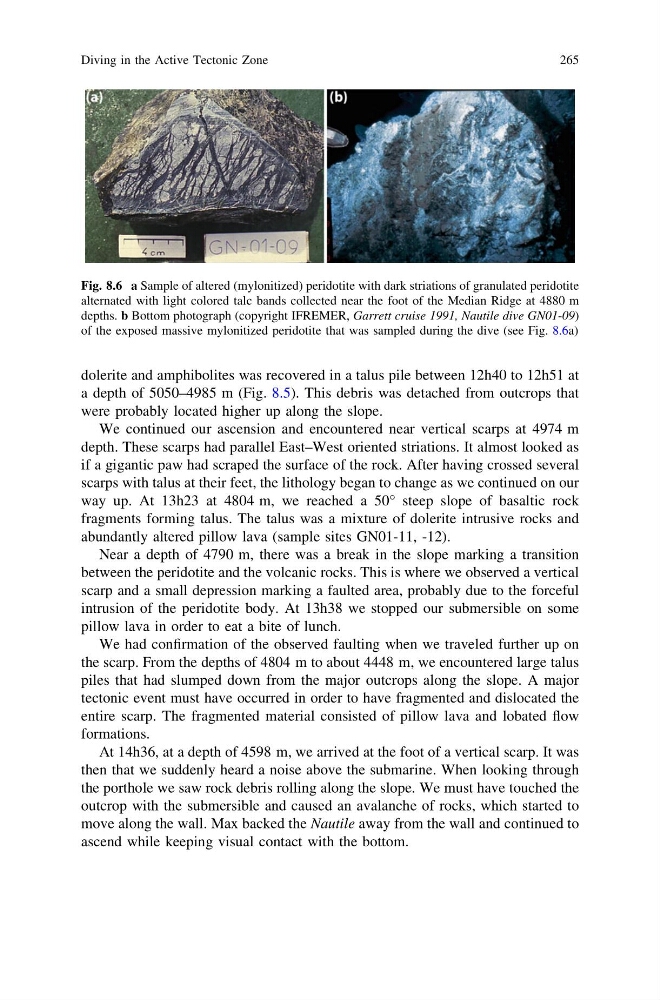
Fig. 8.6 a Sample of altered (mylonitized) peridotite with dark striations of granulated peridotite
alternated with light colored talc bands collected near the foot of the Median Ridge at 4880 m
depths. b Bottom photograph (copyright IFREMER, Garrett cruise 1991, Nautile dive GN01-09)
of the exposed massive mylonitized peridotite that was sampled during the dive (see Fig. 8.6a)
Diving in the Active Tectonic Zone
265
a depth of 5050–4985 m (Fig. 8.5). This debris was detached from outcrops that
were probably located higher up along the slope.
We continued our ascension and encountered near vertical scarps at 4974 m
depth. These scarps had parallel East–West oriented striations. It almost looked as
if a gigantic paw had scraped the surface of the rock. After having crossed several
scarps with talus at their feet, the lithology began to change as we continued on our
way up. At 13h23 at 4804 m, we reached a 50° steep slope of basaltic rock
fragments forming talus. The talus was a mixture of dolerite intrusive rocks and
abundantly altered pillow lava (sample sites GN01-11, -12).
Near a depth of 4790 m, there was a break in the slope marking a transition
between the peridotite and the volcanic rocks. This is where we observed a vertical
scarp and a small depression marking a faulted area, probably due to the forceful
intrusion of the peridotite body. At 13h38 we stopped our submersible on some
pillow lava in order to eat a bite of lunch.
We had confirmation of the observed faulting when we traveled further up on
the scarp. From the depths of 4804 m to about 4448 m, we encountered large talus
piles that had slumped down from the major outcrops along the slope. A major
tectonic event must have occurred in order to have fragmented and dislocated the
entire scarp. The fragmented material consisted of pillow lava and lobated flow
formations.
At 14h36, at a depth of 4598 m, we arrived at the foot of a vertical scarp. It was
then that we suddenly heard a noise above the submarine. When looking through
the porthole we saw rock debris rolling along the slope. We must have touched the
outcrop with the submersible and caused an avalanche of rocks, which started to
move along the wall. Max backed the Nautile away from the wall and continued to
ascend while keeping visual contact with the bottom.
Fig. 8.6 a Sample of altered (mylonitized) peridotite with dark striations of granulated peridotite
alternated with light colored talc bands collected near the foot of the Median Ridge at 4880 m
depths. b Bottom photograph (copyright IFREMER, Garrett cruise 1991, Nautile dive GN01-09)
of the exposed massive mylonitized peridotite that was sampled during the dive (see Fig. 8.6a)
Diving in the Active Tectonic Zone
265