

154
L.-L. Fu
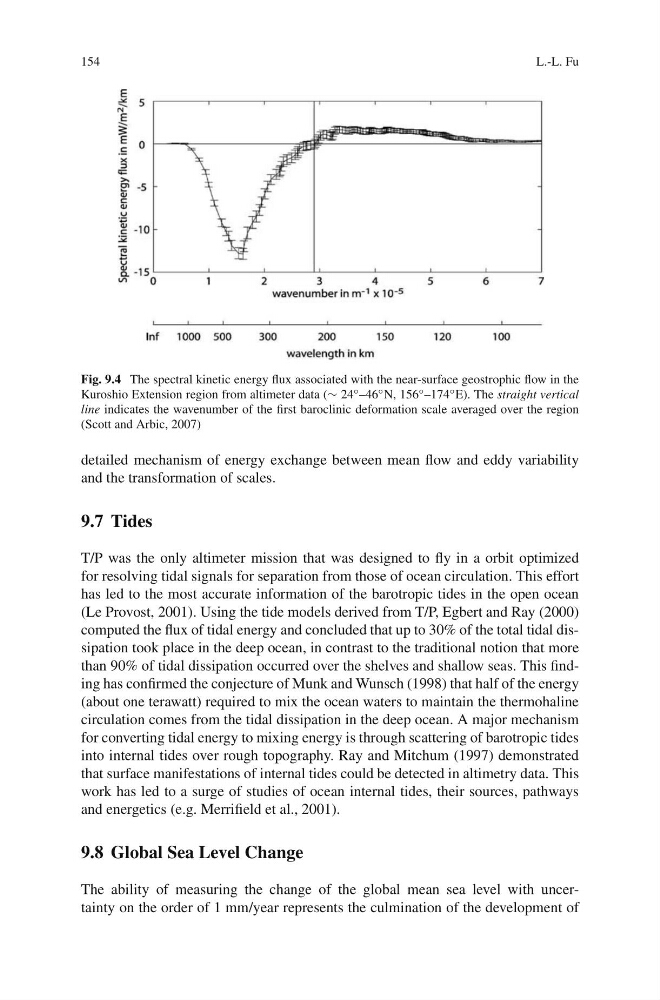
Fig. 9.4 The spectral kinetic energy flux associated with the near-surface geostrophic flow in the
Kuroshio Extension region from altimeter data (∼ 24 ◦ –46 ◦ N, 156 ◦ –174 ◦ E). The straight vertical
line indicates the wavenumber of the first baroclinic deformation scale averaged over the region
(Scott and Arbic, 2007)
detailed mechanism of energy exchange between mean flow and eddy variability
and the transformation of scales.
9.7 Tides
T/P was the only altimeter mission that was designed to fly in a orbit optimized
for resolving tidal signals for separation from those of ocean circulation. This effort
has led to the most accurate information of the barotropic tides in the open ocean
(Le Provost, 2001). Using the tide models derived from T/P, Egbert and Ray (2000)
computed the flux of tidal energy and concluded that up to 30% of the total tidal dissipation took place in the deep ocean, in contrast to the traditional notion that more
than 90% of tidal dissipation occurred over the shelves and shallow seas. This finding has confirmed the conjecture of Munk and Wunsch (1998) that half of the energy
(about one terawatt) required to mix the ocean waters to maintain the thermohaline
circulation comes from the tidal dissipation in the deep ocean. A major mechanism
for converting tidal energy to mixing energy is through scattering of barotropic tides
into internal tides over rough topography. Ray and Mitchum (1997) demonstrated
that surface manifestations of internal tides could be detected in altimetry data. This
work has led to a surge of studies of ocean internal tides, their sources, pathways
and energetics (e.g. Merrifield et al., 2001).
9.8 Global Sea Level Change
The ability of measuring the change of the global mean sea level with uncertainty on the order of 1 mm/year represents the culmination of the development of
L.-L. Fu
Fig. 9.4 The spectral kinetic energy flux associated with the near-surface geostrophic flow in the
Kuroshio Extension region from altimeter data (∼ 24 ◦ –46 ◦ N, 156 ◦ –174 ◦ E). The straight vertical
line indicates the wavenumber of the first baroclinic deformation scale averaged over the region
(Scott and Arbic, 2007)
detailed mechanism of energy exchange between mean flow and eddy variability
and the transformation of scales.
9.7 Tides
T/P was the only altimeter mission that was designed to fly in a orbit optimized
for resolving tidal signals for separation from those of ocean circulation. This effort
has led to the most accurate information of the barotropic tides in the open ocean
(Le Provost, 2001). Using the tide models derived from T/P, Egbert and Ray (2000)
computed the flux of tidal energy and concluded that up to 30% of the total tidal dissipation took place in the deep ocean, in contrast to the traditional notion that more
than 90% of tidal dissipation occurred over the shelves and shallow seas. This finding has confirmed the conjecture of Munk and Wunsch (1998) that half of the energy
(about one terawatt) required to mix the ocean waters to maintain the thermohaline
circulation comes from the tidal dissipation in the deep ocean. A major mechanism
for converting tidal energy to mixing energy is through scattering of barotropic tides
into internal tides over rough topography. Ray and Mitchum (1997) demonstrated
that surface manifestations of internal tides could be detected in altimetry data. This
work has led to a surge of studies of ocean internal tides, their sources, pathways
and energetics (e.g. Merrifield et al., 2001).
9.8 Global Sea Level Change
The ability of measuring the change of the global mean sea level with uncertainty on the order of 1 mm/year represents the culmination of the development of