

622
Land-Ocean Systems in the Siberian Arctic: Dynamics and History
this ecozone the Long branch of the Bering Sea current reached this region. In the overlying
sediments (Ecozone II) diatom assemblages are characterized by slight decrease of the total
diatom number (down 0,4 million valves/g) together with increasing abundance of the iceneritic and sea-ice species. Subsurface sediments include diatom assemblages accumulated
under modem sedimentation and hydrological conditions (Ecozone I).
To the west, in the region between the Chauna Bay and the Kolyma River mouth (Cores 80,
30, 70, 27, Figure 1) taxonomic composition of diatom assemblages and their quantitative
distribution in the sediments resemble those established in the south-eastern part of the sea.
region.
~
;I
' "
til
~
.,,' "
S
.,,:§
~
c~
.~
u
~'S'
~
::21
rS># #~
12
5
<:>
~
<:>
Cl
0
:::
e
s ~
.,s
",
"
~ '" 50
"
!;
u
>
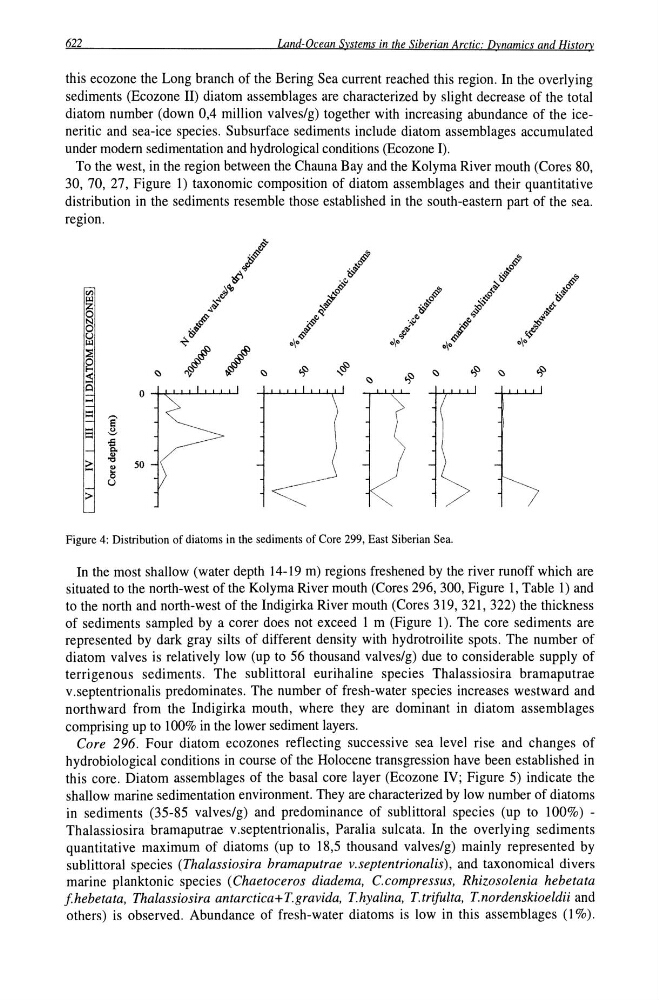
Figure 4: Distribution of diatoms in the sediments of Core 299, East Siberian Sea.
In the most shallow (water depth 14-19 m) regions freshened by the river runoff which are
situated to the north-west of the Kolyma River mouth (Cores 296, 300, Figure 1, Table 1) and
to the north and north-west of the Indigirka River mouth (Cores 319, 321, 322) the thickness
of sediments sampled by a corer does not exceed 1 m (Figure 1). The core sediments are
represented by dark gray silts of different density with hydrotroilite spots. The number of
diatom valves is relatively low (up to 56 thousand valves/g) due to considerable supply of
terrigenous sediments. The sublittoral eurihaline species Thalassiosira bramaputrae
v.septentrionalis predominates. The number of fresh-water species increases westward and
northward from the Indigirka mouth, where they are dominant in diatom assemblages
comprising up to 100% in the lower sediment layers.
Core 296. Four diatom ecozones reflecting successive sea level rise and changes of
hydrobiological conditions in course of the Holocene transgression have been established in
this core. Diatom assemblages of the basal core layer (Ecozone IV; Figure 5) indicate the
shallow marine sedimentation environment. They are characterized by low number of diatoms
in sediments (35-85 valves/g) and predominance of sublittoral species (up to 100%) -
Thalassiosira bramaputrae v.septentrionalis, Paralia su1cata. In the overlying sediments
quantitative maximum of diatoms (up to 18,5 thousand valves/g) mainly represented by
sublittoral species (Thalassiosira bramaputrae v.septentrionalis), and taxonomical divers
marine planktonic species (Chaetoceros diadema, c'compressus, Rhizosolenia hebetata
Jhebetata, Thalassiosira antarctica+ Tgravida, T.hyalina, Ttrifulta, Tnordenskioeldii and
others) is observed. Abundance of fresh-water diatoms is low in this assemblages (l %).
Land-Ocean Systems in the Siberian Arctic: Dynamics and History
this ecozone the Long branch of the Bering Sea current reached this region. In the overlying
sediments (Ecozone II) diatom assemblages are characterized by slight decrease of the total
diatom number (down 0,4 million valves/g) together with increasing abundance of the iceneritic and sea-ice species. Subsurface sediments include diatom assemblages accumulated
under modem sedimentation and hydrological conditions (Ecozone I).
To the west, in the region between the Chauna Bay and the Kolyma River mouth (Cores 80,
30, 70, 27, Figure 1) taxonomic composition of diatom assemblages and their quantitative
distribution in the sediments resemble those established in the south-eastern part of the sea.
region.
~
;I
' "
til
~
.,,' "
S
.,,:§
~
c~
.~
u
~'S'
~
::21
rS># #~
12
5
<:>
~
<:>
Cl
0
:::
e
s ~
.,s
",
"
~ '" 50
"
!;
u
>
Figure 4: Distribution of diatoms in the sediments of Core 299, East Siberian Sea.
In the most shallow (water depth 14-19 m) regions freshened by the river runoff which are
situated to the north-west of the Kolyma River mouth (Cores 296, 300, Figure 1, Table 1) and
to the north and north-west of the Indigirka River mouth (Cores 319, 321, 322) the thickness
of sediments sampled by a corer does not exceed 1 m (Figure 1). The core sediments are
represented by dark gray silts of different density with hydrotroilite spots. The number of
diatom valves is relatively low (up to 56 thousand valves/g) due to considerable supply of
terrigenous sediments. The sublittoral eurihaline species Thalassiosira bramaputrae
v.septentrionalis predominates. The number of fresh-water species increases westward and
northward from the Indigirka mouth, where they are dominant in diatom assemblages
comprising up to 100% in the lower sediment layers.
Core 296. Four diatom ecozones reflecting successive sea level rise and changes of
hydrobiological conditions in course of the Holocene transgression have been established in
this core. Diatom assemblages of the basal core layer (Ecozone IV; Figure 5) indicate the
shallow marine sedimentation environment. They are characterized by low number of diatoms
in sediments (35-85 valves/g) and predominance of sublittoral species (up to 100%) -
Thalassiosira bramaputrae v.septentrionalis, Paralia su1cata. In the overlying sediments
quantitative maximum of diatoms (up to 18,5 thousand valves/g) mainly represented by
sublittoral species (Thalassiosira bramaputrae v.septentrionalis), and taxonomical divers
marine planktonic species (Chaetoceros diadema, c'compressus, Rhizosolenia hebetata
Jhebetata, Thalassiosira antarctica+ Tgravida, T.hyalina, Ttrifulta, Tnordenskioeldii and
others) is observed. Abundance of fresh-water diatoms is low in this assemblages (l %).