

K unz-Pirrung: Distribution of Aquatic Palynomorphs in Suiface Sediments
569
80·
80· N
70·N ~=======_-+ ______ t--_...L _ _ _ ....-2....~ _ _ _ -t-l
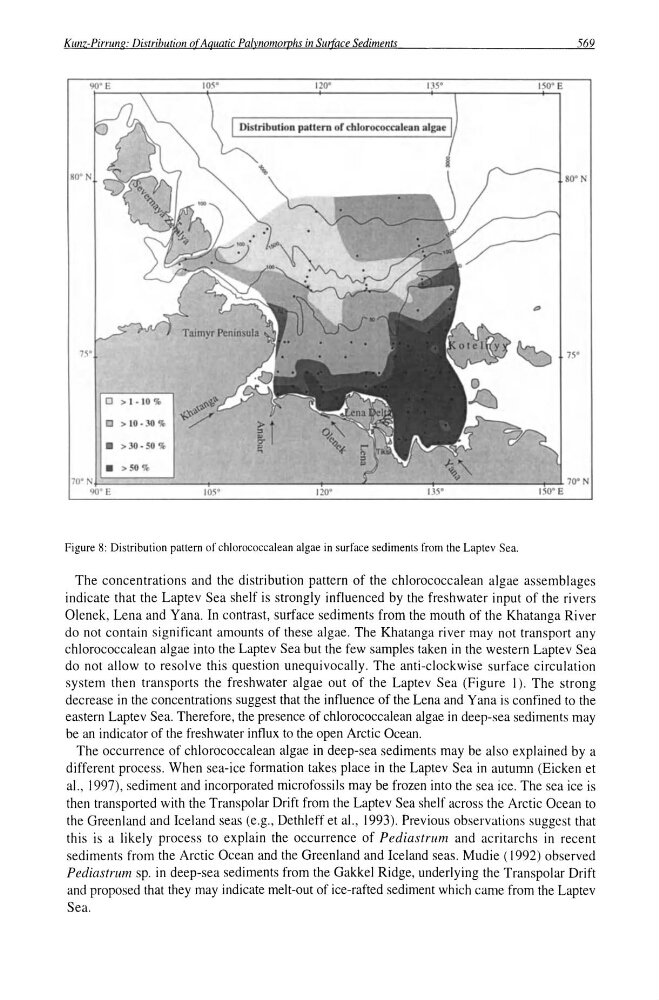
Figure 8: Distribution pattern of chlorococcalean algae in surface sediments from the Laptev Sea.
The concentrations and the distribution pattern of the chlorococcalean algae assemblages
indicate that the Laptev Sea shelf is strongly influenced by the freshwater input of the rivers
Olenek, Lena and Yana. In contrast, surface sediments from the mouth of the Khatanga River
do not contain significant amounts of these algae. The Khatanga river may not transport any
chlorococcalean algae into the Laptev Sea but the few samples taken in the western Laptev Sea
do not allow to resolve this question unequivocally. The anti-clockwise surface circulation
system then transports the freshwater algae out of the Laptev Sea (Figure I). The strong
decrease in the concentrations suggest that the influence of the Lena and Yana is confined to the
eastern Laptev Sea. Therefore, the presence of chlorococcalean algae in deep-sea sediments may
be an indicator of the freshwater influx to the open Arctic Ocean.
The occurrence of chlorococcalean algae in deep-sea sediments may be also explained by a
different process. When sea-ice formation takes place in the Laptev Sea in autumn (Eicken et
aI., 1997), sediment and incorporated microfossils may be frozen into the sea ice. The sea ice is
then transported with the Transpolar Drift from the Laptev Sea shelf across the Arctic Ocean to
the Greenland and Iceland seas (e.g., Dethleff et aI., 1993). Previous observations suggest that
this is a likely process to explain the occurrence of Pediastrum and acritarchs in recent
sediments from the Arctic Ocean and the Greenland and Iceland seas. Mudie ( 1992) observed
Pediastrum sp. in deep-sea sediments from the Gakkel Ridge, underlying the Transpolar Drift
and proposed that they may indicate melt-out of ice-rafted sediment which came from the Laptev
Sea.
569
80·
80· N
70·N ~=======_-+ ______ t--_...L _ _ _ ....-2....~ _ _ _ -t-l
Figure 8: Distribution pattern of chlorococcalean algae in surface sediments from the Laptev Sea.
The concentrations and the distribution pattern of the chlorococcalean algae assemblages
indicate that the Laptev Sea shelf is strongly influenced by the freshwater input of the rivers
Olenek, Lena and Yana. In contrast, surface sediments from the mouth of the Khatanga River
do not contain significant amounts of these algae. The Khatanga river may not transport any
chlorococcalean algae into the Laptev Sea but the few samples taken in the western Laptev Sea
do not allow to resolve this question unequivocally. The anti-clockwise surface circulation
system then transports the freshwater algae out of the Laptev Sea (Figure I). The strong
decrease in the concentrations suggest that the influence of the Lena and Yana is confined to the
eastern Laptev Sea. Therefore, the presence of chlorococcalean algae in deep-sea sediments may
be an indicator of the freshwater influx to the open Arctic Ocean.
The occurrence of chlorococcalean algae in deep-sea sediments may be also explained by a
different process. When sea-ice formation takes place in the Laptev Sea in autumn (Eicken et
aI., 1997), sediment and incorporated microfossils may be frozen into the sea ice. The sea ice is
then transported with the Transpolar Drift from the Laptev Sea shelf across the Arctic Ocean to
the Greenland and Iceland seas (e.g., Dethleff et aI., 1993). Previous observations suggest that
this is a likely process to explain the occurrence of Pediastrum and acritarchs in recent
sediments from the Arctic Ocean and the Greenland and Iceland seas. Mudie ( 1992) observed
Pediastrum sp. in deep-sea sediments from the Gakkel Ridge, underlying the Transpolar Drift
and proposed that they may indicate melt-out of ice-rafted sediment which came from the Laptev
Sea.