

356
Land-Ocean Systems in the Siberian Arctic: Dynamics and History
downstream flow of ice slabs or ice melting at its place of origin. Ice flow under flood
conditions can cause river bed and bank erosion, e.g. bottom material is picked up, ice rafted
pebbles or floating material which slumped from the river banks onto the ice particles. The
transported sediment is deposited in the river delta and in the northern part of the LevinsonLessing-Lake.
140, , --------------------------------------~
I
120 ..!...
!
100 .i.
I
i
- H(t)
:r:: 80 .!.
-
1 \
'", 60 -'-' .
..,
I "
.E. rV 40 - '~_.... .' :
. Q(t)
to...,,;
I
I.,
~
I
. . . . J \,. ... , ...
20 -
'~~
.. ......
I
...
............ ~ ~: ~: ~ ~- ~ . . ~ .... ~ ~ .. -_ ... --- ..
o .:: ' :::::::::::'::.:: .:.::,: .; ,,,,,",,,. , .... " ... "
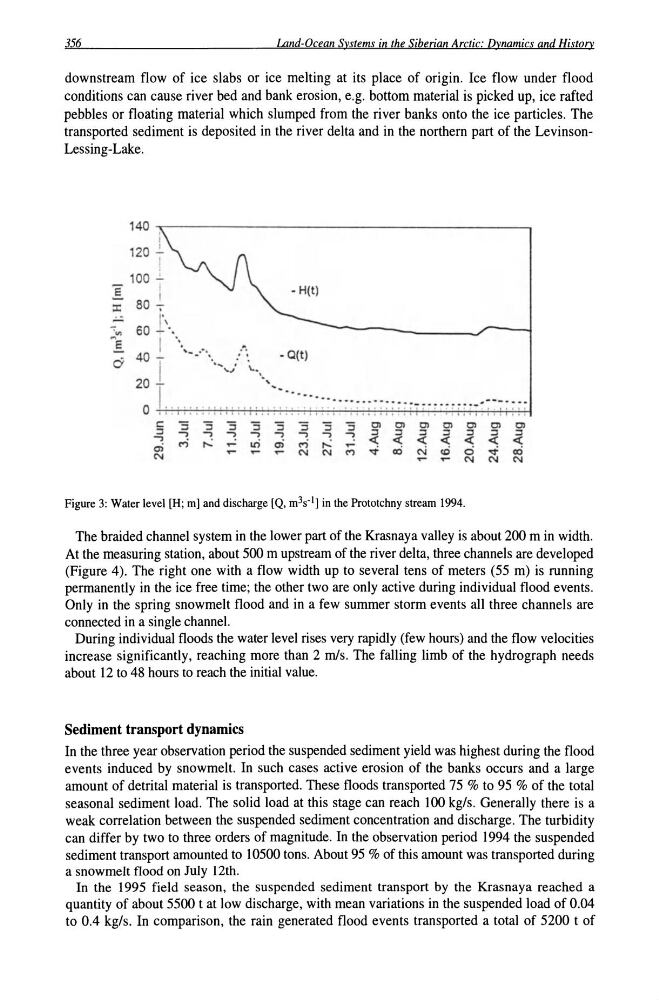
Figure 3: Water level [H; ml and discharge [Q, m 3 s- 1 ] in the Prototchny stream 1994.
The braided channel system in the lower part of the Krasnaya valley is about 200 m in width.
At the measuring station, about 500 m upstream of the river delta, three channels are developed
(Figure 4). The right one with a flow width up to several tens of meters (55 m) is running
permanently in the ice free time; the other two are only active during individual flood events.
Only in the spring snowmelt flood and in a few summer storm events all three channels are
connected in a single channel.
During individual floods the water level rises very rapidly (few hours) and the flow velocities
increase significantly, reaching more than 2 mls. The falling limb of the hydrograph needs
about 12 to 48 hours to reach the initial value.
Sediment transport dynamics
In the three year observation period the suspended sediment yield was highest during the flood
events induced by snowmelt. In such cases active erosion of the banks occurs and a large
amount of detrital material is transported. These floods transported 75 % to 95 % of the total
seasonal sediment load. The solid load at this stage can reach 100 kg/so Generally there is a
weak correlation between the suspended sediment concentration and discharge. The turbidity
can differ by two to three orders of magnitude. In the observation period 1994 the suspended
sediment transport amounted to 10500 tons. About 95 % of this amount was transported during
a snowmelt flood on July 12th.
In the 1995 field season, the suspended sediment transport by the Krasnaya reached a
quantity of about 5500 t at low discharge, with mean variations in the suspended load of 0.04
to 0.4 kg/so In comparison, the rain generated flood events transported a total of 5200 t of
Land-Ocean Systems in the Siberian Arctic: Dynamics and History
downstream flow of ice slabs or ice melting at its place of origin. Ice flow under flood
conditions can cause river bed and bank erosion, e.g. bottom material is picked up, ice rafted
pebbles or floating material which slumped from the river banks onto the ice particles. The
transported sediment is deposited in the river delta and in the northern part of the LevinsonLessing-Lake.
140, , --------------------------------------~
I
120 ..!...
!
100 .i.
I
i
- H(t)
:r:: 80 .!.
-
1 \
'", 60 -'-' .
..,
I "
.E. rV 40 - '~_.... .' :
. Q(t)
to...,,;
I
I.,
~
I
. . . . J \,. ... , ...
20 -
'~~
.. ......
I
...
............ ~ ~: ~: ~ ~- ~ . . ~ .... ~ ~ .. -_ ... --- ..
o .:: ' :::::::::::'::.:: .:.::,: .; ,,,,,",,,. , .... " ... "
Figure 3: Water level [H; ml and discharge [Q, m 3 s- 1 ] in the Prototchny stream 1994.
The braided channel system in the lower part of the Krasnaya valley is about 200 m in width.
At the measuring station, about 500 m upstream of the river delta, three channels are developed
(Figure 4). The right one with a flow width up to several tens of meters (55 m) is running
permanently in the ice free time; the other two are only active during individual flood events.
Only in the spring snowmelt flood and in a few summer storm events all three channels are
connected in a single channel.
During individual floods the water level rises very rapidly (few hours) and the flow velocities
increase significantly, reaching more than 2 mls. The falling limb of the hydrograph needs
about 12 to 48 hours to reach the initial value.
Sediment transport dynamics
In the three year observation period the suspended sediment yield was highest during the flood
events induced by snowmelt. In such cases active erosion of the banks occurs and a large
amount of detrital material is transported. These floods transported 75 % to 95 % of the total
seasonal sediment load. The solid load at this stage can reach 100 kg/so Generally there is a
weak correlation between the suspended sediment concentration and discharge. The turbidity
can differ by two to three orders of magnitude. In the observation period 1994 the suspended
sediment transport amounted to 10500 tons. About 95 % of this amount was transported during
a snowmelt flood on July 12th.
In the 1995 field season, the suspended sediment transport by the Krasnaya reached a
quantity of about 5500 t at low discharge, with mean variations in the suspended load of 0.04
to 0.4 kg/so In comparison, the rain generated flood events transported a total of 5200 t of