

Zatsepin et al.: Step-Like Vertical Structure Formation Due to Turbulent Mixing
97
spatial homogeneity of stirring. The decreasing of a number of grids was impressed only in the
increasing (quasi-linear) of time period during witch the step-like structure was formed. Next
step will be to provide experimental runs with intermittent stirring in order to investigate is
there or not any critical time interval of stirring which controls the layer formation process.
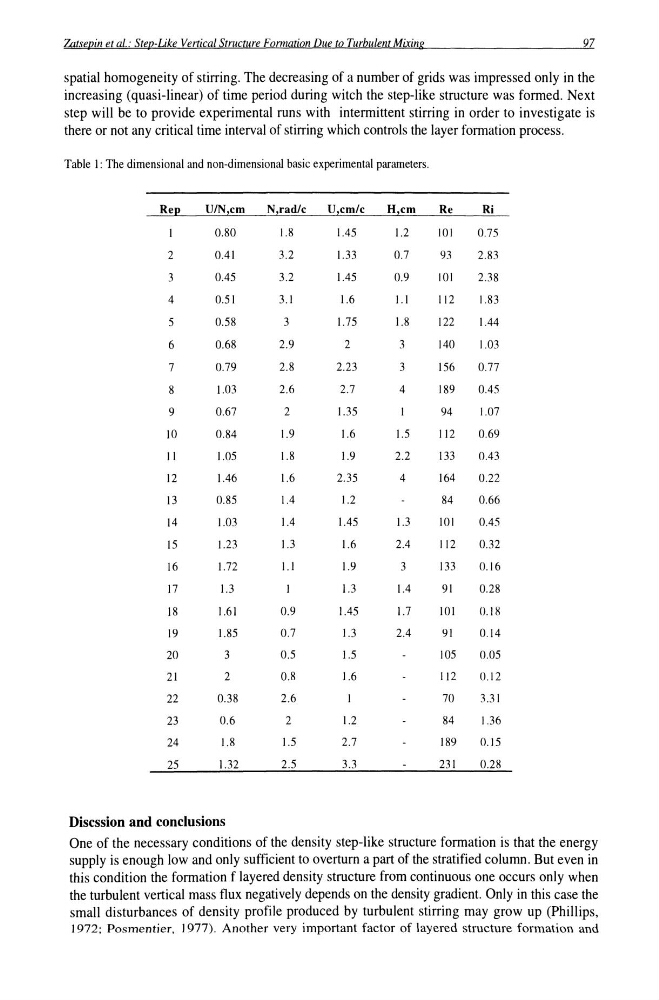
Table I: The dimensional and non-dimensional basic experimental parameters.
Rep
UIN,cm
N,rad/c
U,cm/c
H,cm
Re
Ri
0.80
1.8
1.45
1.2
IOJ
075
2
0.41
3.2
1.33
0.7
93
2.83
3
0.45
3.2
1.45
0.9
101
2.38
4
0.51
3.1
1.6
l.l
112
1.83
5
0.58
3
1.75
1.8
122
1.44
6
0.68
2.9
2
3
140
1.03
7
0.79
2.8
2.23
3
156
0.77
8
1.03
2.6
2.7
4
189
0.45
9
0.67
2
1.35
94
1.07
10
0.84
1.9
1.6
1.5
112
0.69
11
1.05
1.8
1.9
2.2
133
0.43
12
1.46
1.6
2.35
4
164
0.22
13
0.85
1.4
1.2
84
0.66
14
1.03
1.4
1.45
1.3
101
0.45
15
1.23
1.3
1.6
2.4
112
0.32
16
1.72
1.1
1.9
3
133
0.16
17
1.3
1.3
1.4
91
0.28
18
1.61
0.9
1.45
1.7
101
0.18
19
1.85
0.7
1.3
2.4
91
0.14
20
3
0.5
1.5
105
0.05
21
2
0.8
1.6
112
0.12
22
0.38
2.6
70
3.31
23
0.6
2
1.2
84
1.36
24
1.8
1.5
2.7
189
0.15
25
1.32
2.5
3.3
231
0.28
Discssion and conclusions
One of the necessary conditions of the density step-like structure formation is that the energy
supply is enough low and only sufficient to overturn a part of the stratified column. But even in
this condition the formation f layered density structure from continuous one occurs only when
the turbulent vertical mass flux negatively depends on the density gradient. Only in this case the
small disturbances of density profile produced by turbulent stirring may grow up (Phillips,
1972: Posmentier, 1977). Another very important factor of layered structure formation and
97
spatial homogeneity of stirring. The decreasing of a number of grids was impressed only in the
increasing (quasi-linear) of time period during witch the step-like structure was formed. Next
step will be to provide experimental runs with intermittent stirring in order to investigate is
there or not any critical time interval of stirring which controls the layer formation process.
Table I: The dimensional and non-dimensional basic experimental parameters.
Rep
UIN,cm
N,rad/c
U,cm/c
H,cm
Re
Ri
0.80
1.8
1.45
1.2
IOJ
075
2
0.41
3.2
1.33
0.7
93
2.83
3
0.45
3.2
1.45
0.9
101
2.38
4
0.51
3.1
1.6
l.l
112
1.83
5
0.58
3
1.75
1.8
122
1.44
6
0.68
2.9
2
3
140
1.03
7
0.79
2.8
2.23
3
156
0.77
8
1.03
2.6
2.7
4
189
0.45
9
0.67
2
1.35
94
1.07
10
0.84
1.9
1.6
1.5
112
0.69
11
1.05
1.8
1.9
2.2
133
0.43
12
1.46
1.6
2.35
4
164
0.22
13
0.85
1.4
1.2
84
0.66
14
1.03
1.4
1.45
1.3
101
0.45
15
1.23
1.3
1.6
2.4
112
0.32
16
1.72
1.1
1.9
3
133
0.16
17
1.3
1.3
1.4
91
0.28
18
1.61
0.9
1.45
1.7
101
0.18
19
1.85
0.7
1.3
2.4
91
0.14
20
3
0.5
1.5
105
0.05
21
2
0.8
1.6
112
0.12
22
0.38
2.6
70
3.31
23
0.6
2
1.2
84
1.36
24
1.8
1.5
2.7
189
0.15
25
1.32
2.5
3.3
231
0.28
Discssion and conclusions
One of the necessary conditions of the density step-like structure formation is that the energy
supply is enough low and only sufficient to overturn a part of the stratified column. But even in
this condition the formation f layered density structure from continuous one occurs only when
the turbulent vertical mass flux negatively depends on the density gradient. Only in this case the
small disturbances of density profile produced by turbulent stirring may grow up (Phillips,
1972: Posmentier, 1977). Another very important factor of layered structure formation and