

290
T. Soomere
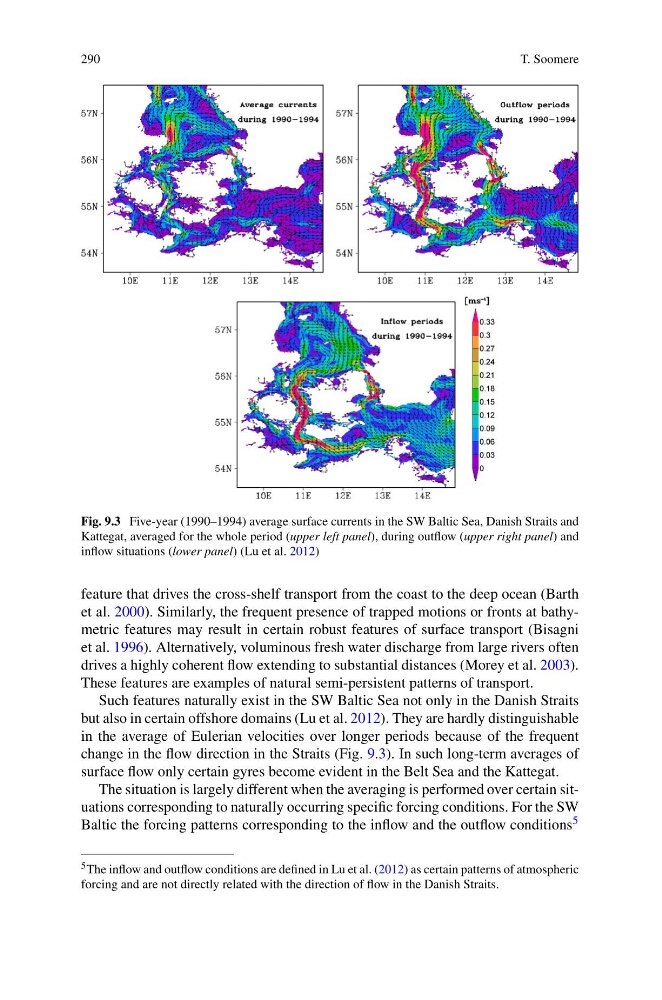
Fig. 9.3 Five-year (1990–1994) average surface currents in the SW Baltic Sea, Danish Straits and
Kattegat, averaged for the whole period (upper left panel), during outflow (upper right panel) and
inflow situations (lower panel) (Lu et al. 2012)
feature that drives the cross-shelf transport from the coast to the deep ocean (Barth
et al. 2000). Similarly, the frequent presence of trapped motions or fronts at bathymetric features may result in certain robust features of surface transport (Bisagni
et al. 1996). Alternatively, voluminous fresh water discharge from large rivers often
drives a highly coherent flow extending to substantial distances (Morey et al. 2003).
These features are examples of natural semi-persistent patterns of transport.
Such features naturally exist in the SW Baltic Sea not only in the Danish Straits
but also in certain offshore domains (Lu et al. 2012). They are hardly distinguishable
in the average of Eulerian velocities over longer periods because of the frequent
change in the flow direction in the Straits (Fig. 9.3). In such long-term averages of
surface flow only certain gyres become evident in the Belt Sea and the Kattegat.
The situation is largely different when the averaging is performed over certain situations corresponding to naturally occurring specific forcing conditions. For the SW
Baltic the forcing patterns corresponding to the inflow and the outflow conditions 5
5 The inflow and outflow conditions are defined in Lu et al. (2012) as certain patterns of atmospheric
forcing and are not directly related with the direction of flow in the Danish Straits.
T. Soomere
Fig. 9.3 Five-year (1990–1994) average surface currents in the SW Baltic Sea, Danish Straits and
Kattegat, averaged for the whole period (upper left panel), during outflow (upper right panel) and
inflow situations (lower panel) (Lu et al. 2012)
feature that drives the cross-shelf transport from the coast to the deep ocean (Barth
et al. 2000). Similarly, the frequent presence of trapped motions or fronts at bathymetric features may result in certain robust features of surface transport (Bisagni
et al. 1996). Alternatively, voluminous fresh water discharge from large rivers often
drives a highly coherent flow extending to substantial distances (Morey et al. 2003).
These features are examples of natural semi-persistent patterns of transport.
Such features naturally exist in the SW Baltic Sea not only in the Danish Straits
but also in certain offshore domains (Lu et al. 2012). They are hardly distinguishable
in the average of Eulerian velocities over longer periods because of the frequent
change in the flow direction in the Straits (Fig. 9.3). In such long-term averages of
surface flow only certain gyres become evident in the Belt Sea and the Kattegat.
The situation is largely different when the averaging is performed over certain situations corresponding to naturally occurring specific forcing conditions. For the SW
Baltic the forcing patterns corresponding to the inflow and the outflow conditions 5
5 The inflow and outflow conditions are defined in Lu et al. (2012) as certain patterns of atmospheric
forcing and are not directly related with the direction of flow in the Danish Straits.