

28
R.K. Turner· B.T. Bower
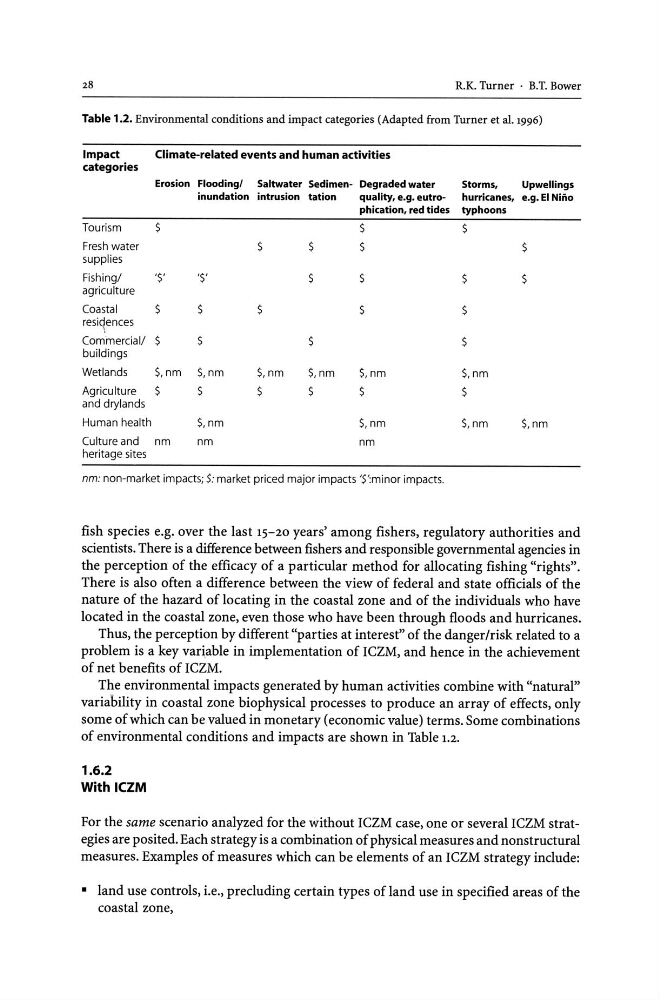
Table 1.2. Environmental conditions and impact categories (Adapted from Turner et al. 1996)
Impact
Climate-related events and human activities
categories
Erosion Flooding!
Saltwater Sedimen- Degraded water
Storms,
Upwellings
inundation intrusion tation
quality, e.g. eutrohurricanes, e.g.EI Nino
phication, red tides typhoons
Tourism
$
$
$
Fresh water
$
$
$
$
supplies
Fishing!
'$'
'$'
$
$
agriculture
Coastal
$
$
$
resiqences
Commercial! $
$
$
$
buildings
Wetlands
$,nm
$, nm
$,nm
$,nm
$,nm
$,nm
Agriculture
$
$
$
and drylands
Human health
$,nm
$,nm
$,nm
$,nm
Culture and
nm
nm
nm
heritage sites
nm: non-market impacts; $: market priced major impacts '$':minor impacts.
fish species e.g. over the last 15-20 years' among fishers, regulatory authorities and
scientists. There is a difference between fishers and responsible governmental agencies in
the perception of the efficacy of a particular method for allocating fishing "rights".
There is also often a difference between the view of federal and state officials of the
nature of the hazard of locating in the coastal zone and of the individuals who have
located in the coastal zone, even those who have been through floods and hurricanes.
Thus, the perception by different "parties at interest" of the danger/risk related to a
problem is a key var~able in implementation of ICZM, and hence in the achievement
of net benefits of ICZM.
The environmental impacts generated by human activities combine with "natural"
variability in coastal zone biophysical processes to produce an array of effects, only
some of which can be valued in monetary (economic value) terms. Some combinations
of environmental conditions and impacts are shown in Table 1.2.
1.6.2
With ICZM
For the same scenario analyzed for the without ICZM case, one or several ICZM strategies are posited. Each strategy is a combination of physical measures and nonstructural
measures. Examples of measures which can be elements of an ICZM strategy include:
• land use controls, i.e., precluding certain types of land use in specified areas of the
coastal zone,
R.K. Turner· B.T. Bower
Table 1.2. Environmental conditions and impact categories (Adapted from Turner et al. 1996)
Impact
Climate-related events and human activities
categories
Erosion Flooding!
Saltwater Sedimen- Degraded water
Storms,
Upwellings
inundation intrusion tation
quality, e.g. eutrohurricanes, e.g.EI Nino
phication, red tides typhoons
Tourism
$
$
$
Fresh water
$
$
$
$
supplies
Fishing!
'$'
'$'
$
$
agriculture
Coastal
$
$
$
resiqences
Commercial! $
$
$
$
buildings
Wetlands
$,nm
$, nm
$,nm
$,nm
$,nm
$,nm
Agriculture
$
$
$
and drylands
Human health
$,nm
$,nm
$,nm
$,nm
Culture and
nm
nm
nm
heritage sites
nm: non-market impacts; $: market priced major impacts '$':minor impacts.
fish species e.g. over the last 15-20 years' among fishers, regulatory authorities and
scientists. There is a difference between fishers and responsible governmental agencies in
the perception of the efficacy of a particular method for allocating fishing "rights".
There is also often a difference between the view of federal and state officials of the
nature of the hazard of locating in the coastal zone and of the individuals who have
located in the coastal zone, even those who have been through floods and hurricanes.
Thus, the perception by different "parties at interest" of the danger/risk related to a
problem is a key var~able in implementation of ICZM, and hence in the achievement
of net benefits of ICZM.
The environmental impacts generated by human activities combine with "natural"
variability in coastal zone biophysical processes to produce an array of effects, only
some of which can be valued in monetary (economic value) terms. Some combinations
of environmental conditions and impacts are shown in Table 1.2.
1.6.2
With ICZM
For the same scenario analyzed for the without ICZM case, one or several ICZM strategies are posited. Each strategy is a combination of physical measures and nonstructural
measures. Examples of measures which can be elements of an ICZM strategy include:
• land use controls, i.e., precluding certain types of land use in specified areas of the
coastal zone,