

CHAPTER 1 • Principles and Benefits of Integrated Coastal Zone Management (lCZM)
29
Direct Use Values
e.g.
fish
fuelwood
recreation
transponJ
navigation
Valuation Methods
Market analysis:
Other non-market valuation
methods (TeM, CVM, HP)
(IOC);(IS);
(Replacement costs)
Use Values
Resource Utilization Benefits
Mitigation Benefits
Enhancement Benefits
Preservation Benefits
Option Benefits
Existence Benefits
Indirect Use Values
(Functional Values)
e.g.
floold control
Option Values
Quasi-option Values
---------'----------------------storm protection
nutrient cycling
waste assimilation
sedimentation
habitat loss reduction
groundwater protection
Valuation Methods
Damage costs avoided:
Preventive expendftures;
Value of changes in productivity;
(Relocation costs)
(Replacement costs)
insurance value of
preserving options
tor use
value of increased
information in the
future: Unatural
laboratory"
Valuation Methods
CVM
Nonuse Values
I
Existence Bequest
I
value derived from just knowing
a species or system is conserved
value of passing on natural assets
'intact' to future generations
'moral resource' value motivations
Valuation Methods
CVM
Notes: Market Analysis: based on market prices; HP = hedonic pricing, based on land/property value data; CVM = contingent valuation method based on social surveys
designed to elicit willingness to pay values; rCM = travel cost method, based on recreationalist expenditure data; fOC = indirect opportunity cost approach, based on options
foregone; IS = indirect substitute approach. The benefits categories illustrated do not include the "indirect" or "secondary benefits" provided by the coastal zone to the
regional economy, ie the regional income multiplier effects.
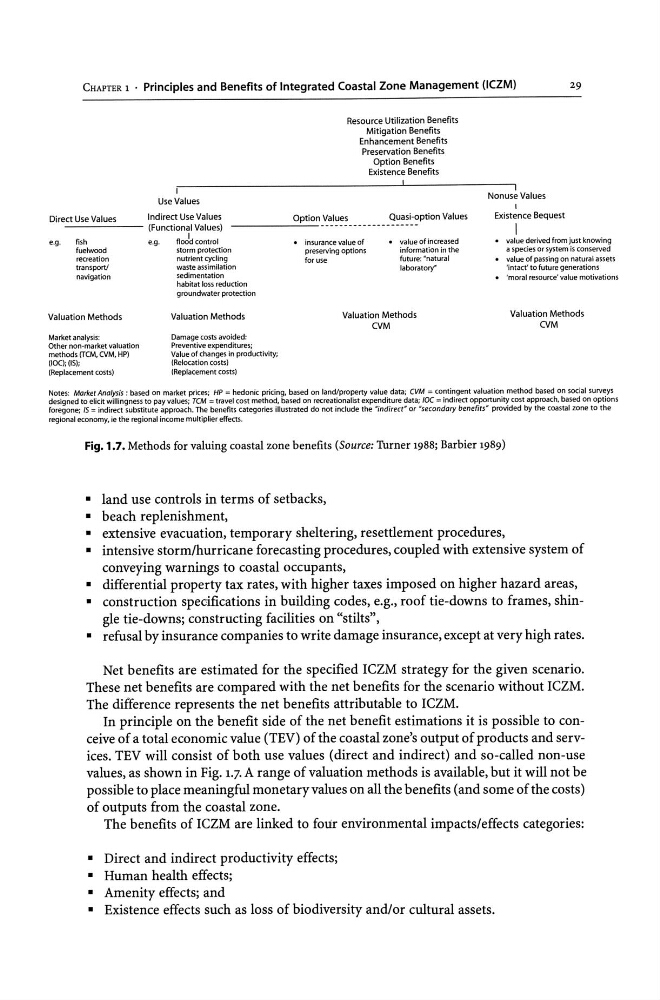
Fig. 1.7. Methods for valuing coastal zone benefits (Source: Turnefl988; Barbiefl989)
• land use controls in terms of setbacks,
• beach replenishment,
• extensive evacuation, temporary sheltering, resettlement procedures,
• intensive storm/hurricane forecasting procedures, coupled with extensive system of
conveying warnings to coastal occupants,
• differential property tax rates, with higher taxes imposed on higher hazard areas,
• construction specifications in building codes, e.g., roof tie-downs to frames, shingle tie-downs; constructing facilities on "stilts",
• refusal by insurance companies to write damage insurance, except at very high rates.
Net benefits are estimated for the specified ICZM strategy for the given scenario.
These net benefits are compared with the net benefits for the scenario without ICZM.
The difference represents the net benefits attributable to ICZM.
In principle on the benefit side of the net benefit estimations it is possible to conceive of a total economic value (TEV) of the coastal zone's output of products and services. TEV will consist of both use values (direct and indirect) and so-called non-use
values, as shown in Fig. 1.7. A range of valuation methods is available, but it will not be
possible to place meaningful monetary values on all the benefits (and some of the costs)
of outputs from the coastal zone.
The benefits of ICZM are linked to four environmental impacts/effects categories:
• Direct and indirect productivity effects;
• Human health effects;
• Amenity effects; and
• Existence effects such as loss of biodiversity and/or cultural assets.
29
Direct Use Values
e.g.
fish
fuelwood
recreation
transponJ
navigation
Valuation Methods
Market analysis:
Other non-market valuation
methods (TeM, CVM, HP)
(IOC);(IS);
(Replacement costs)
Use Values
Resource Utilization Benefits
Mitigation Benefits
Enhancement Benefits
Preservation Benefits
Option Benefits
Existence Benefits
Indirect Use Values
(Functional Values)
e.g.
floold control
Option Values
Quasi-option Values
---------'----------------------storm protection
nutrient cycling
waste assimilation
sedimentation
habitat loss reduction
groundwater protection
Valuation Methods
Damage costs avoided:
Preventive expendftures;
Value of changes in productivity;
(Relocation costs)
(Replacement costs)
insurance value of
preserving options
tor use
value of increased
information in the
future: Unatural
laboratory"
Valuation Methods
CVM
Nonuse Values
I
Existence Bequest
I
value derived from just knowing
a species or system is conserved
value of passing on natural assets
'intact' to future generations
'moral resource' value motivations
Valuation Methods
CVM
Notes: Market Analysis: based on market prices; HP = hedonic pricing, based on land/property value data; CVM = contingent valuation method based on social surveys
designed to elicit willingness to pay values; rCM = travel cost method, based on recreationalist expenditure data; fOC = indirect opportunity cost approach, based on options
foregone; IS = indirect substitute approach. The benefits categories illustrated do not include the "indirect" or "secondary benefits" provided by the coastal zone to the
regional economy, ie the regional income multiplier effects.
Fig. 1.7. Methods for valuing coastal zone benefits (Source: Turnefl988; Barbiefl989)
• land use controls in terms of setbacks,
• beach replenishment,
• extensive evacuation, temporary sheltering, resettlement procedures,
• intensive storm/hurricane forecasting procedures, coupled with extensive system of
conveying warnings to coastal occupants,
• differential property tax rates, with higher taxes imposed on higher hazard areas,
• construction specifications in building codes, e.g., roof tie-downs to frames, shingle tie-downs; constructing facilities on "stilts",
• refusal by insurance companies to write damage insurance, except at very high rates.
Net benefits are estimated for the specified ICZM strategy for the given scenario.
These net benefits are compared with the net benefits for the scenario without ICZM.
The difference represents the net benefits attributable to ICZM.
In principle on the benefit side of the net benefit estimations it is possible to conceive of a total economic value (TEV) of the coastal zone's output of products and services. TEV will consist of both use values (direct and indirect) and so-called non-use
values, as shown in Fig. 1.7. A range of valuation methods is available, but it will not be
possible to place meaningful monetary values on all the benefits (and some of the costs)
of outputs from the coastal zone.
The benefits of ICZM are linked to four environmental impacts/effects categories:
• Direct and indirect productivity effects;
• Human health effects;
• Amenity effects; and
• Existence effects such as loss of biodiversity and/or cultural assets.