

24
R.K. Turner . B.T. Bower
~IMP~NDICHARGES
OR
IMPACTS
AND/OR
ACTIVITY
INDUSTRIAL
ACTIVITIES
URBAN AREA
SEWAGE
URBAN AREA
STORM RUN-OFF
SAND DEMAND
IN BAY
TOURISM IN PARK
UPSTREAM
AGRICULTURAL
ACTIVITIES
EFFECTS ON REGIONAL ECONOMY
ADDITIONAL EMPLOYMENT PROVIDED
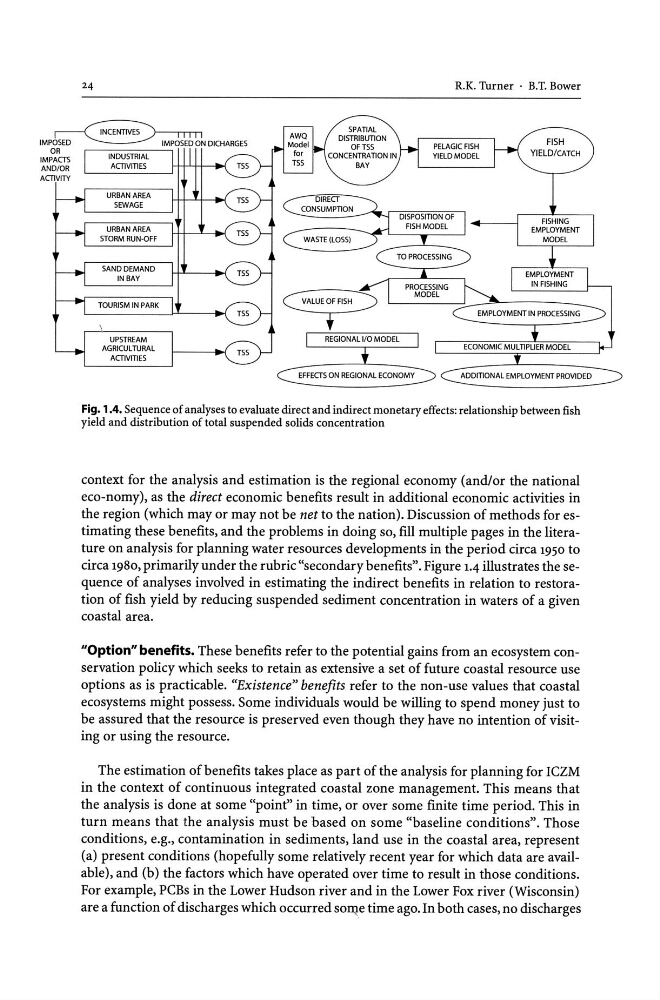
Fig. 1.4. Sequence of analyses to evaluate direct and indirect monetary effects: relationship between fish
yield and distribution of total suspended solids concentration
context for the analysis and estimation is the regional economy (and/or the national
eco-nomy), as the direct economic benefits result in additional economic activities in
the region (which mayor may not be net to the nation). Discussion of methods for estimating these benefits, and the problems in doing so, fill multiple pages in the literature on analysis for planning water resources developments in the period circa 1950 to
circa 1980, primarily under the rubric "secondary benefits". Figure 1.4 illustrates the sequence of analyses involved in estimating the indirect benefits in relation to restoration of fish yield by reducing suspended sediment concentration in waters of a given
coastal area.
"Option" benefits. These benefits refer to the potential gains from an ecosystem conservation policy which seeks to retain as extensive a set of future coastal resource use
options as is practicable. "Existence" benefits refer to the non-use values that coastal
ecosystems might possess. Some individuals would be willing to spend money just to
be assured that the resource is preserved even though they have no intention of visiting or using the resource.
The estimation of benefits takes place as part of the analysis for planning for ICZM
in the context of continuous integrated coastal zone management. This means that
the analysis is done at some "point" intime, or over some finite time period. This in
turn means that the analysis must be based on some "baseline conditions". Those
conditions, e.g., contamination in sediments, land use in the coastal area, represent
(a) present conditions (hopefully some relatively recent year for which data are available), and (b) the factors which have operated over time to result in those conditions.
For example, PCBs in the Lower Hudson river and in the Lower Fox river (Wisconsin)
are a function of discharges which occurred sOIQe time ago. In both cases, no discharges
R.K. Turner . B.T. Bower
~IMP~NDICHARGES
OR
IMPACTS
AND/OR
ACTIVITY
INDUSTRIAL
ACTIVITIES
URBAN AREA
SEWAGE
URBAN AREA
STORM RUN-OFF
SAND DEMAND
IN BAY
TOURISM IN PARK
UPSTREAM
AGRICULTURAL
ACTIVITIES
EFFECTS ON REGIONAL ECONOMY
ADDITIONAL EMPLOYMENT PROVIDED
Fig. 1.4. Sequence of analyses to evaluate direct and indirect monetary effects: relationship between fish
yield and distribution of total suspended solids concentration
context for the analysis and estimation is the regional economy (and/or the national
eco-nomy), as the direct economic benefits result in additional economic activities in
the region (which mayor may not be net to the nation). Discussion of methods for estimating these benefits, and the problems in doing so, fill multiple pages in the literature on analysis for planning water resources developments in the period circa 1950 to
circa 1980, primarily under the rubric "secondary benefits". Figure 1.4 illustrates the sequence of analyses involved in estimating the indirect benefits in relation to restoration of fish yield by reducing suspended sediment concentration in waters of a given
coastal area.
"Option" benefits. These benefits refer to the potential gains from an ecosystem conservation policy which seeks to retain as extensive a set of future coastal resource use
options as is practicable. "Existence" benefits refer to the non-use values that coastal
ecosystems might possess. Some individuals would be willing to spend money just to
be assured that the resource is preserved even though they have no intention of visiting or using the resource.
The estimation of benefits takes place as part of the analysis for planning for ICZM
in the context of continuous integrated coastal zone management. This means that
the analysis is done at some "point" intime, or over some finite time period. This in
turn means that the analysis must be based on some "baseline conditions". Those
conditions, e.g., contamination in sediments, land use in the coastal area, represent
(a) present conditions (hopefully some relatively recent year for which data are available), and (b) the factors which have operated over time to result in those conditions.
For example, PCBs in the Lower Hudson river and in the Lower Fox river (Wisconsin)
are a function of discharges which occurred sOIQe time ago. In both cases, no discharges