

CHAPTER 1 . Principles and Benefits of Integrated Coastal Zone Management (lCZM)
19
Financial flows
~
Information Flows - - - .
L
"feedback"
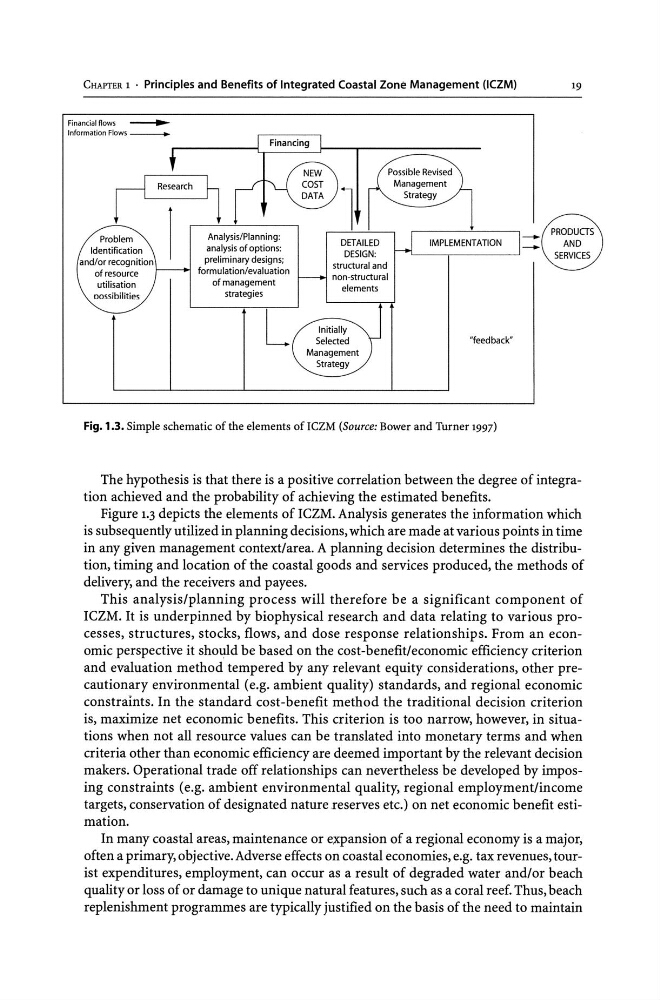
Fig. 1.3. Simple schematic of the elements of ICZM (Source: Bower and Turner 1997)
The hypothesis is that there is a positive correlation between the degree of integration achieved and the probability of achieving the estimated benefits.
Figure 1.3 depicts the elements of ICZM. Analysis generates the information which
is subsequently utilized in planning decisions, which are made at various points in time
in any given management context/area. A planning decision determines the distribution, timing and location of the coastal goods and services produced, the methods of
delivery, and the receivers and payees.
This analysis/planning process will therefore be a significant component of
ICZM. It is underpinned by biophysical research and data relating to various processes, structures, stocks, flows, and dose response relationships. From an economic perspective it should be based on the cost-benefit/economic efficiency criterion
and evaluation method tempered by any relevant equity considerations, other precautionary environmental (e.g. ambient quality) standards, and regional economic
constraints. In the standard cost-benefit method the traditional decision criterion
is, maximize net economic benefits. This criterion is too narrow, however, in situations when not all resource values can be translated into monetary terms and when
criteria other than economic efficiency are deemed important by the relevant decision
makers. Operational trade off relationships can nevertheless be developed by imposing constraints (e.g. ambient environmental quality, regional employment/income
targets, conservation of designated nature reserves etc.) on net economic benefit estimation.
In many coastal areas, maintenance or expansion of a regional economy is a major,
often a primary, objective. Adverse effects on coastal economies, e.g. tax revenues, tourist expenditures, employment, can occur as a result of degraded water and/or beach
quality or loss of or damage to unique natural features, such as a coral reef. Thus, beach
replenishment programmes are typically justified on the basis of the need to maintain
19
Financial flows
~
Information Flows - - - .
L
"feedback"
Fig. 1.3. Simple schematic of the elements of ICZM (Source: Bower and Turner 1997)
The hypothesis is that there is a positive correlation between the degree of integration achieved and the probability of achieving the estimated benefits.
Figure 1.3 depicts the elements of ICZM. Analysis generates the information which
is subsequently utilized in planning decisions, which are made at various points in time
in any given management context/area. A planning decision determines the distribution, timing and location of the coastal goods and services produced, the methods of
delivery, and the receivers and payees.
This analysis/planning process will therefore be a significant component of
ICZM. It is underpinned by biophysical research and data relating to various processes, structures, stocks, flows, and dose response relationships. From an economic perspective it should be based on the cost-benefit/economic efficiency criterion
and evaluation method tempered by any relevant equity considerations, other precautionary environmental (e.g. ambient quality) standards, and regional economic
constraints. In the standard cost-benefit method the traditional decision criterion
is, maximize net economic benefits. This criterion is too narrow, however, in situations when not all resource values can be translated into monetary terms and when
criteria other than economic efficiency are deemed important by the relevant decision
makers. Operational trade off relationships can nevertheless be developed by imposing constraints (e.g. ambient environmental quality, regional employment/income
targets, conservation of designated nature reserves etc.) on net economic benefit estimation.
In many coastal areas, maintenance or expansion of a regional economy is a major,
often a primary, objective. Adverse effects on coastal economies, e.g. tax revenues, tourist expenditures, employment, can occur as a result of degraded water and/or beach
quality or loss of or damage to unique natural features, such as a coral reef. Thus, beach
replenishment programmes are typically justified on the basis of the need to maintain