

CHAPTER 18 • Management of Tokyo Bay
339
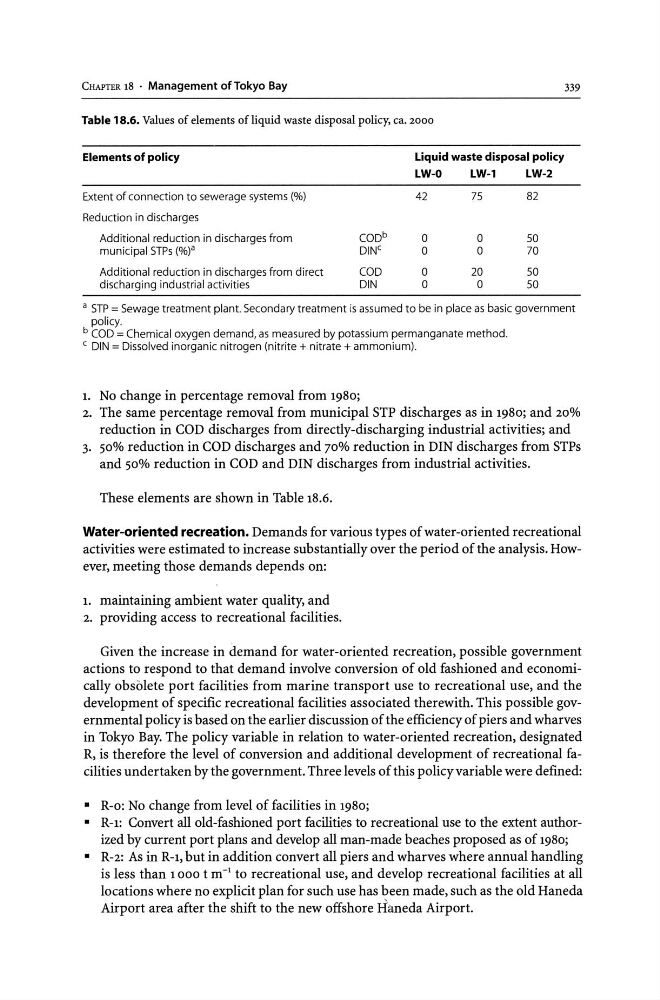
Table 18.6. Values of elements of liquid waste disposal policy, ca. 2000
Elements of policy
Liquid waste disposal policy
LW-O
LW-1
LW-2
Extent of connection to sewerage systems (%)
42
75
82
Reduction in discharges
Additional reduction in discharges from
COD b
0
0
50
municipal STPs (%)a
DIN c
0
0
70
Additional reduction in discharges from direct
COD
0
20
50
discharging industrial activities
DIN
0
0
50
a STP = Sewage treatment plant. Secondary treatment is assumed to be in place as basic government
policy.
b COD = Chemical oxygen demand, as measured by potassium permanganate method.
C DIN = Dissolved inorganic nitrogen (nitrite + nitrate + ammonium).
1. No change in percentage removal from 1980;
2. The same percentage removal from municipal STP discharges as in 1980; and 20%
reduction in COD discharges from directly-discharging industrial activities; and
3. 50% reduction in COD discharges and 70% reduction in DIN discharges from STPs
and 50% reduction in COD and DIN discharges from industrial activities.
These elements are shown in Table 18.6.
Water-oriented recreation. Demands for various types of water-oriented recreational
activities were estimated to increase substantially over the period of the analysis. However, meeting those demands depends on:
1. maintaining ambient water quality, and
2. providing access to recreational facilities.
Given the increase in demand for water-oriented recreation, possible government
actions to respond to that demand involve conversion of old fashioned and economically obsolete port facilities from marine transport use to recreational use, and the
development of specific recreational facilities associated therewith. This possible governmental policy is based on the earlier discussion of the efficiency of piers and wharves
in Tokyo Bay. The policy variable in relation to water-oriented recreation, designated
R, is therefore the level of conversion and additional development of recreational facilities undertaken by the government. Three levels of this policy variable were defined:
• R-o: No change from level of facilities in 1980;
• R-l: Convert all old-fashioned port faciliti(;!s to recreational use to the extent authorized by current port plans and develop all man-made beaches proposed as of 1980;
• R-2: As in R-l, but in addition convert all piers and wharves where annual handling
is less than 1000 t m- l to recreational use, and develop recreational facilities at all
locations where no explicit plan for such use has been made, such as the old Haneda
Airport area after the shift to the new offshore Haneda Airport.
339
Table 18.6. Values of elements of liquid waste disposal policy, ca. 2000
Elements of policy
Liquid waste disposal policy
LW-O
LW-1
LW-2
Extent of connection to sewerage systems (%)
42
75
82
Reduction in discharges
Additional reduction in discharges from
COD b
0
0
50
municipal STPs (%)a
DIN c
0
0
70
Additional reduction in discharges from direct
COD
0
20
50
discharging industrial activities
DIN
0
0
50
a STP = Sewage treatment plant. Secondary treatment is assumed to be in place as basic government
policy.
b COD = Chemical oxygen demand, as measured by potassium permanganate method.
C DIN = Dissolved inorganic nitrogen (nitrite + nitrate + ammonium).
1. No change in percentage removal from 1980;
2. The same percentage removal from municipal STP discharges as in 1980; and 20%
reduction in COD discharges from directly-discharging industrial activities; and
3. 50% reduction in COD discharges and 70% reduction in DIN discharges from STPs
and 50% reduction in COD and DIN discharges from industrial activities.
These elements are shown in Table 18.6.
Water-oriented recreation. Demands for various types of water-oriented recreational
activities were estimated to increase substantially over the period of the analysis. However, meeting those demands depends on:
1. maintaining ambient water quality, and
2. providing access to recreational facilities.
Given the increase in demand for water-oriented recreation, possible government
actions to respond to that demand involve conversion of old fashioned and economically obsolete port facilities from marine transport use to recreational use, and the
development of specific recreational facilities associated therewith. This possible governmental policy is based on the earlier discussion of the efficiency of piers and wharves
in Tokyo Bay. The policy variable in relation to water-oriented recreation, designated
R, is therefore the level of conversion and additional development of recreational facilities undertaken by the government. Three levels of this policy variable were defined:
• R-o: No change from level of facilities in 1980;
• R-l: Convert all old-fashioned port faciliti(;!s to recreational use to the extent authorized by current port plans and develop all man-made beaches proposed as of 1980;
• R-2: As in R-l, but in addition convert all piers and wharves where annual handling
is less than 1000 t m- l to recreational use, and develop recreational facilities at all
locations where no explicit plan for such use has been made, such as the old Haneda
Airport area after the shift to the new offshore Haneda Airport.