

x
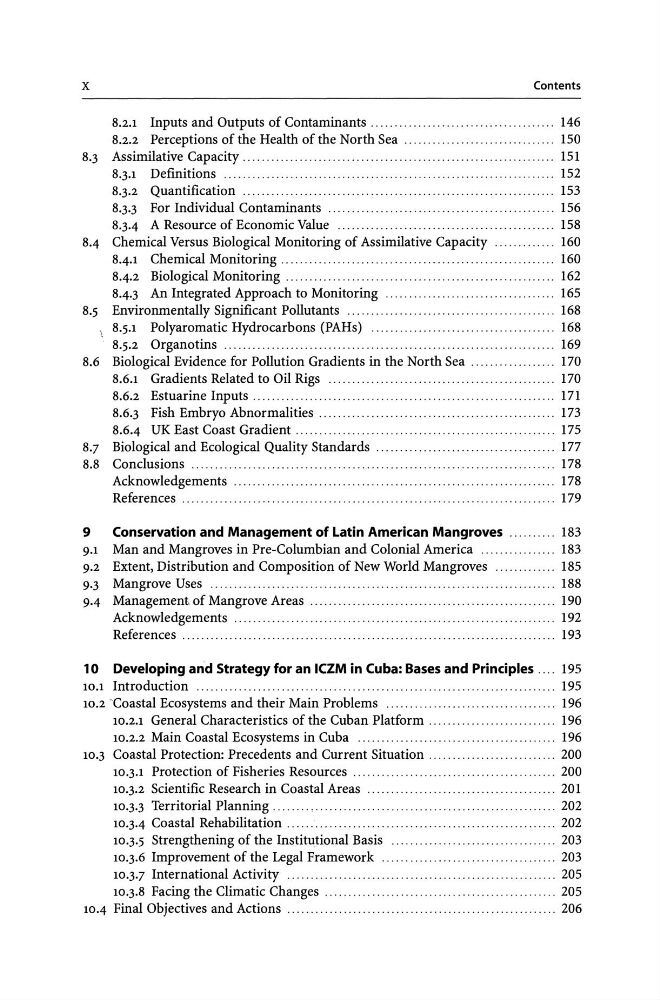
Contents
8.2.1 Inputs and Outputs of ContaDlinants ....................................... 146
8.2.2 Perceptions of the Health of the North Sea ................................ 150
8.3 Assimilative Capacity .................................................................. 151
8.3-1 Definitions ...................................................................... 152
8.3.2 Quantification .................................................................. 153
8.3.3 For Individual ContaDlinants ................................................ 156
8.3.4 A Resource of Economic Value .............................................. 158
8.4 Chemical Versus Biological Monitoring of Assimilative Capacity ............. 160
8.4.1 Chemical Monitoring .......................................................... 160
8.4.2 Biological Monitoring ......................................................... 162
8.4.3 An Integrated Approach to Monitoring .................................... 165
8.5 Environmentally Significant Pollutants ............................................ 168
8.5.1 Polyaromatic Hydrocarbons (PAHs) ....................................... 168
8.5.2 Organotins ...................................................................... 169
8.6 Biological Evidence for Pollution Gradients in the North Sea .................. 170
8.6.1 Gradients Related to Oil Rigs ................................................ 170
8.6.2 Estuarine Inputs ................................................................ 171
8.6.3 Fish Embryo Abnormalities .................................................. 173
8.6.4 UK East Coast Gradient ....................................................... 175
8.7 Biological and Ecological Quality Standards ...................................... 177
8.8 Conclusions ............................................................................. 178
Acknowledgements .................................................................... 178
References ............................................................................... 179
9
Conservation and Management of Latin American Mangroves .......... 183
9.1 Man and Mangroves in Pre-Columbian and Colonial America ................ 183
9.2 Extent, Distribution and Composition of New World Mangroves ............. 185
9.3 Mangrove Uses ......................................................................... 188
9.4 Management of Mangrove Areas .................................................... 190
Acknowledgements .................................................................... 192
References ............................................................................... 193
10 Developing and Strategy for an ICZM in Cuba: Bases and Principles .... 195
10.1 Introduction ............................................................................ 195
10.2 -Coastal Ecosystems and their Main Problems .................................... 196
10.2.1 General Characteristics of the Cuban Platform ........................... 196
10.2.2 Main Coastal Ecosystems in Cuba .......................................... 196
10.3 Coastal Protection: Precedents and Current Situation ........................... 200
10.3-1 Protection of Fisheries Resources ........................................... 200
10.3.2 Scientific Research in Coastal Areas ........................................ 201
10.3.3 Territorial Planning .......................... , ................................. 202
10.3.4 Coastal Rehabilitation ......................................................... 202
10.3.5 Strengthening of the Institutional Basis ................................... 203
10.3.6 Improvement of the Legal FraDlework ..................................... 203
10.3.7 International Activity ......................................................... 205
10.3.8 Facing the Climatic Changes ................................................. 205
10.4 Final Objectives and Actions ......................................................... 206
Contents
8.2.1 Inputs and Outputs of ContaDlinants ....................................... 146
8.2.2 Perceptions of the Health of the North Sea ................................ 150
8.3 Assimilative Capacity .................................................................. 151
8.3-1 Definitions ...................................................................... 152
8.3.2 Quantification .................................................................. 153
8.3.3 For Individual ContaDlinants ................................................ 156
8.3.4 A Resource of Economic Value .............................................. 158
8.4 Chemical Versus Biological Monitoring of Assimilative Capacity ............. 160
8.4.1 Chemical Monitoring .......................................................... 160
8.4.2 Biological Monitoring ......................................................... 162
8.4.3 An Integrated Approach to Monitoring .................................... 165
8.5 Environmentally Significant Pollutants ............................................ 168
8.5.1 Polyaromatic Hydrocarbons (PAHs) ....................................... 168
8.5.2 Organotins ...................................................................... 169
8.6 Biological Evidence for Pollution Gradients in the North Sea .................. 170
8.6.1 Gradients Related to Oil Rigs ................................................ 170
8.6.2 Estuarine Inputs ................................................................ 171
8.6.3 Fish Embryo Abnormalities .................................................. 173
8.6.4 UK East Coast Gradient ....................................................... 175
8.7 Biological and Ecological Quality Standards ...................................... 177
8.8 Conclusions ............................................................................. 178
Acknowledgements .................................................................... 178
References ............................................................................... 179
9
Conservation and Management of Latin American Mangroves .......... 183
9.1 Man and Mangroves in Pre-Columbian and Colonial America ................ 183
9.2 Extent, Distribution and Composition of New World Mangroves ............. 185
9.3 Mangrove Uses ......................................................................... 188
9.4 Management of Mangrove Areas .................................................... 190
Acknowledgements .................................................................... 192
References ............................................................................... 193
10 Developing and Strategy for an ICZM in Cuba: Bases and Principles .... 195
10.1 Introduction ............................................................................ 195
10.2 -Coastal Ecosystems and their Main Problems .................................... 196
10.2.1 General Characteristics of the Cuban Platform ........................... 196
10.2.2 Main Coastal Ecosystems in Cuba .......................................... 196
10.3 Coastal Protection: Precedents and Current Situation ........................... 200
10.3-1 Protection of Fisheries Resources ........................................... 200
10.3.2 Scientific Research in Coastal Areas ........................................ 201
10.3.3 Territorial Planning .......................... , ................................. 202
10.3.4 Coastal Rehabilitation ......................................................... 202
10.3.5 Strengthening of the Institutional Basis ................................... 203
10.3.6 Improvement of the Legal FraDlework ..................................... 203
10.3.7 International Activity ......................................................... 205
10.3.8 Facing the Climatic Changes ................................................. 205
10.4 Final Objectives and Actions ......................................................... 206