

14.4.2 Dispersal Syndrome
The analysis of the dispersal syndrome of the fruits from all the species that we
found in the sampled plots shows differences among the five stands. Species whose
seeds are dispersed by physical vectors (wind, water, explosion or gravity) were
predominant in the Casuarina plots located on the foredunes (75 %) (Fig. 14.4b).
In the old plots and tropical dry forest, the percentage of species with seeds
dispersed by abiotic vectors decreased to 24 and 23 % respectively. Zoochorous
species increased in all four Casuarina stands in comparison to the Casuarina
forest on foredunes. In particular, ornithochorous species were most abundant in
the oldest stands, as well as in the tropical dry forest (38 and 41 % respectively). It
is evident that the most frequent species have an ornithochorous or zoochorous
dispersal syndrome, with the exception of C. equisetifolia.
The species that we observed in more than ten quadrats, except for Casuarina,
are commonly found in tropical dry forest and in old secondary forests. Most of
them are trees or shrubs, except G. barbatus and P. serratifolia, two woody lianas
that were also found in the tropical dry forest. Most of these species are dispersed
by animals (Fig. 14.6; Table 14.1). Woody species were predominantly
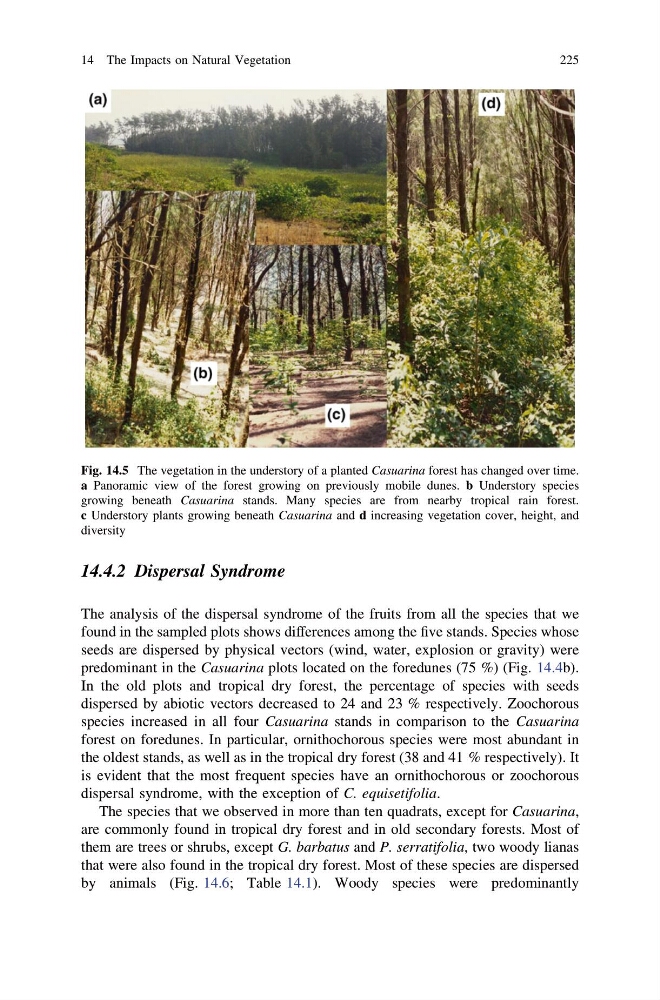
Fig. 14.5 The vegetation in the understory of a planted Casuarina forest has changed over time.
a Panoramic view of the forest growing on previously mobile dunes. b Understory species
growing beneath Casuarina stands. Many species are from nearby tropical rain forest.
c Understory plants growing beneath Casuarina and d increasing vegetation cover, height, and
diversity
14 The Impacts on Natural Vegetation
225
The analysis of the dispersal syndrome of the fruits from all the species that we
found in the sampled plots shows differences among the five stands. Species whose
seeds are dispersed by physical vectors (wind, water, explosion or gravity) were
predominant in the Casuarina plots located on the foredunes (75 %) (Fig. 14.4b).
In the old plots and tropical dry forest, the percentage of species with seeds
dispersed by abiotic vectors decreased to 24 and 23 % respectively. Zoochorous
species increased in all four Casuarina stands in comparison to the Casuarina
forest on foredunes. In particular, ornithochorous species were most abundant in
the oldest stands, as well as in the tropical dry forest (38 and 41 % respectively). It
is evident that the most frequent species have an ornithochorous or zoochorous
dispersal syndrome, with the exception of C. equisetifolia.
The species that we observed in more than ten quadrats, except for Casuarina,
are commonly found in tropical dry forest and in old secondary forests. Most of
them are trees or shrubs, except G. barbatus and P. serratifolia, two woody lianas
that were also found in the tropical dry forest. Most of these species are dispersed
by animals (Fig. 14.6; Table 14.1). Woody species were predominantly
Fig. 14.5 The vegetation in the understory of a planted Casuarina forest has changed over time.
a Panoramic view of the forest growing on previously mobile dunes. b Understory species
growing beneath Casuarina stands. Many species are from nearby tropical rain forest.
c Understory plants growing beneath Casuarina and d increasing vegetation cover, height, and
diversity
14 The Impacts on Natural Vegetation
225