

Karkinitsky Bay of the Black Sea (Fig. 17.3). Perhaps this is due to post-accident
transport the dissolved radionuclides by the Black Sea current from the area of the
Dnieper-Bug estuary, to which the NCC waters now resets, to the central area of the
Black Sea.
The components of
137 Cs and
90 Sr balance in the Black Sea before and after the
ChNPP accident (Fig. 17.5), obtained on base analysis of the primary data and
published materials (Buesseler et al. 1990; Gudiksen et al. 1991; Voitsekhovich
et al. 1997; Chudinovskikh et al. 2004; Database ORChB IMBR 2006; Polikarpov
et al. 2008) are presented.
Study of the radiological response of the Black Sea on the ChNPP accident
showed that the main factors of the formation of radioactive contamination fields
were: atmospheric fallout on the surface of the sea, inflow of the radionuclides in
the oxygen zone with the runoff of the rivers and their transport through the straits,
migration into deep zone and removal by sedimentation into the thickness of
bottom sediments (Fig. 17.5). Inflow of
90 Sr with atmospheric fallout on the
Black Sea water area in 1986 was 100–300 TBq and for 137Cs –1700–2400 TBq.
For the period 1986–2000 years the 160 Æ 28 TBq of
90
Sr and 22.6 Æ 5.4 TBq
137 Cs
had realized at sea with the runoff of the largest Rivers (the Dnieper and the
Danube) of the Black Sea (Polikarpov et al. 2008). Thus, the total flow of
90 Sr
into the Black Sea from 1986 to 2000 can be estimated as 260–460 TBq and
137 Cs –
1723–2423 TBq. By 2000, the sedimentary depositing of
90 Sr into the thickness of
the bottom sediments of the Black Sea amounted to only 0.4 TBq, or 0.09–0.15% of
1980
1990
2000
2010
2020
10
100
1000
90 Sr before the Chernobyl NPP accident
Forecast
estimation
Years
Bq m -3
T 05 =7.6 year
R 2 =0.68
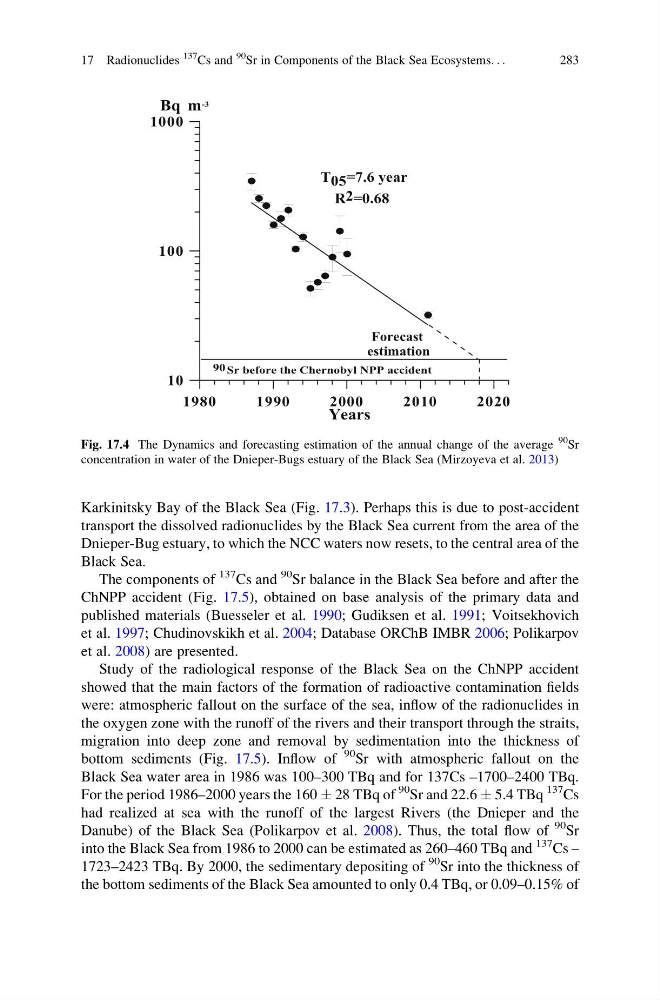
Fig. 17.4 The Dynamics and forecasting estimation of the annual change of the average
90
Sr
concentration in water of the Dnieper-Bugs estuary of the Black Sea (Mirzoyeva et al. 2013)
17 Radionuclides
137
Cs and
90
Sr in Components of the Black Sea Ecosystems. . .
283
transport the dissolved radionuclides by the Black Sea current from the area of the
Dnieper-Bug estuary, to which the NCC waters now resets, to the central area of the
Black Sea.
The components of
137 Cs and
90 Sr balance in the Black Sea before and after the
ChNPP accident (Fig. 17.5), obtained on base analysis of the primary data and
published materials (Buesseler et al. 1990; Gudiksen et al. 1991; Voitsekhovich
et al. 1997; Chudinovskikh et al. 2004; Database ORChB IMBR 2006; Polikarpov
et al. 2008) are presented.
Study of the radiological response of the Black Sea on the ChNPP accident
showed that the main factors of the formation of radioactive contamination fields
were: atmospheric fallout on the surface of the sea, inflow of the radionuclides in
the oxygen zone with the runoff of the rivers and their transport through the straits,
migration into deep zone and removal by sedimentation into the thickness of
bottom sediments (Fig. 17.5). Inflow of
90 Sr with atmospheric fallout on the
Black Sea water area in 1986 was 100–300 TBq and for 137Cs –1700–2400 TBq.
For the period 1986–2000 years the 160 Æ 28 TBq of
90
Sr and 22.6 Æ 5.4 TBq
137 Cs
had realized at sea with the runoff of the largest Rivers (the Dnieper and the
Danube) of the Black Sea (Polikarpov et al. 2008). Thus, the total flow of
90 Sr
into the Black Sea from 1986 to 2000 can be estimated as 260–460 TBq and
137 Cs –
1723–2423 TBq. By 2000, the sedimentary depositing of
90 Sr into the thickness of
the bottom sediments of the Black Sea amounted to only 0.4 TBq, or 0.09–0.15% of
1980
1990
2000
2010
2020
10
100
1000
90 Sr before the Chernobyl NPP accident
Forecast
estimation
Years
Bq m -3
T 05 =7.6 year
R 2 =0.68
Fig. 17.4 The Dynamics and forecasting estimation of the annual change of the average
90
Sr
concentration in water of the Dnieper-Bugs estuary of the Black Sea (Mirzoyeva et al. 2013)
17 Radionuclides
137
Cs and
90
Sr in Components of the Black Sea Ecosystems. . .
283