

7.2 Participatory Action
167
Collaborative process
Trust building
Commitment
to process
Shared
understanding
Intermediate
outcomes
Face-to-face
dialogue
Starting conditions
Power-resourceknowledge
asymmetries
Incentive for and
constraints on
participation
Prehistory of
cooperation or
conflict
(initial trust level)
Institutional design
Outcomes
Facilitative leadership
(including empowerment)
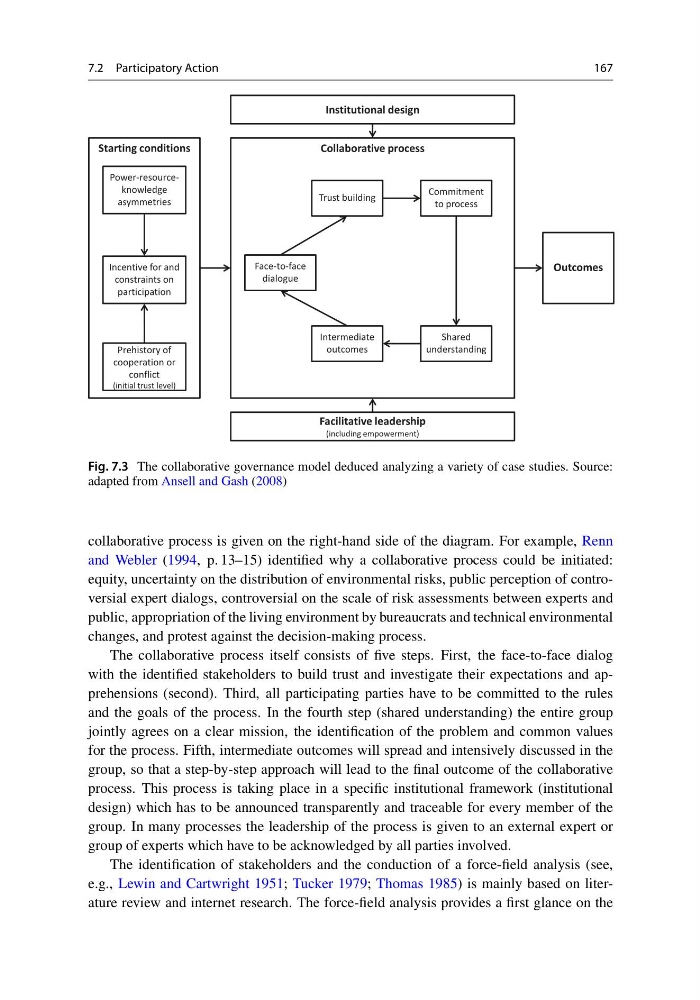
Fig. 7.3 The collaborative governance model deduced analyzing a variety of case studies. Source:
adapted from Ansell and Gash (2008)
collaborative process is given on the right-hand side of the diagram. For example, Renn
and Webler (1994, p. 13–15) identified why a collaborative process could be initiated:
equity, uncertainty on the distribution of environmental risks, public perception of controversial expert dialogs, controversial on the scale of risk assessments between experts and
public, appropriation of the living environment by bureaucrats and technical environmental
changes, and protest against the decision-making process.
The collaborative process itself consists of five steps. First, the face-to-face dialog
with the identified stakeholders to build trust and investigate their expectations and apprehensions (second). Third, all participating parties have to be committed to the rules
and the goals of the process. In the fourth step (shared understanding) the entire group
jointly agrees on a clear mission, the identification of the problem and common values
for the process. Fifth, intermediate outcomes will spread and intensively discussed in the
group, so that a step-by-step approach will lead to the final outcome of the collaborative
process. This process is taking place in a specific institutional framework (institutional
design) which has to be announced transparently and traceable for every member of the
group. In many processes the leadership of the process is given to an external expert or
group of experts which have to be acknowledged by all parties involved.
The identification of stakeholders and the conduction of a force-field analysis (see,
e.g., Lewin and Cartwright 1951; Tucker 1979; Thomas 1985) is mainly based on literature review and internet research. The force-field analysis provides a first glance on the
167
Collaborative process
Trust building
Commitment
to process
Shared
understanding
Intermediate
outcomes
Face-to-face
dialogue
Starting conditions
Power-resourceknowledge
asymmetries
Incentive for and
constraints on
participation
Prehistory of
cooperation or
conflict
(initial trust level)
Institutional design
Outcomes
Facilitative leadership
(including empowerment)
Fig. 7.3 The collaborative governance model deduced analyzing a variety of case studies. Source:
adapted from Ansell and Gash (2008)
collaborative process is given on the right-hand side of the diagram. For example, Renn
and Webler (1994, p. 13–15) identified why a collaborative process could be initiated:
equity, uncertainty on the distribution of environmental risks, public perception of controversial expert dialogs, controversial on the scale of risk assessments between experts and
public, appropriation of the living environment by bureaucrats and technical environmental
changes, and protest against the decision-making process.
The collaborative process itself consists of five steps. First, the face-to-face dialog
with the identified stakeholders to build trust and investigate their expectations and apprehensions (second). Third, all participating parties have to be committed to the rules
and the goals of the process. In the fourth step (shared understanding) the entire group
jointly agrees on a clear mission, the identification of the problem and common values
for the process. Fifth, intermediate outcomes will spread and intensively discussed in the
group, so that a step-by-step approach will lead to the final outcome of the collaborative
process. This process is taking place in a specific institutional framework (institutional
design) which has to be announced transparently and traceable for every member of the
group. In many processes the leadership of the process is given to an external expert or
group of experts which have to be acknowledged by all parties involved.
The identification of stakeholders and the conduction of a force-field analysis (see,
e.g., Lewin and Cartwright 1951; Tucker 1979; Thomas 1985) is mainly based on literature review and internet research. The force-field analysis provides a first glance on the