

Collection, Enumeration, and Biomass of Zooplankton
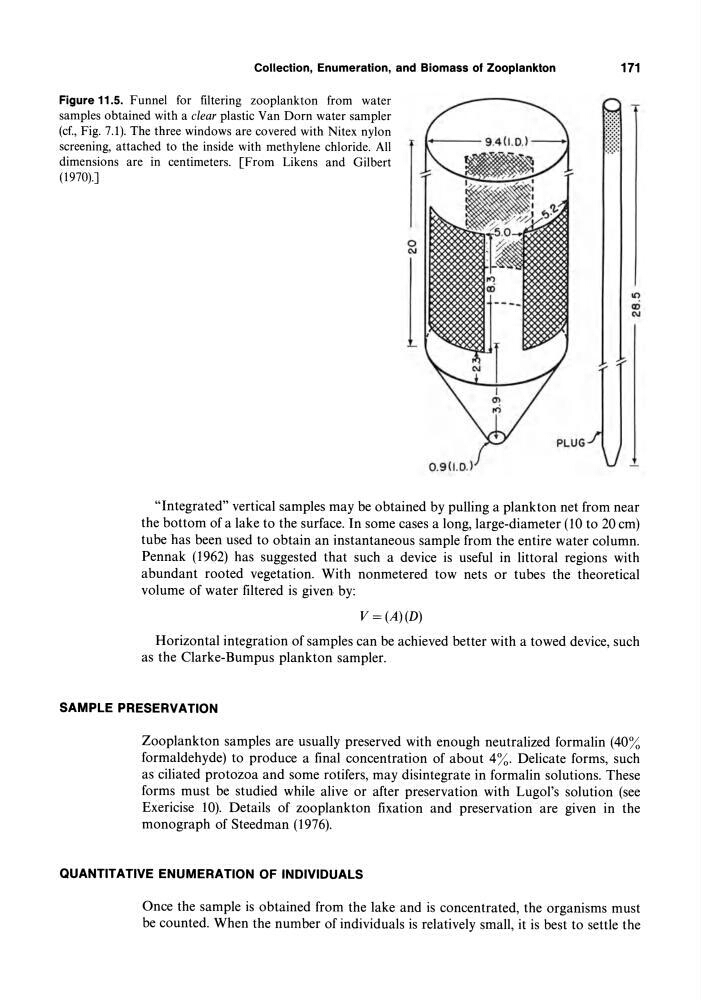
Figure 11.5. Funnel for filtering zooplankton from water
samples obtained with a clear plastic Van Dorn water sampler
(cf., Fig. 7.1). The three windows are covered with Nitex nylon
screening, attached to the inside with methylene chloride. All
dimensions are in centimeters. [From Likens and Gilbert
(1970).J
----III
171
"Integrated" vertical samples may be obtained by pulling a plankton net from near
the bottom of a lake to the surface. In some cases a long, large-diameter (10 to 20 cm)
tube has been used to obtain an instantaneous sample from the entire water column.
Pennak (1962) has suggested that such a device is useful in littoral regions with
abundant rooted vegetation. With nonmetered tow nets or tubes the theoretical
volume of water filtered is given by:
v = (A) (D)
Horizontal integration of samples can be achieved better with a towed device, such
as the Clarke-Bumpus plankton sampler.
SAMPLE PRESERVATION
Zooplankton samples are usually preserved with enough neutralized formalin (40%
formaldehyde) to produce a final concentration of about 4%. Delicate forms, such
as ciliated protozoa and some rotifers, may disintegrate in formalin solutions. These
forms must be studied while alive or after preservation with Lugol's solution (see
Exericise 10). Details of zooplankton fixation and preservation are given in the
monograph of Steedman (1976).
QUANTITATIVE ENUMERATION OF INDIVIDUALS
Once the sample is obtained from the lake and is concentrated, the organisms must
be counted. When the number of individuals is relatively small, it is best to settle the
Figure 11.5. Funnel for filtering zooplankton from water
samples obtained with a clear plastic Van Dorn water sampler
(cf., Fig. 7.1). The three windows are covered with Nitex nylon
screening, attached to the inside with methylene chloride. All
dimensions are in centimeters. [From Likens and Gilbert
(1970).J
----III
171
"Integrated" vertical samples may be obtained by pulling a plankton net from near
the bottom of a lake to the surface. In some cases a long, large-diameter (10 to 20 cm)
tube has been used to obtain an instantaneous sample from the entire water column.
Pennak (1962) has suggested that such a device is useful in littoral regions with
abundant rooted vegetation. With nonmetered tow nets or tubes the theoretical
volume of water filtered is given by:
v = (A) (D)
Horizontal integration of samples can be achieved better with a towed device, such
as the Clarke-Bumpus plankton sampler.
SAMPLE PRESERVATION
Zooplankton samples are usually preserved with enough neutralized formalin (40%
formaldehyde) to produce a final concentration of about 4%. Delicate forms, such
as ciliated protozoa and some rotifers, may disintegrate in formalin solutions. These
forms must be studied while alive or after preservation with Lugol's solution (see
Exericise 10). Details of zooplankton fixation and preservation are given in the
monograph of Steedman (1976).
QUANTITATIVE ENUMERATION OF INDIVIDUALS
Once the sample is obtained from the lake and is concentrated, the organisms must
be counted. When the number of individuals is relatively small, it is best to settle the