

Study of Microbial Methane Oxidation Using 14C
227
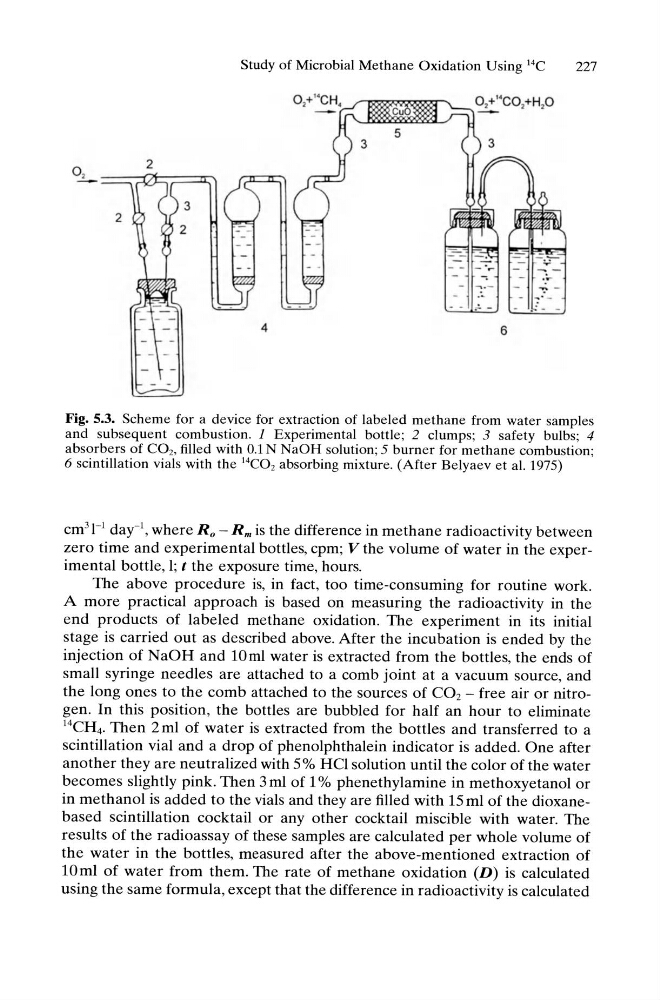
Fig. 5.3. Scheme for a device for extraction of labeled methane from water samples
and subsequent combustion. 1 Experimental bottle; 2 clumps; 3 safety bulbs; 4
absorbers of CO2, filled with 0.1 N NaOH solution; 5 burner for methane combustion;
6 scintillation vials with the 14COz absorbing mixture. (After Belyaev et al. 1975)
cm31~1 day~l, where Ro - Rm is the difference in methane radioactivity between
zero time and experimental bottles, cpm; V the volume of water in the experimental bottle, 1; t the exposure time, hours.
The above procedure is, in fact, too time-consuming for routine work.
A more practical approach is based on measuring the radioactivity in the
end products of labeled methane oxidation. The experiment in its initial
stage is carried out as described above. After the incubation is ended by the
injection of NaOH and lOml water is extracted from the bottles, the ends of
small syringe needles are attached to a comb joint at a vacuum source, and
the long ones to the comb attached to the sources of CO2 - free air or nitrogen. In this position, the bottles are bubbled for half an hour to eliminate
14CH4. Then 2ml of water is extracted from the bottles and transferred to a
scintillation vial and a drop of phenolphthalein indicator is added. One after
another they are neutralized with 5% Hel solution until the color of the water
becomes slightly pink. Then 3 ml of 1 % phenethylamine in methoxyetanol or
in methanol is added to the vials and they are filled with 15 ml of the dioxanebased scintillation cocktail or any other cocktail miscible with water. The
results of the radioassay of these samples are calculated per whole volume of
the water in the bottles, measured after the above-mentioned extraction of
10ml of water from them. The rate of methane oxidation (D) is calculated
using the same formula, except that the difference in radioactivity is calculated
227
Fig. 5.3. Scheme for a device for extraction of labeled methane from water samples
and subsequent combustion. 1 Experimental bottle; 2 clumps; 3 safety bulbs; 4
absorbers of CO2, filled with 0.1 N NaOH solution; 5 burner for methane combustion;
6 scintillation vials with the 14COz absorbing mixture. (After Belyaev et al. 1975)
cm31~1 day~l, where Ro - Rm is the difference in methane radioactivity between
zero time and experimental bottles, cpm; V the volume of water in the experimental bottle, 1; t the exposure time, hours.
The above procedure is, in fact, too time-consuming for routine work.
A more practical approach is based on measuring the radioactivity in the
end products of labeled methane oxidation. The experiment in its initial
stage is carried out as described above. After the incubation is ended by the
injection of NaOH and lOml water is extracted from the bottles, the ends of
small syringe needles are attached to a comb joint at a vacuum source, and
the long ones to the comb attached to the sources of CO2 - free air or nitrogen. In this position, the bottles are bubbled for half an hour to eliminate
14CH4. Then 2ml of water is extracted from the bottles and transferred to a
scintillation vial and a drop of phenolphthalein indicator is added. One after
another they are neutralized with 5% Hel solution until the color of the water
becomes slightly pink. Then 3 ml of 1 % phenethylamine in methoxyetanol or
in methanol is added to the vials and they are filled with 15 ml of the dioxanebased scintillation cocktail or any other cocktail miscible with water. The
results of the radioassay of these samples are calculated per whole volume of
the water in the bottles, measured after the above-mentioned extraction of
10ml of water from them. The rate of methane oxidation (D) is calculated
using the same formula, except that the difference in radioactivity is calculated