

THE NEAR-SURFACE LAYER OF THE OCEAN
difficult, even though considerable empirical studies on the breaking process
are available.
Mason (1952) distinguished two types of breaking waves, spilling and
plunging breakers, applying to most situations in the open ocean. The
transition from one kind to another is gradual, so such classification is more
qualitative than quantitative. Galvin (1972) extended this empirical
classification by introducing also collapsing and surging breakers, which are
typical for shoreline.
In the open ocean, when the wave height reaches its maximum value,
breaking first appears as foam and bubbles on the crests of the steepest
waves. This is a spilling breaker according to the Galvin (1972)
classification. It is usually accompanied by a relatively small amount of
kinetic energy dissipation, and the wave crest for this type of breaker is
almost symmetric.
When the front face of the wave becomes steep, the crest curls over the
front face and falls into the base of the wave producing a large splash. This
plunging breaker type is not unusual for wave breaking on beaches but much
less frequent for deepwater waves.
In general, the problem of surface wave instability in deep water is a
three-dimensional one. McLean et al. (1981) found two types of threedimensional instability of finite-amplitude surface waves. Su (1982) later
reported experimental evidence of these types of instabilities.
Spilling breakers are typical for deepwater (open ocean) conditions. A
characteristic property of a spilling breaker is that, as it breaks gently at the
48
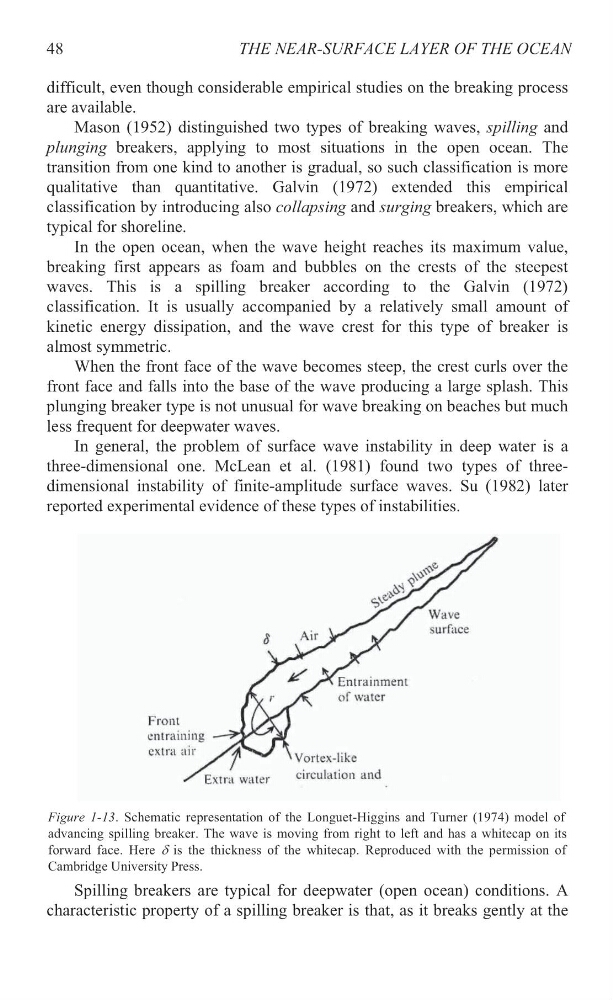
Figure 1-13. Schematic representation of the Longuet-Higgins and Turner (1974) model of
advancing spilling breaker. The wave is moving from right to left and has a whitecap on its
forward face. Here G is the thickness of the whitecap. Reproduced with the permission of
Cambridge University Press.
difficult, even though considerable empirical studies on the breaking process
are available.
Mason (1952) distinguished two types of breaking waves, spilling and
plunging breakers, applying to most situations in the open ocean. The
transition from one kind to another is gradual, so such classification is more
qualitative than quantitative. Galvin (1972) extended this empirical
classification by introducing also collapsing and surging breakers, which are
typical for shoreline.
In the open ocean, when the wave height reaches its maximum value,
breaking first appears as foam and bubbles on the crests of the steepest
waves. This is a spilling breaker according to the Galvin (1972)
classification. It is usually accompanied by a relatively small amount of
kinetic energy dissipation, and the wave crest for this type of breaker is
almost symmetric.
When the front face of the wave becomes steep, the crest curls over the
front face and falls into the base of the wave producing a large splash. This
plunging breaker type is not unusual for wave breaking on beaches but much
less frequent for deepwater waves.
In general, the problem of surface wave instability in deep water is a
three-dimensional one. McLean et al. (1981) found two types of threedimensional instability of finite-amplitude surface waves. Su (1982) later
reported experimental evidence of these types of instabilities.
Spilling breakers are typical for deepwater (open ocean) conditions. A
characteristic property of a spilling breaker is that, as it breaks gently at the
48
Figure 1-13. Schematic representation of the Longuet-Higgins and Turner (1974) model of
advancing spilling breaker. The wave is moving from right to left and has a whitecap on its
forward face. Here G is the thickness of the whitecap. Reproduced with the permission of
Cambridge University Press.