

and diagonal shear crack (Fig. 15b); short beam (
L
h = 1.9) failed after diagonal shear
cracking (Fig. 15c).
In comparison with the processes observed in sea ice tests, it can be noted that
compression at beam deformation after initiation of the flexural cracks played a
significantly less important role. It is explained by the fact that the model ice in these
tests was strongly non-uniform across its thickness, i.e. the failure processes were
mainly governed by fracturing of the hard surface layer of small thickness. At
cracking (flexural or shear) the surface layer was not only fractured but also flaked,
and a softer underlayer started to take the load. From the force records of beam tests
with #Col3 (
L
h = 6.7) and #Col4 (
L
h = 4.9) shown in Fig. 16 it can be seen that
compression forces are much less than the forces causing ice failure due to bending
or shear.
a)
Beam #Col3
b)
Beam #Col6
c)
Beam #Col5
Fig. 15 Failure patterns of columnar model ice
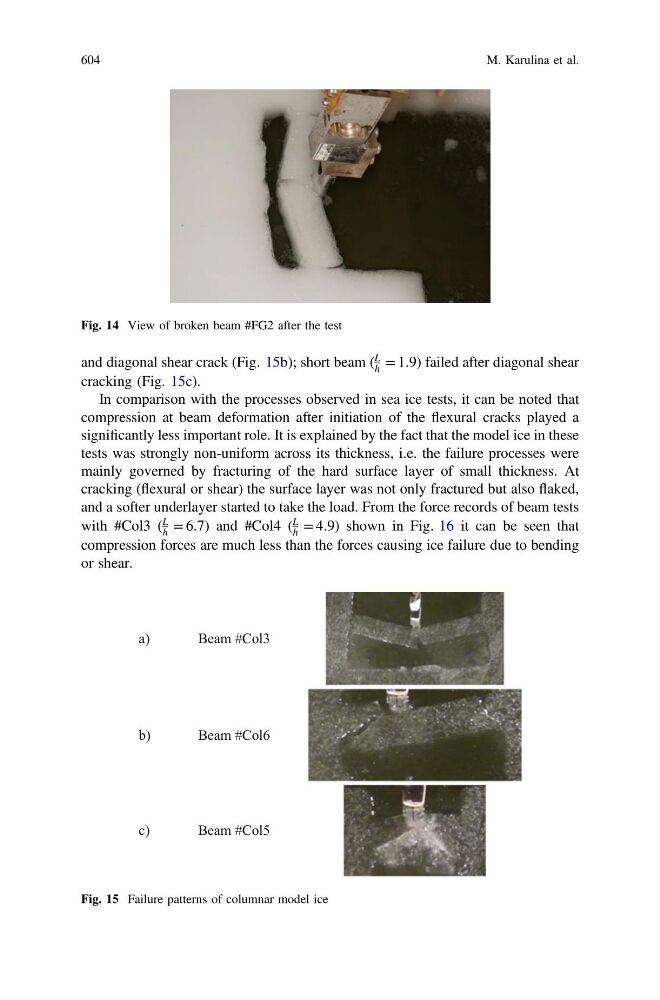
Fig. 14 View of broken beam #FG2 after the test
604
M. Karulina et al.
L
h = 1.9) failed after diagonal shear
cracking (Fig. 15c).
In comparison with the processes observed in sea ice tests, it can be noted that
compression at beam deformation after initiation of the flexural cracks played a
significantly less important role. It is explained by the fact that the model ice in these
tests was strongly non-uniform across its thickness, i.e. the failure processes were
mainly governed by fracturing of the hard surface layer of small thickness. At
cracking (flexural or shear) the surface layer was not only fractured but also flaked,
and a softer underlayer started to take the load. From the force records of beam tests
with #Col3 (
L
h = 6.7) and #Col4 (
L
h = 4.9) shown in Fig. 16 it can be seen that
compression forces are much less than the forces causing ice failure due to bending
or shear.
a)
Beam #Col3
b)
Beam #Col6
c)
Beam #Col5
Fig. 15 Failure patterns of columnar model ice
Fig. 14 View of broken beam #FG2 after the test
604
M. Karulina et al.