

Calculating FRAM’s Dead Water
51
0.5
0.6
0.7
0.8
0.9
1
1.1
0
0.05
0.1
0.15
0.2
C dw
(b 0 /h 0 ) 2
F r
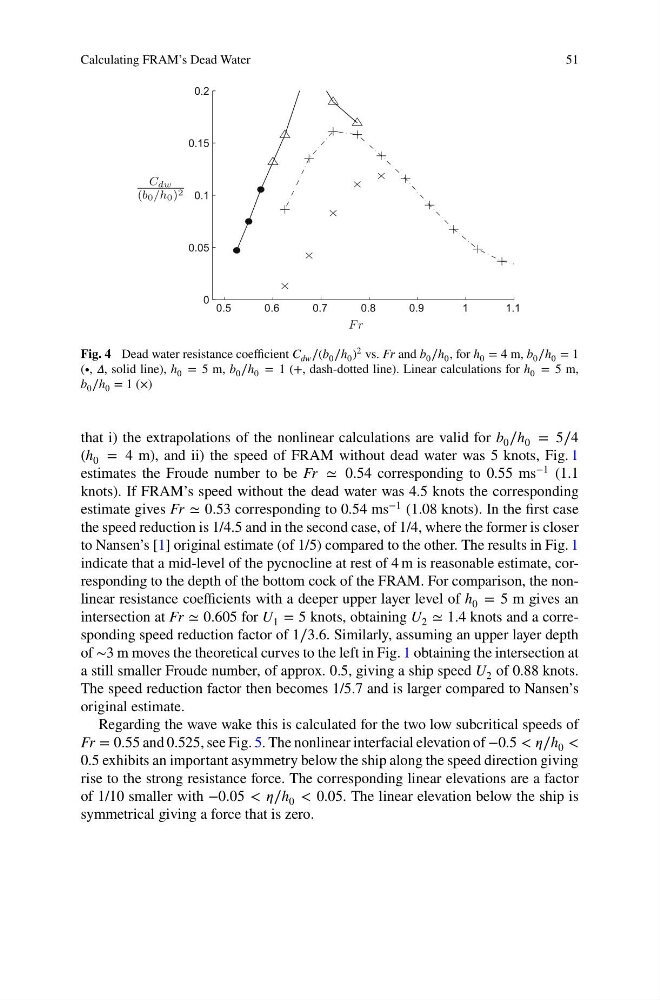
Fig. 4 Dead water resistance coefficient C dw ∕(b 0 ∕h 0 )
2 vs. Fr and b 0 ∕h 0 , for h 0 = 4 m, b 0 ∕h 0 = 1
(∙, í µí»¥, solid line), h 0 = 5 m, b 0 ∕h 0 = 1 (+, dash-dotted line). Linear calculations for h 0 = 5 m,
b 0 ∕h 0 = 1 (×)
that i) the extrapolations of the nonlinear calculations are valid for b 0 ∕h 0 = 5∕4
(h 0 = 4 m), and ii) the speed of FRAM without dead water was 5 knots, Fig. 1
estimates the Froude number to be Fr ≃ 0.54 corresponding to 0.55 ms
−1 (1.1
knots). If FRAM’s speed without the dead water was 4.5 knots the corresponding
estimate gives Fr ≃ 0.53 corresponding to 0.54 ms −1 (1.08 knots). In the first case
the speed reduction is 1/4.5 and in the second case, of 1/4, where the former is closer
to Nansen’s [1] original estimate (of 1/5) compared to the other. The results in Fig. 1
indicate that a mid-level of the pycnocline at rest of 4 m is reasonable estimate, corresponding to the depth of the bottom cock of the FRAM. For comparison, the nonlinear resistance coefficients with a deeper upper layer level of h 0 = 5 m gives an
intersection at Fr ≃ 0.605 for U 1 = 5 knots, obtaining U 2 ≃ 1.4 knots and a corresponding speed reduction factor of 1∕3.6. Similarly, assuming an upper layer depth
of ∼3 m moves the theoretical curves to the left in Fig. 1 obtaining the intersection at
a still smaller Froude number, of approx. 0.5, giving a ship speed U 2 of 0.88 knots.
The speed reduction factor then becomes 1/5.7 and is larger compared to Nansen’s
original estimate.
Regarding the wave wake this is calculated for the two low subcritical speeds of
Fr = 0.55 and 0.525, see Fig. 5. The nonlinear interfacial elevation of −0.5 < í µí¼∕h 0 <
0.5 exhibits an important asymmetry below the ship along the speed direction giving
rise to the strong resistance force. The corresponding linear elevations are a factor
of 1/10 smaller with −0.05 < í µí¼∕h 0 < 0.05. The linear elevation below the ship is
symmetrical giving a force that is zero.
51
0.5
0.6
0.7
0.8
0.9
1
1.1
0
0.05
0.1
0.15
0.2
C dw
(b 0 /h 0 ) 2
F r
Fig. 4 Dead water resistance coefficient C dw ∕(b 0 ∕h 0 )
2 vs. Fr and b 0 ∕h 0 , for h 0 = 4 m, b 0 ∕h 0 = 1
(∙, í µí»¥, solid line), h 0 = 5 m, b 0 ∕h 0 = 1 (+, dash-dotted line). Linear calculations for h 0 = 5 m,
b 0 ∕h 0 = 1 (×)
that i) the extrapolations of the nonlinear calculations are valid for b 0 ∕h 0 = 5∕4
(h 0 = 4 m), and ii) the speed of FRAM without dead water was 5 knots, Fig. 1
estimates the Froude number to be Fr ≃ 0.54 corresponding to 0.55 ms
−1 (1.1
knots). If FRAM’s speed without the dead water was 4.5 knots the corresponding
estimate gives Fr ≃ 0.53 corresponding to 0.54 ms −1 (1.08 knots). In the first case
the speed reduction is 1/4.5 and in the second case, of 1/4, where the former is closer
to Nansen’s [1] original estimate (of 1/5) compared to the other. The results in Fig. 1
indicate that a mid-level of the pycnocline at rest of 4 m is reasonable estimate, corresponding to the depth of the bottom cock of the FRAM. For comparison, the nonlinear resistance coefficients with a deeper upper layer level of h 0 = 5 m gives an
intersection at Fr ≃ 0.605 for U 1 = 5 knots, obtaining U 2 ≃ 1.4 knots and a corresponding speed reduction factor of 1∕3.6. Similarly, assuming an upper layer depth
of ∼3 m moves the theoretical curves to the left in Fig. 1 obtaining the intersection at
a still smaller Froude number, of approx. 0.5, giving a ship speed U 2 of 0.88 knots.
The speed reduction factor then becomes 1/5.7 and is larger compared to Nansen’s
original estimate.
Regarding the wave wake this is calculated for the two low subcritical speeds of
Fr = 0.55 and 0.525, see Fig. 5. The nonlinear interfacial elevation of −0.5 < í µí¼∕h 0 <
0.5 exhibits an important asymmetry below the ship along the speed direction giving
rise to the strong resistance force. The corresponding linear elevations are a factor
of 1/10 smaller with −0.05 < í µí¼∕h 0 < 0.05. The linear elevation below the ship is
symmetrical giving a force that is zero.