

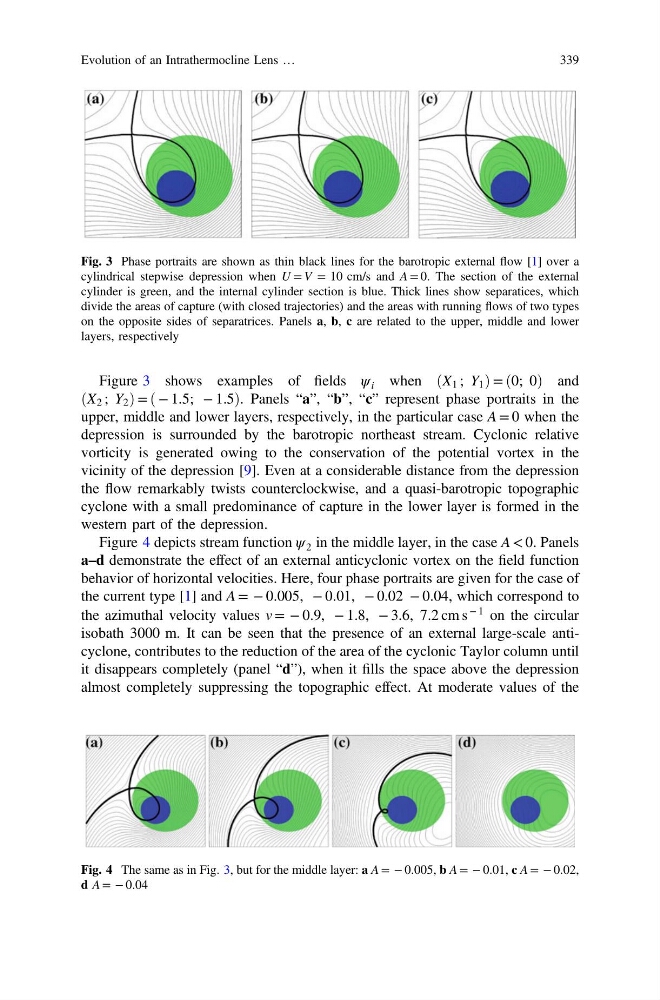
Figure 3 shows examples of fields ψ i when X 1 ; Y 1
ð
Þ= ð0; 0Þ and
X 2 ; Y 2
ð
Þ= ð − 1.5; − 1.5Þ. Panels “a”, “b”, “c” represent phase portraits in the
upper, middle and lower layers, respectively, in the particular case A = 0 when the
depression is surrounded by the barotropic northeast stream. Cyclonic relative
vorticity is generated owing to the conservation of the potential vortex in the
vicinity of the depression [9]. Even at a considerable distance from the depression
the flow remarkably twists counterclockwise, and a quasi-barotropic topographic
cyclone with a small predominance of capture in the lower layer is formed in the
western part of the depression.
Figure 4 depicts stream function ψ 2 in the middle layer, in the case A < 0. Panels
a–d demonstrate the effect of an external anticyclonic vortex on the field function
behavior of horizontal velocities. Here, four phase portraits are given for the case of
the current type [1] and A = − 0.005, − 0.01, − 0.02 − 0.04, which correspond to
the azimuthal velocity values v = − 0.9, − 1.8, − 3.6, 7.2 cm s
− 1 on the circular
isobath 3000 m. It can be seen that the presence of an external large-scale anticyclone, contributes to the reduction of the area of the cyclonic Taylor column until
it disappears completely (panel “d”), when it fills the space above the depression
almost completely suppressing the topographic effect. At moderate values of the
Fig. 3 Phase portraits are shown as thin black lines for the barotropic external flow [1] over a
cylindrical stepwise depression when U = V = 10 cm/s and A = 0. The section of the external
cylinder is green, and the internal cylinder section is blue. Thick lines show separatices, which
divide the areas of capture (with closed trajectories) and the areas with running flows of two types
on the opposite sides of separatrices. Panels a, b, c are related to the upper, middle and lower
layers, respectively
Fig. 4 The same as in Fig. 3, but for the middle layer: a A = − 0.005, b A = − 0.01, c A = − 0.02,
d A = − 0.04
Evolution of an Intrathermocline Lens …
339
ð
Þ= ð0; 0Þ and
X 2 ; Y 2
ð
Þ= ð − 1.5; − 1.5Þ. Panels “a”, “b”, “c” represent phase portraits in the
upper, middle and lower layers, respectively, in the particular case A = 0 when the
depression is surrounded by the barotropic northeast stream. Cyclonic relative
vorticity is generated owing to the conservation of the potential vortex in the
vicinity of the depression [9]. Even at a considerable distance from the depression
the flow remarkably twists counterclockwise, and a quasi-barotropic topographic
cyclone with a small predominance of capture in the lower layer is formed in the
western part of the depression.
Figure 4 depicts stream function ψ 2 in the middle layer, in the case A < 0. Panels
a–d demonstrate the effect of an external anticyclonic vortex on the field function
behavior of horizontal velocities. Here, four phase portraits are given for the case of
the current type [1] and A = − 0.005, − 0.01, − 0.02 − 0.04, which correspond to
the azimuthal velocity values v = − 0.9, − 1.8, − 3.6, 7.2 cm s
− 1 on the circular
isobath 3000 m. It can be seen that the presence of an external large-scale anticyclone, contributes to the reduction of the area of the cyclonic Taylor column until
it disappears completely (panel “d”), when it fills the space above the depression
almost completely suppressing the topographic effect. At moderate values of the
Fig. 3 Phase portraits are shown as thin black lines for the barotropic external flow [1] over a
cylindrical stepwise depression when U = V = 10 cm/s and A = 0. The section of the external
cylinder is green, and the internal cylinder section is blue. Thick lines show separatices, which
divide the areas of capture (with closed trajectories) and the areas with running flows of two types
on the opposite sides of separatrices. Panels a, b, c are related to the upper, middle and lower
layers, respectively
Fig. 4 The same as in Fig. 3, but for the middle layer: a A = − 0.005, b A = − 0.01, c A = − 0.02,
d A = − 0.04
Evolution of an Intrathermocline Lens …
339