

Chapter 4: FINE STRUCTURE AND MICROSTRUCTURE
sporadic mixing event possibly driven by shear. Below 8 m, turbulence
levels are close to the noise level of the sensor.
The third example (X Figure 4-2c) represents low wind speed conditions.
There is a diurnal thermocline near the surface. While the diurnal mixed
layer is not clearly seen in the temperature profile, intense velocity
fluctuations in the upper 0.5 m indicate the presence of mixing.
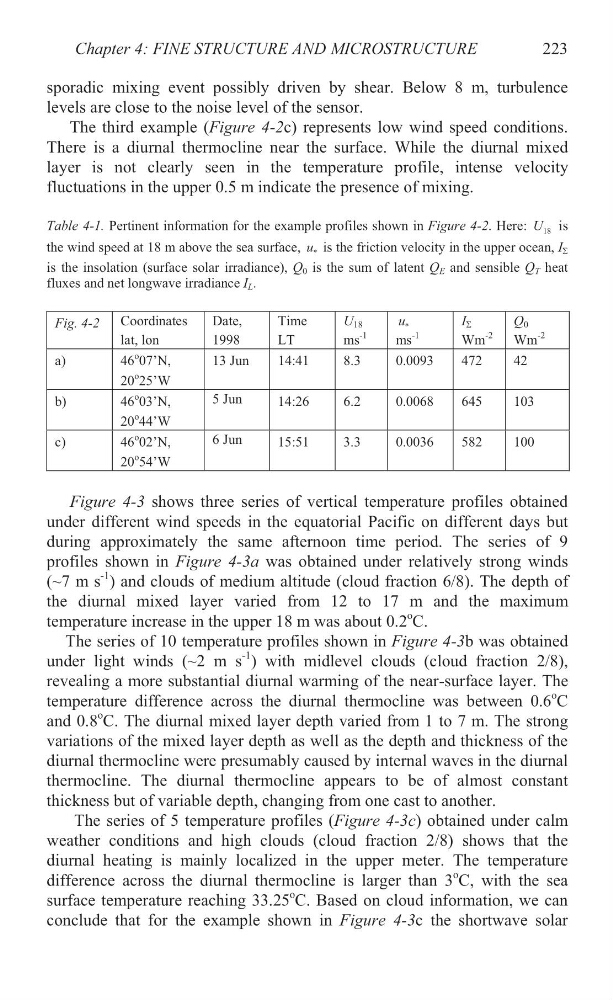
Table 4-1. Pertinent information for the example profiles shown in Figure 4-2X . Here: 18
U is
the wind speed at 18 m above the sea surface, *
u is the friction velocity in the upper ocean, IB 6 B
is the insolation (surface solar irradiance), QB 0 B is the sum of latent QB E B and sensible QB T B heat
fluxes and net longwave irradiance IB L B .
Fig. 4-2
Coordinates
lat, lon
Date,
1998
Time
LT
UB 18
msP
-1
P
*
u
msP
-1
P
IB 6 B
WmP
-2
P
QB 0 B
WmP
-2
P
a)
46P
o
P07’N,
20P
o
P25’W
13 Jun
14:41
8.3
0.0093
472
42
b)
46P
o
P03’N,
20P
o
P44’W
5 Jun
14:26
6.2
0.0068
645
103
c)
46P
o
P02’N,
20P
o
P54’W
6 Jun
15:51
3.3
0.0036
582
100
Figure 4-3 shows three series of vertical temperature profiles obtained
under different wind speeds in the equatorial Pacific on different days but
during approximately the same afternoon time period. The series of 9
profiles shown in X Figure 4-3X a was obtained under relatively strong winds
(~7 m sP
-1
P)
and clouds of medium altitude (cloud fraction 6/8). The depth of
the diurnal mixed layer varied from 12 to 17 m and the maximum
temperature increase in the upper 18 m was about 0.2P
o
PC.
The series of 10 temperature profiles shown in Figure 4-3X b was obtained
under light winds (~2 m sP
-1
P)
with midlevel clouds (cloud fraction 2/8),
revealing a more substantial diurnal warming of the near-surface layer. The
temperature difference across the diurnal thermocline was between 0.6P
o
PC
and 0.8P
o
PC.
The diurnal mixed layer depth varied from 1 to 7 m. The strong
variations of the mixed layer depth as well as the depth and thickness of the
diurnal thermocline were presumably caused by internal waves in the diurnal
thermocline. The diurnal thermocline appears to be of almost constant
thickness but of variable depth, changing from one cast to another.
The series of 5 temperature profiles (X Figure 4-3X c) obtained under calm
weather conditions and high clouds (cloud fraction 2/8) shows that the
diurnal heating is mainly localized in the upper meter. The temperature
difference across the diurnal thermocline is larger than 3P
o
PC,
with the sea
surface temperature reaching 33.25P
o
PC.
Based on cloud information, we can
conclude that for the example shown in X Figure 4-3c the shortwave solar
223
sporadic mixing event possibly driven by shear. Below 8 m, turbulence
levels are close to the noise level of the sensor.
The third example (X Figure 4-2c) represents low wind speed conditions.
There is a diurnal thermocline near the surface. While the diurnal mixed
layer is not clearly seen in the temperature profile, intense velocity
fluctuations in the upper 0.5 m indicate the presence of mixing.
Table 4-1. Pertinent information for the example profiles shown in Figure 4-2X . Here: 18
U is
the wind speed at 18 m above the sea surface, *
u is the friction velocity in the upper ocean, IB 6 B
is the insolation (surface solar irradiance), QB 0 B is the sum of latent QB E B and sensible QB T B heat
fluxes and net longwave irradiance IB L B .
Fig. 4-2
Coordinates
lat, lon
Date,
1998
Time
LT
UB 18
msP
-1
P
*
u
msP
-1
P
IB 6 B
WmP
-2
P
QB 0 B
WmP
-2
P
a)
46P
o
P07’N,
20P
o
P25’W
13 Jun
14:41
8.3
0.0093
472
42
b)
46P
o
P03’N,
20P
o
P44’W
5 Jun
14:26
6.2
0.0068
645
103
c)
46P
o
P02’N,
20P
o
P54’W
6 Jun
15:51
3.3
0.0036
582
100
Figure 4-3 shows three series of vertical temperature profiles obtained
under different wind speeds in the equatorial Pacific on different days but
during approximately the same afternoon time period. The series of 9
profiles shown in X Figure 4-3X a was obtained under relatively strong winds
(~7 m sP
-1
P)
and clouds of medium altitude (cloud fraction 6/8). The depth of
the diurnal mixed layer varied from 12 to 17 m and the maximum
temperature increase in the upper 18 m was about 0.2P
o
PC.
The series of 10 temperature profiles shown in Figure 4-3X b was obtained
under light winds (~2 m sP
-1
P)
with midlevel clouds (cloud fraction 2/8),
revealing a more substantial diurnal warming of the near-surface layer. The
temperature difference across the diurnal thermocline was between 0.6P
o
PC
and 0.8P
o
PC.
The diurnal mixed layer depth varied from 1 to 7 m. The strong
variations of the mixed layer depth as well as the depth and thickness of the
diurnal thermocline were presumably caused by internal waves in the diurnal
thermocline. The diurnal thermocline appears to be of almost constant
thickness but of variable depth, changing from one cast to another.
The series of 5 temperature profiles (X Figure 4-3X c) obtained under calm
weather conditions and high clouds (cloud fraction 2/8) shows that the
diurnal heating is mainly localized in the upper meter. The temperature
difference across the diurnal thermocline is larger than 3P
o
PC,
with the sea
surface temperature reaching 33.25P
o
PC.
Based on cloud information, we can
conclude that for the example shown in X Figure 4-3c the shortwave solar
223