

272 Gerbrand J. Komen
are not ideal, spectra are no longer simple. This became first apparent in the
SWAMP (1985) study, when the behaviour ofmany wave models was compared in
situations that were still idealised but which differed from fetch- and duration-limited wave growth. The simplest such case is the slanting fetch situation in which
the coastline is still straight and the wind is constant but blowing under an angle.
This was found already to introduce a significant asymmetry in the spectrum.
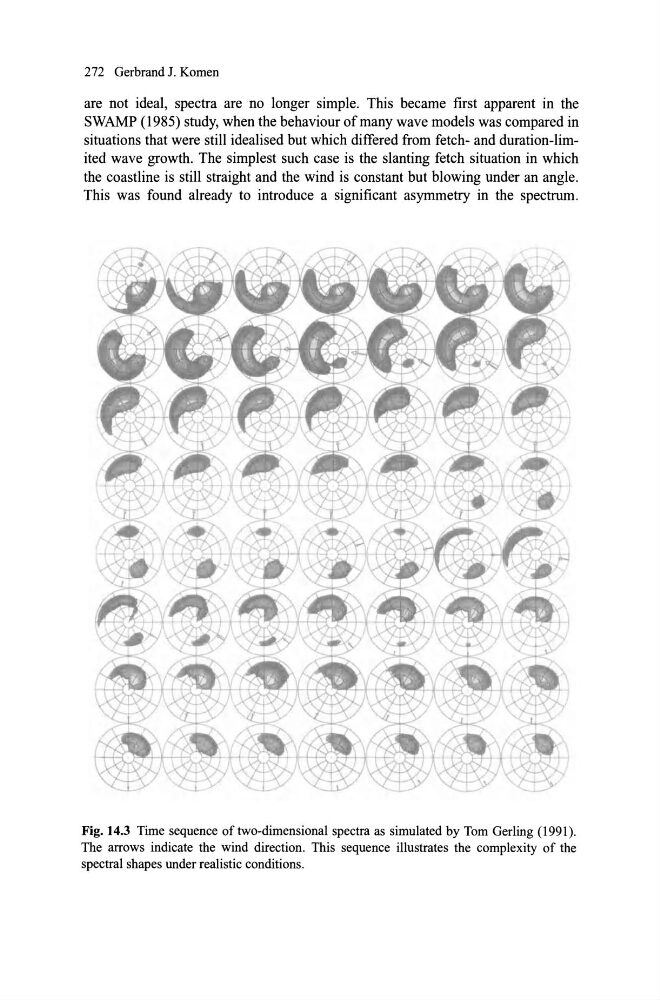
Fig. 14.3 Time sequence of two-dimensional spectra as simulated by Tom Gerling (1991).
The arrows indicate the wind direction. This sequence illustrates the complexity of the
spectral shapes under realistic conditions.
are not ideal, spectra are no longer simple. This became first apparent in the
SWAMP (1985) study, when the behaviour ofmany wave models was compared in
situations that were still idealised but which differed from fetch- and duration-limited wave growth. The simplest such case is the slanting fetch situation in which
the coastline is still straight and the wind is constant but blowing under an angle.
This was found already to introduce a significant asymmetry in the spectrum.
Fig. 14.3 Time sequence of two-dimensional spectra as simulated by Tom Gerling (1991).
The arrows indicate the wind direction. This sequence illustrates the complexity of the
spectral shapes under realistic conditions.