

Forecasting of Sea-level, Currents and Sea Ice in the Baltic Sea
Waterlevel at Ratan. T odays date 03- Sep- 1998
25 ... . .... . ..... .... , .. ... .. .... .. ... .. ... .... .. .. -. -- . - -.\
\
20 ------1------10
, \
-- - .. . - - -~_\ .\'
\
5 --\' ,:
\ .
\1 :
.... J
p orecast(solid line)
- - -Pbserwd(dashed :llne) -
239
ÎToday 1 ?OO
o --- -- --- ...... ................ ................ .. .... ..... ....... .......... .... .
08127
08129
08/31
Date 1998
09/02
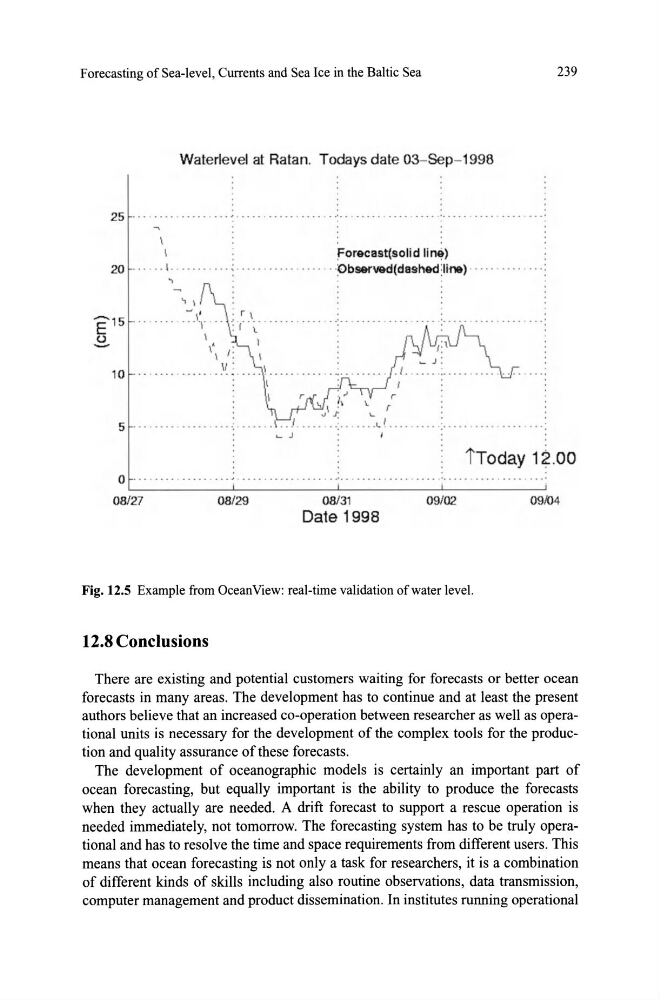
Fig. 12.5 Example from OceanView: real-time validation ofwater level.
12.8 Conclusions
09104
There are existing and potential customers waiting for forecasts or better ocean
forecasts in many areas. The development has to continue and at least the present
authors believe that an increased co-operation between researcher as well as operational units is necessary for the development of the complex tools for the production and quality assurance of these forecasts.
The development of oceanographic models is certainly an important part of
ocean forecasting, but equally important is the ability to produce the forecasts
when they actually are needed. A drift forecast to support a rescue operation is
needed immediately, not tomOITOw. The forecasting system has to be truly operational and has to resolve the time and space requirements from different users. This
means that ocean forecasting is not only a task for researchers, it is a combination
of different kinds of skills including also routine observations, data transmission,
computer management and product dissemination. In institutes running operational
Waterlevel at Ratan. T odays date 03- Sep- 1998
25 ... . .... . ..... .... , .. ... .. .... .. ... .. ... .... .. .. -. -- . - -.\
\
20 ------1------10
, \
-- - .. . - - -~_\ .\'
\
5 --\' ,:
\ .
\1 :
.... J
p orecast(solid line)
- - -Pbserwd(dashed :llne) -
239
ÎToday 1 ?OO
o --- -- --- ...... ................ ................ .. .... ..... ....... .......... .... .
08127
08129
08/31
Date 1998
09/02
Fig. 12.5 Example from OceanView: real-time validation ofwater level.
12.8 Conclusions
09104
There are existing and potential customers waiting for forecasts or better ocean
forecasts in many areas. The development has to continue and at least the present
authors believe that an increased co-operation between researcher as well as operational units is necessary for the development of the complex tools for the production and quality assurance of these forecasts.
The development of oceanographic models is certainly an important part of
ocean forecasting, but equally important is the ability to produce the forecasts
when they actually are needed. A drift forecast to support a rescue operation is
needed immediately, not tomOITOw. The forecasting system has to be truly operational and has to resolve the time and space requirements from different users. This
means that ocean forecasting is not only a task for researchers, it is a combination
of different kinds of skills including also routine observations, data transmission,
computer management and product dissemination. In institutes running operational