

124 Keith Haines
Oi
~ O<50,6
j ..
~ 0.4
a
"
.,
Ul
~ 0,2
Surface 1000 m
L,,_
O,O-'-r------,-------,------,--o
50
100
150
Oays rrom ISI January
' "
~ 0.4
g ..
Ul
~ 0,2
Below 1000m
O.O-'-r-----r------,------L----,---o
50
100
150
Oays rrom 1 si January
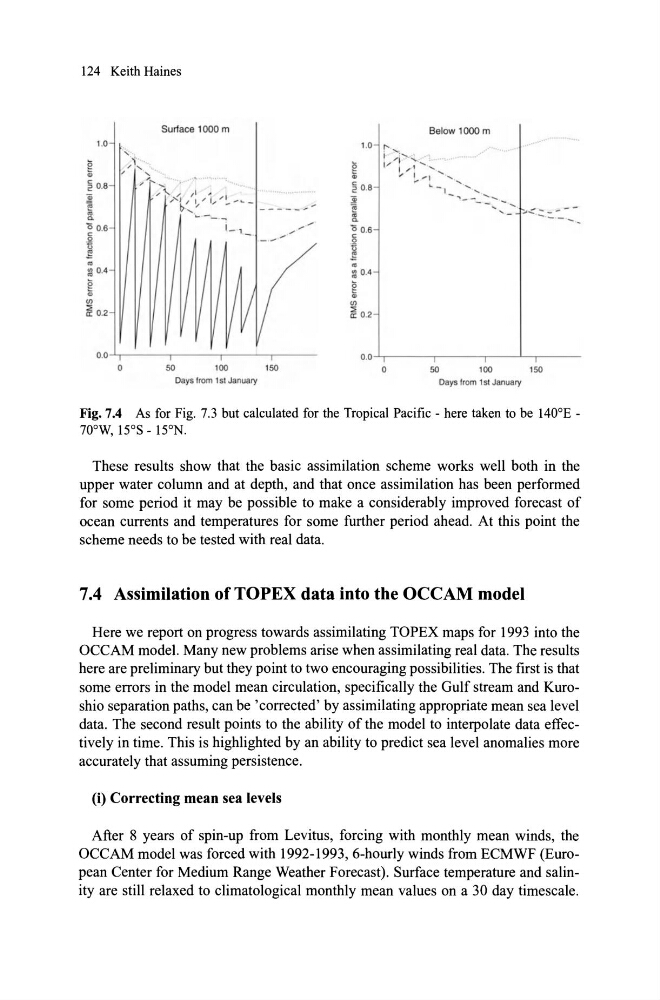
Fig.7.4 As for Fig. 7.3 but calcu\ated for the Tropica\ Pacific - here taken to be 140 0 E -
70 0 W, 15°S - 15°N.
These results show that the basic assimilation scheme works weB both in the
upper water co\umn and at depth, and that once assimilation has been performed
for some period it may be possible to make a considerably improved forecast of
ocean currents and temperatures for some further period ahead. At this point the
scheme needs to be tested with real data.
7.4 Assimilation of TOPEX data into the OCCAM model
Here we report on progress towards assimilating TOPEX maps for 1993 into the
OCCAM model. Many new prob\ems arise when assimilating real data. The results
here are preliminary but they point to two encouraging possibilities. The first is that
some errors in the model mean circulation, specifically the Gulf stream and Kuroshio separation paths, can be 'corrected' by assimilating appropriate mean sea level
data. The second result points to the ability of the model to interpolate data effectively in time. This is highlighted by an ability to predict sea level anomalies more
accurately that assuming persistence.
(i) Correcting mean sea levels
After 8 years of spin-up from Levitus, forcing with monthly mean winds, the
OCCAM model was forced with 1992-1993, 6-hourly winds from ECMWF (European Center for Medium Range Weather Forecast). Surface temperature and salinity are still relaxed to climatological monthly mean values on a 30 day timescale.
Oi
~ O<50,6
j ..
~ 0.4
a
"
.,
Ul
~ 0,2
Surface 1000 m
L,,_
O,O-'-r------,-------,------,--o
50
100
150
Oays rrom ISI January
' "
~ 0.4
g ..
Ul
~ 0,2
Below 1000m
O.O-'-r-----r------,------L----,---o
50
100
150
Oays rrom 1 si January
Fig.7.4 As for Fig. 7.3 but calcu\ated for the Tropica\ Pacific - here taken to be 140 0 E -
70 0 W, 15°S - 15°N.
These results show that the basic assimilation scheme works weB both in the
upper water co\umn and at depth, and that once assimilation has been performed
for some period it may be possible to make a considerably improved forecast of
ocean currents and temperatures for some further period ahead. At this point the
scheme needs to be tested with real data.
7.4 Assimilation of TOPEX data into the OCCAM model
Here we report on progress towards assimilating TOPEX maps for 1993 into the
OCCAM model. Many new prob\ems arise when assimilating real data. The results
here are preliminary but they point to two encouraging possibilities. The first is that
some errors in the model mean circulation, specifically the Gulf stream and Kuroshio separation paths, can be 'corrected' by assimilating appropriate mean sea level
data. The second result points to the ability of the model to interpolate data effectively in time. This is highlighted by an ability to predict sea level anomalies more
accurately that assuming persistence.
(i) Correcting mean sea levels
After 8 years of spin-up from Levitus, forcing with monthly mean winds, the
OCCAM model was forced with 1992-1993, 6-hourly winds from ECMWF (European Center for Medium Range Weather Forecast). Surface temperature and salinity are still relaxed to climatological monthly mean values on a 30 day timescale.