

704
Herterich et al.
l Initialization I
!
probably
forward step
observable
not observable
parameters
parameters
r r
1 t
corrections to
disagreement
comparison with
parameters
measured data
agreement within error bounds!
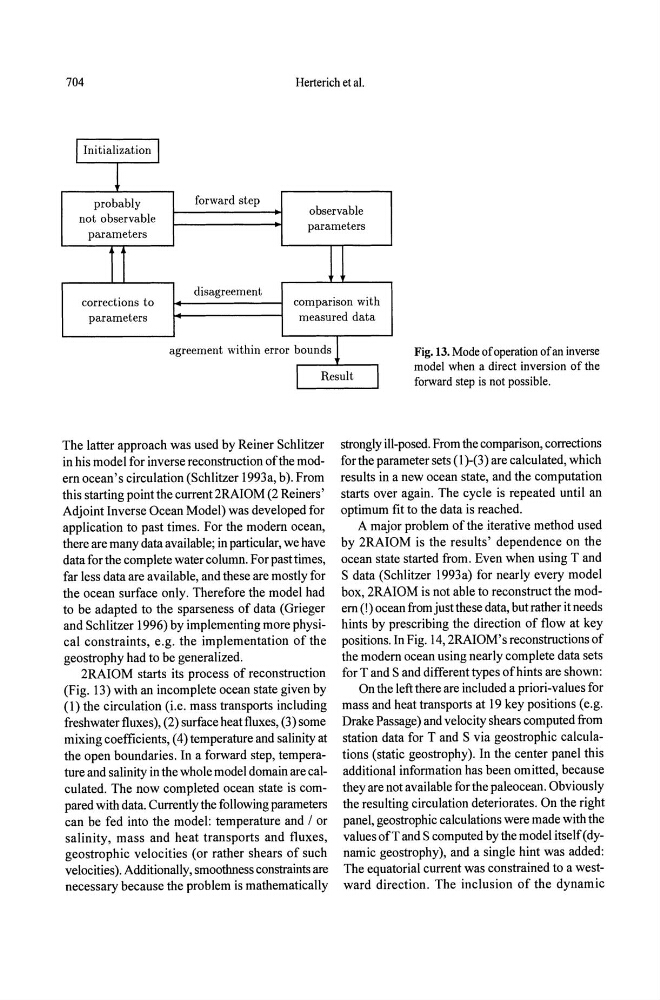
Fig. 13. Mode of operation of an inverse
model when a direct inversion of the
forward step is not possible.
I
Result
I
The latter approach was used by Reiner Schlitzer
in his model for inverse reconstruction ofthe modem ocean's circulation (Schlitzer 1993a, b). From
this starting point the current 2RAIOM (2 Reiners'
Adjoint Inverse Ocean Model) was developed for
application to past times. For the modem ocean,
there are many data available; in particular, we have
data for the complete water column. For pasttimes,
far less data are available, and these are mostly for
the ocean surface only. Therefore the model had
to be adapted to the sparseness of data (Grieger
and Schlitzer 1996) by implementing more physical constraints, e.g. the implementation of the
geostrophy had to be generalized.
2RAIOM starts its process of reconstruction
(Fig. 13) with an incomplete ocean state given by
(I) the circulation (Le. mass transports including
freshwater fluxes), (2) surface heat fluxes, (3) some
mixing coefficients, (4) temperature and salinity at
the open boundaries. In a forward step, temperature and salinity in the whole model domain are calculated. The now completed ocean state is compared with data. Currently the following parameters
can be fed into the model: temperature and / or
salinity, mass and heat transports and fluxes,
geostrophic velocities (or rather shears of such
velocities). Additionally, smoothness constraints are
necessary because the problem is mathematically
strongly ill-posed. From the comparison, corrections
for the parameter sets (1 )-(3) are calculated, which
results in a new ocean state, and the computation
starts over again. The cycle is repeated until an
optimum fit to the data is reached.
A major problem of the iterative method used
by 2RAIOM is the results' dependence on the
ocean state started from. Even when using T and
S data (Schlitzer 1993a) for nearly every model
box, 2RAIOM is not able to reconstruct the modem (!) ocean from justthese data, but rather it needs
hints by prescribing the direction of flow at key
positions. In Fig. 14, 2RAIOM's reconstructions of
the modem ocean using nearly complete data sets
for T and S and different types of hints are shown:
On the left there are included a priori-values for
mass and heat transports at 19 key positions (e.g.
Drake Passage) and velocity shears computed from
station data for T and S via geostrophic calculations (static geostrophy). In the center panel this
additional information has been omitted, because
they are not available for the paleocean. Obviously
the resulting circulation deteriorates. On the right
panel, geostrophic calculations were made with the
values ofT and S computed by the model itself (dynamic geostrophy), and a single hint was added:
The equatorial current was constrained to a westward direction. The inclusion of the dynamic