

Terrestrial Organic Matter in Marine Sediments
561
15 30
25
20
15
10
~
r
"
0
• I ~ ...
/
" .
.I
A
10
15
10
.g
/ \0
.~ 0 ,
j
'\~ ,
' . . '. ;
.' .
.... , ....
B
1 0 ' - - - - - - - - - - - - - " ' - _ - - - 1
Longilude
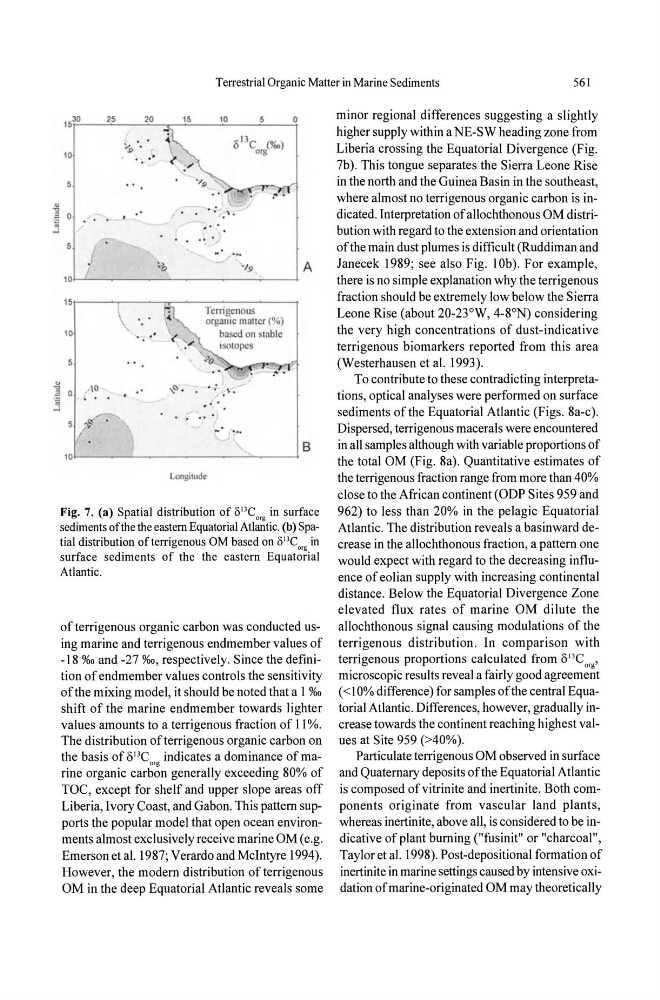
Fig. 7. (a) Spatial distribution of o l3 C O '" in surface
sediments of the the eastern Equatorial Atlantic. (b) Spatial distribution ofterrigenous OM based on o 13 C mg in
surface sediments of the the eastern Equatorial
Atlantic.
of terrigenous organic carbon was conducted using marine and terrigenous end member values of
-18 %0 and -27 %0, respectively. Since the definition of endrnember values controls the sensitivity
ofthe mixing model, it should be noted that a I 0/00
shift of the marine endmember towards lighter
values amounts to a terrigenous fraction of II %.
The distribution of terrigenous organic carbon on
the basis of 8 1J C indicates a dominance of mao's
rine organic carbon generally exceeding 80% of
TOC, except for shelf and upper slope areas off
Liberia, Ivory Coast, and Gabon. This pattern supports the popular model that open ocean environments almost exclusively receive marine OM (e.g.
Emerson et al. 1987; Verardo and McIntyre 1994).
However, the modern distribution of terrigenous
OM in the deep Equatorial Atlantic reveals some
minor regional differences suggesting a slightly
higher supply within a NE-SW heading zone from
Liberia crossing the Equatorial Divergence (Fig.
7b). This tongue separates the Sierra Leone Rise
in the north and the Guinea Basin in the southeast,
where almost no terrigenous organic carbon is indicated. Interpretation of allochthonous OM distribution with regard to the extension and orientation
ofthe main dust plumes is difficult (Ruddiman and
Janecek 1989; see also Fig. lOb). For example,
there is no simple explanation why the terrigenous
fraction should be extremely low below the Sierra
Leone Rise (about 20-23°W, 4-8°N) considering
the very high concentrations of dust-indicative
terrigenous biomarkers reported from this area
(Westerhausen et al. 1993).
To contribute to these contradicting interpretations, optical analyses were performed on surface
sediments ofthe Equatorial Atlantic (Figs. 8a-c).
Dispersed, terrigenous macerals were encountered
in all samples although with variable proportions of
the total OM (Fig. 8a). Quantitative estimates of
the terrigenous fraction range from more than 40%
close to the African continent (ODP Sites 959 and
962) to less than 20% in the pelagic Equatorial
Atlantic. The distribution reveals a basinward decrease in the allochthonous fraction, a pattern one
would expect with regard to the decreasing influence of eolian supply with increasing continental
distance. Below the Equatorial Divergence Zone
elevated flux rates of marine OM dilute the
allochthonous signal causing modulations of the
terrigenous distribution. In comparison with
terrigenous proportions calculated from Ol3C ocg'
microscopic results reveal a fairly good agreement
«10% difference) for samples of the central Equatorial Atlantic. Differences, however, gradually increase towards the continent reaching highest values at Site 959 (>40%).
Particulate terrigenous OM observed in surface
and Quaternary deposits ofthe Equatorial Atlantic
is composed of vitrinite and inertinite. Both components originate from vascular land plants,
whereas inertinite, above all, is considered to be indicative of plant burning ("fusinit" or "charcoal",
Taylor et al. 1998). Post-depositional formation of
inertinite in marine settings caused by intensive oxidation of marine-originated OM may theoretically