

456
Ho1mesetal.
13
12
'C' 11
CC!
10
0
9
0
~
z
8
l()
(,()
7
6
5
•
•
o
•
•
•
: .
•
I
•
•
•
I
•
2 3 4 5 6 7
Time (days)
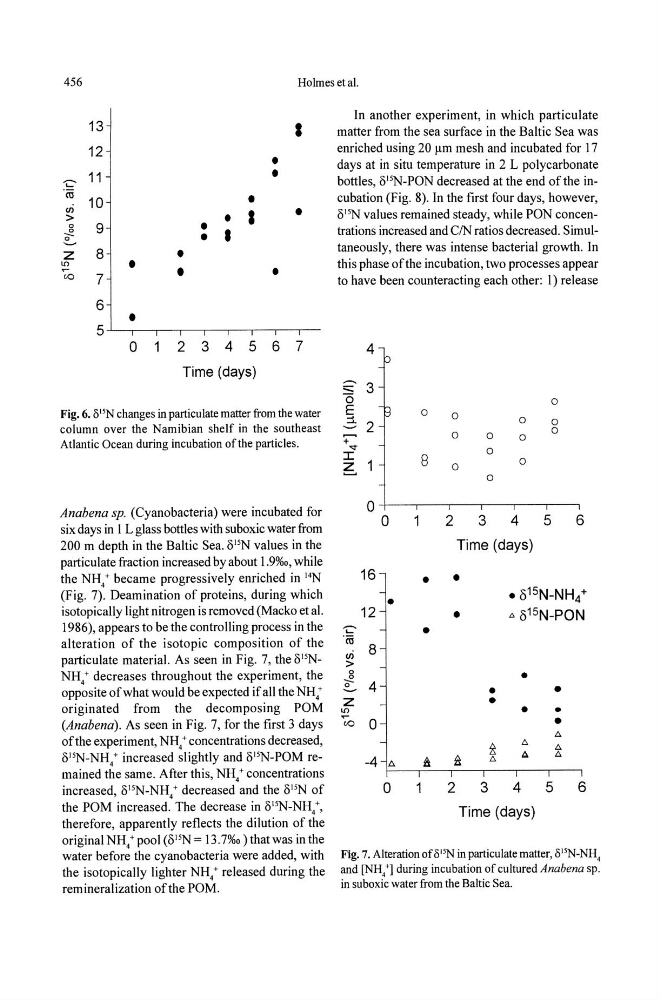
Fig. 6. 8"N changes in particulate matter from the water
column over the Namibian shelf in the southeast
Atlantic Ocean during incubation of the particles.
Anabena sp. (Cyanobacteria) were incubated for
six days in 1 L glass bottles with suboxic water from
200 m depth in the Baltic Sea. 8 15 N values in the
particulate fraction increased by about 1.9%0, while
the NH/ became progressively enriched in 14N
(Fig. 7). Deamination of proteins, during which
isotopically light nitrogen is removed (Macko et al.
1986), appears to be the controlling process in the
alteration of the isotopic composition of the
particulate material. As seen in Fig. 7, the 8 15 N_
NH/ decreases throughout the experiment, the
opposite of what would be expected if all the NH4+
originated from the decomposing POM
(Anabena). As seen in Fig. 7, for the first 3 days
ofthe experiment, NH/ concentrations decreased,
8 15 N-NH/ increased slightly and 8 15 N-POM remained the same. After this, NH/ concentrations
increased, 8 15 N-NH/ decreased and the 8 15 N of
the POM increased. The decrease in 8 15 N-NH/,
therefore, apparently reflects the dilution of the
original NH/pool (8 15 N = 13.7%0 ) that was in the
water before the cyanobacteria were added, with
the isotopically lighter NH/ released during the
remineralization of the POM.
In another experiment, in which particulate
matter from the sea surface in the Baltic Sea was
enriched using 20 fim mesh and incubated for 17
days at in situ temperature in 2 L polycarbonate
bottles, 8 15 N-PON decreased at the end of the incubation (Fig. 8). In the first four days, however,
8 15 N values remained steady, while PON concentrations increased and CIN ratios decreased. Simultaneously, there was intense bacterial growth. In
this phase ofthe incubation, two processes appear
to have been counteracting each other: 1) release
4
==23
"0
E
:::t 2
+""' o;t
I
~
16
12
8
4
0
o
•
-4 L:i.
0
0
8
•
•
a
1
0
0
0
0
0
0
0
0
0
0
0
0
2
3
4
5
6
Time (days)
•
•
~
2
3
•
•
~
L:i.
.1)15N-NH 4 +
" 1)15N-PON
•
•
L:i.
A
4
5
•
•
• L:i.
L:i.
L:i.
6
Time (days)
Fig. 7. Alteration of8 15 N in particulate matter, 8 15 N-NH 4
and [NH 4 +j during incubation of cultured Anabena sp.
in suboxic water from the Baltic Sea.
Ho1mesetal.
13
12
'C' 11
CC!
10
0
9
0
~
z
8
l()
(,()
7
6
5
•
•
o
•
•
•
: .
•
I
•
•
•
I
•
2 3 4 5 6 7
Time (days)
Fig. 6. 8"N changes in particulate matter from the water
column over the Namibian shelf in the southeast
Atlantic Ocean during incubation of the particles.
Anabena sp. (Cyanobacteria) were incubated for
six days in 1 L glass bottles with suboxic water from
200 m depth in the Baltic Sea. 8 15 N values in the
particulate fraction increased by about 1.9%0, while
the NH/ became progressively enriched in 14N
(Fig. 7). Deamination of proteins, during which
isotopically light nitrogen is removed (Macko et al.
1986), appears to be the controlling process in the
alteration of the isotopic composition of the
particulate material. As seen in Fig. 7, the 8 15 N_
NH/ decreases throughout the experiment, the
opposite of what would be expected if all the NH4+
originated from the decomposing POM
(Anabena). As seen in Fig. 7, for the first 3 days
ofthe experiment, NH/ concentrations decreased,
8 15 N-NH/ increased slightly and 8 15 N-POM remained the same. After this, NH/ concentrations
increased, 8 15 N-NH/ decreased and the 8 15 N of
the POM increased. The decrease in 8 15 N-NH/,
therefore, apparently reflects the dilution of the
original NH/pool (8 15 N = 13.7%0 ) that was in the
water before the cyanobacteria were added, with
the isotopically lighter NH/ released during the
remineralization of the POM.
In another experiment, in which particulate
matter from the sea surface in the Baltic Sea was
enriched using 20 fim mesh and incubated for 17
days at in situ temperature in 2 L polycarbonate
bottles, 8 15 N-PON decreased at the end of the incubation (Fig. 8). In the first four days, however,
8 15 N values remained steady, while PON concentrations increased and CIN ratios decreased. Simultaneously, there was intense bacterial growth. In
this phase ofthe incubation, two processes appear
to have been counteracting each other: 1) release
4
==23
"0
E
:::t 2
+""' o;t
I
~
16
12
8
4
0
o
•
-4 L:i.
0
0
8
•
•
a
1
0
0
0
0
0
0
0
0
0
0
0
0
2
3
4
5
6
Time (days)
•
•
~
2
3
•
•
~
L:i.
.1)15N-NH 4 +
" 1)15N-PON
•
•
L:i.
A
4
5
•
•
• L:i.
L:i.
L:i.
6
Time (days)
Fig. 7. Alteration of8 15 N in particulate matter, 8 15 N-NH 4
and [NH 4 +j during incubation of cultured Anabena sp.
in suboxic water from the Baltic Sea.